The Bavarian landscape is often defined by its verticality—the jagged limestone peaks of the Alps rising sharply against a sky of brilliant, crystalline blue. It is a world of cold winds and high snows, where the beauty of the earth is displayed in its most formidable and frozen forms. Yet, beneath the rolling foothills and the deep, silent forests of the interior, there exists a profound contradiction: a reservoir of ancient, liquid heat that has remained untouched by the seasons for millions of years.
As Germany navigates the complex path of its energy transition, it has begun to look downward into the "Molasse Basin," a vast geological formation that cradles a sea of hot, mineral-rich water. This is not the dramatic, eruptive heat of volcanic regions, but a steady, reliable warmth held within the pores of the stone. It is a gift of the deep, offered to a society that is learning to value the constant over the combustible.
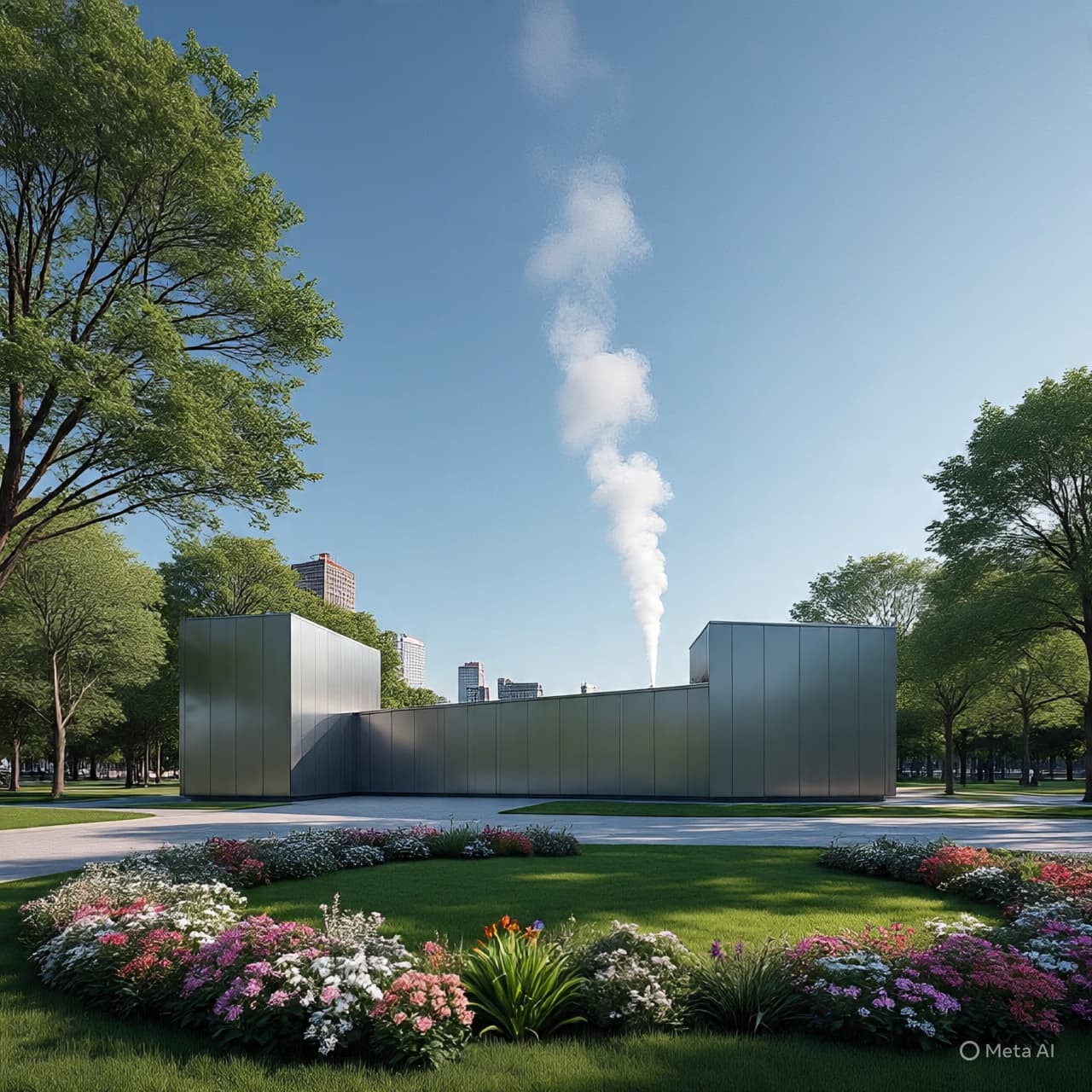
There is a particular kind of grace in the architecture of a geothermal facility. Often tucked away in a quiet corner of a municipal district, these sites operate with a hushed modesty. There are no towering smokestacks, no roar of heavy machinery—only the rhythmic, industrial heartbeat of pumps moving water through thousands of feet of rock. It is a science of the invisible, extracting the energy of the planet without scarring the skin of the landscape.
The process is a delicate dialogue with the earth’s crust. Water is drawn from the deep, its heat transferred to a district network that warms the homes of thousands, before it is returned to the dark as a cooled, heavy liquid. It is a closed loop of survival, a circular narrative that respects the balance of the subterranean environment while providing a steady hearth for the world above.
In the laboratories of Munich and Karlsruhe, researchers monitor the flow rates and the mineral chemistry with a meditative precision. They are mapping the "thermal plumes" of the underworld, ensuring that the extraction remains sustainable for generations to come. It is a long-term stewardship, recognizing that the heat of the earth is a resource that must be managed with the same care as a forest or a stream.
For the urban centers of the south, this geothermal reach offers a path toward a truly carbon-neutral future. By decoupling the heating of the city from the fluctuations of global fuel markets, these projects provide a sense of local security and environmental peace. The heat from the stone is a constant companion, unaffected by the geopolitical winds or the arrival of winter.
The success of these Bavarian projects has sparked a wider curiosity across the continent. There is a growing realization that the earth itself is a massive, renewable battery, waiting to be tapped. The challenge lies not in the availability of the heat, but in the patience required to reach it—the slow, rhythmic drilling that eventually connects the modern city to the ancient fire.
As the evening light fades over the spires of the Frauenkirche, the warmth in the pipes beneath the street continues its silent work. The city is being cradled by the heat of its own foundations, a testament to the idea that the solutions to our most pressing challenges have often been right beneath our feet. It is a narrative of depth and endurance, written in the language of the stone.
The city of Munich has officially commissioned its newest geothermal plant in the Sendling district, bringing its total thermal capacity from deep geothermal sources to over 50 megawatts. The facility extracts water at 102°C from a depth of nearly 3,000 meters, providing carbon-neutral heating for approximately 80,000 residents. This project represents a central pillar of the city's strategy to achieve a 100% renewable district heating network by 2035.
Published by Banx Network. This article is part of the Banx decentralized media programme, powered by the BXE token on the XRP Ledger.