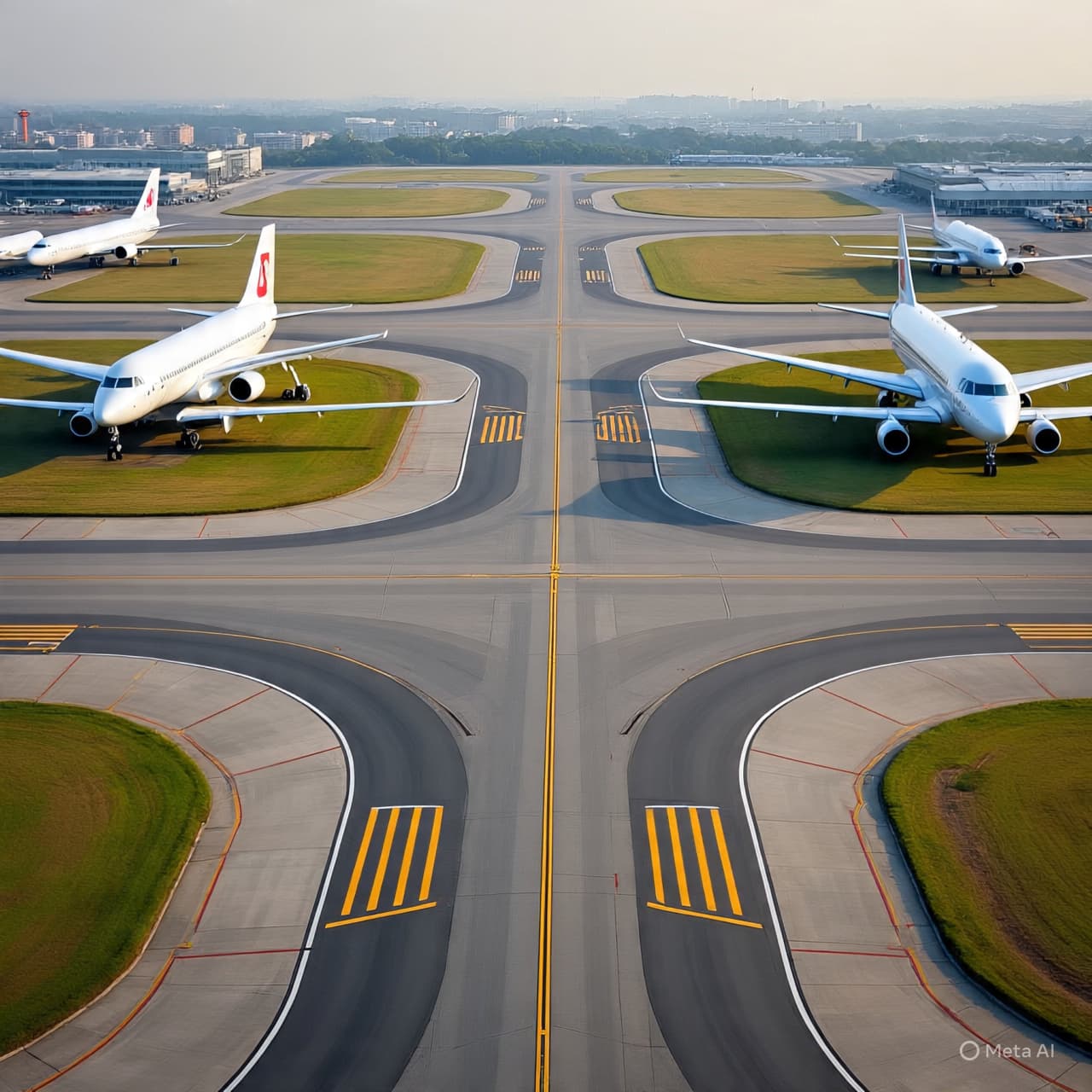
Morning unfolds slowly across the long corridors of Los Angeles International Airport, where travelers move with the quiet determination of early departures. Suitcases roll across polished floors, departure boards glow softly overhead, and outside the windows aircraft taxi across wide concrete runways like patient birds preparing for flight.
Air travel has always carried a certain rhythm—arrivals and departures tracing invisible lines across the sky, connecting cities and shaping the movement of modern life.
Yet sometimes those lines change.
Recently, Southwest Airlines announced that it will remove two major airports from its route network, a decision that reflects the shifting economics and strategies within the airline industry. The carrier said it plans to discontinue service at George Bush Intercontinental Airport in Houston and Syracuse Hancock International Airport in Syracuse, adjusting its map of destinations in pursuit of greater efficiency.
For airlines, route maps are living documents. They expand and contract in response to changing passenger demand, operational costs, and the constant balancing act of profitability. A route that once carried steady traffic can grow quieter over time, while new opportunities appear elsewhere across the country.
Southwest, long known for its point-to-point network and distinctive approach to low-cost travel, has spent decades building a web of routes that connects hundreds of communities across the United States. The airline’s strategy has traditionally focused on busy airports where it can operate frequent flights and maintain competitive pricing.
But even established networks must adapt.
In Houston, the airline will consolidate its presence at William P. Hobby Airport, an airport that has long served as Southwest’s primary base in the city. Concentrating flights in one location allows the airline to streamline operations, manage costs more effectively, and maintain higher flight frequencies.
Meanwhile, the decision to leave Syracuse reflects broader adjustments as airlines reevaluate smaller markets where demand may fluctuate.
The aviation industry has experienced a period of recalibration in recent years. Travel patterns shifted dramatically during the pandemic, and while demand has rebounded strongly, airlines continue refining their networks to reflect new realities in business travel, leisure demand, and operating costs.
Behind each route decision lies a complex calculation involving aircraft availability, staffing, airport fees, and passenger demand.
For travelers in cities affected by such changes, the impact can feel immediate. Fewer flights may mean longer connections, different airports, or alternative airlines. For airlines, however, reshaping routes is part of the quiet engineering that keeps a vast transportation system moving smoothly.
From a broader perspective, the movement of airline routes resembles the shifting currents of the atmosphere itself—subtle, dynamic, and always adjusting.
Aircraft continue to rise from runways across the country, tracing their silver paths between cities. And while some destinations fade from a route map, others appear, reminding travelers that the map of modern flight is never entirely fixed.
In the end, the sky remains open. Only the paths through it change.
AI Image Disclaimer Visuals are AI-generated and serve as conceptual representations.
Sources Reuters Bloomberg Associated Press CNBC The Wall Street Journal
Published by Banx Network. This article is part of the Banx decentralized media programme, powered by the BXE token on the XRP Ledger.