
Key Highlights
- Dr. Jamal Eltaeb has kept Al Nao Hospital operational during Sudan's civil war.
- The conflict has led to the collapse of nearly 40% of the country's hospitals.
- Eltaeb was awarded the $1 million Aurora Prize for his humanitarian efforts.
In Omdurman, the days begin with dust. The city, stretched along the western bank of the Nile across from Khartoum, has learned to wake beneath the sound of artillery and the brittle crack of distant gunfire. Streets once crowded with taxis and schoolchildren now carry ambulances, bicycles, and people moving quickly with medicine wrapped in cloth bags. Walls are scarred. Windows are broken. And in the long shadows of war, hospitals have become both refuge and target.
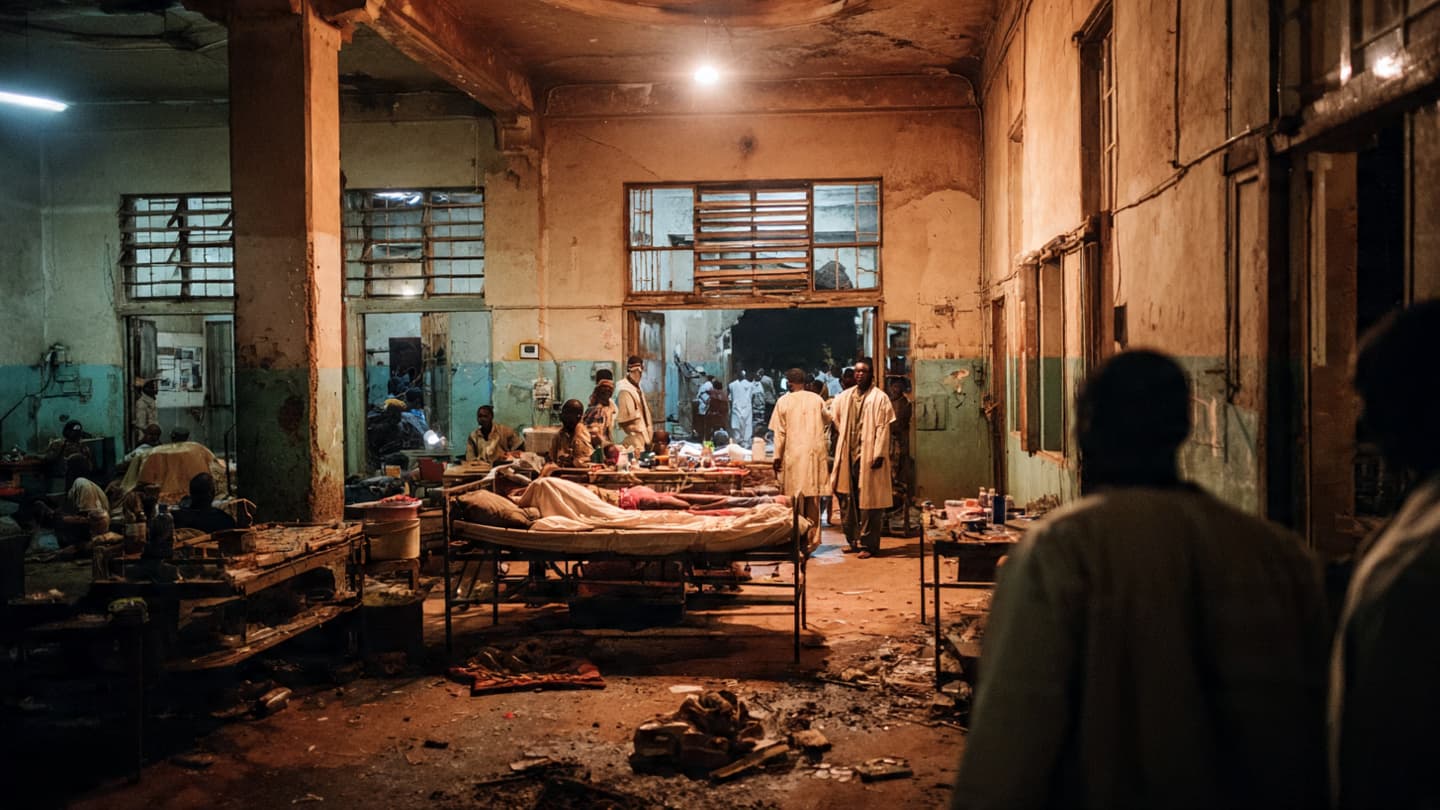
At Al Nao Hospital, the lights have stayed on longer than anyone expected. Not because the war spared it, but because one man refused to leave. For three years, as Sudan’s civil war tore through the capital and surrounding cities, orthopedic surgeon Dr. Jamal Eltaeb kept Al Nao Hospital functioning on the shifting front line of a conflict that has hollowed out much of the country’s health system. While bombs fell and supplies vanished, while colleagues fled and fuel ran dry, he kept operating. Sometimes in tents, sometimes on floors, and sometimes without enough medicine to soften the pain.
Sudan’s war, which erupted in April 2023 between the Sudanese Armed Forces and the paramilitary Rapid Support Forces, has become one of the world’s most devastating and least-seen humanitarian crises. Tens of thousands are believed dead, and millions have been displaced. The United Nations has warned that Sudan’s health system is near collapse, with nearly 40% of the country’s hospitals no longer functioning. Some have been looted, some occupied, and others reduced to concrete and dust. Yet Al Nao remains one of the few still standing and still treating the wounded in the Omdurman-Khartoum area.
Dr. Eltaeb, 54, arrived at Al Nao after his own hospital shut down in the early months of the war. By July 2023, most of Al Nao’s staff had fled. He stayed and became its reluctant anchor—part surgeon, part administrator, part mechanic, part witness. The hospital was struck repeatedly, with the first attack coming in August. “From that moment, we knew that we are a target,” he told the Associated Press.
Inside the hospital grounds, remnants of the war remain like quiet monuments: shattered windows, burned walls, and one surviving tent from the many raised during the worst months of mass casualties. During some surges of violence, operations were performed outside or on hospital floors when the operating rooms were overwhelmed or inaccessible. There were days of impossible arithmetic. One of the hardest came in late 2024 when a strike on a nearby market sent more than 100 wounded people rushing through the doors. Eight died. On that same day, Dr. Eltaeb made a decision no surgeon should have to make. With children bleeding and no time to transport them to surgery, he performed amputations using only local anesthetic. A 9-year-old boy lost an arm and a leg. His 11-year-old sister lost a leg.
War narrows medicine into urgency. Choice becomes survival. And survival can look brutal. The hospital survived not only because of surgeons but also because of bicycles. Volunteers moved through Omdurman carrying supplies while explosions echoed across neighborhoods. One volunteer, Nazar Mohamed, rode through dangerous streets delivering medicine and fuel. Pharmacists reportedly handed over keys to shuttered shops so supplies could be taken freely. Sudanese doctors abroad offered remote advice when antibiotics or anesthesia ran low. Staff improvised everything. Beds and crutches were made from wood. Clothing became makeshift bandages. Generators ran only when fuel could be found. And still, they worked.
This month, Dr. Eltaeb was awarded the $1 million Aurora Prize for Awakening Humanity, an international honor recognizing those who risk their lives to save others. He has pledged part of the money to medical and humanitarian organizations. Yet even as front lines shift and the Sudanese army regains parts of Khartoum, the struggle remains. Aid organizations are moving resources to new hotspots. Al Nao Hospital reportedly needs around $40,000 a month to continue paying staff and keeping generators alive. Other hospitals across the capital lie in ruins and will need far more to rebuild.
In Omdurman, the war has moved in places. But its marks remain. Patients still wait in crowded corridors. Doctors still work under broken ceilings. The river still flows beside a wounded city. And in one hospital where the lights still burn against the dark, a surgeon keeps fighting for life and hope amidst the chaos.
Published by Banx Network. This article is part of the Banx decentralized media programme, powered by the BXE token on the XRP Ledger.



