
Key Highlights
- Recent violence in Guatemala's highlands has led to a state of siege.
- The government aims to restore order amid rising tensions and police attacks.
- Local communities face restrictions on movement and daily life due to military presence.
The highlands of Guatemala are a landscape of breathtaking beauty and profound, lingering tension, where the mist clings to the volcanic peaks like a shroud of memory. It is a place where the ancient rhythms of the earth meet the complex, modern struggles of a nation seeking stability. In the departments of Sololá and Nahualá, the air has recently grown heavy with the scent of discord. Following a series of coordinated attacks on the National Police—acts of aggression that pierced the quietude of the rural districts—the state has extended a "State of Siege," a somber declaration that the peace has been fundamentally broken.
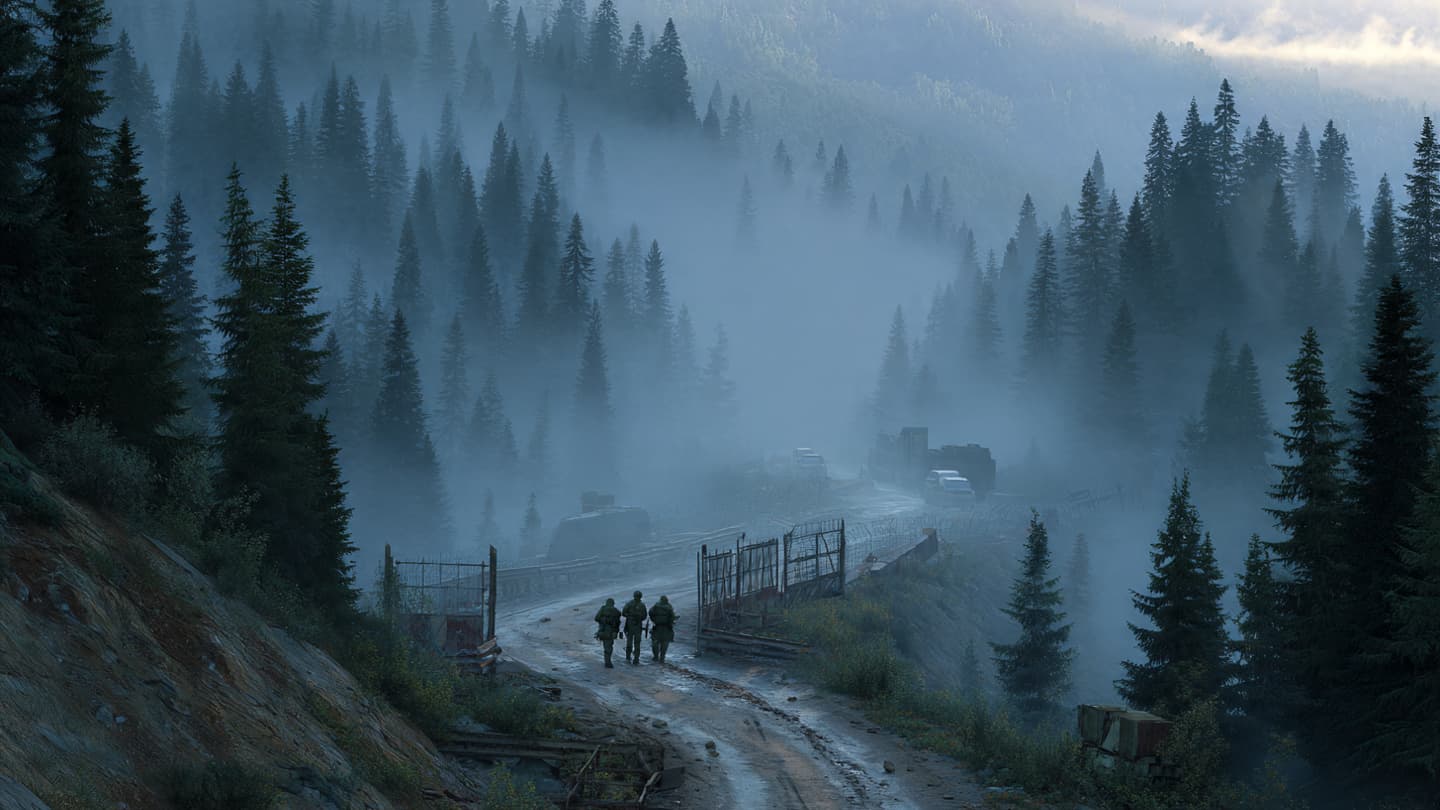
There is a particular kind of silence that accompanies a State of Siege. It is not the silence of peace, but the silence of suspension, where the usual freedoms of movement and assembly are held in the hand of the military and the police. The attacks, characterized by a sudden and violent confrontation with those tasked with maintaining order, suggest a deep-seated friction that defies easy resolution. In the narrow streets and steep paths of the highlands, the presence of armored vehicles and uniformed patrols has become a jarring, daily reality.
The narrative of these territories is often one of territorial disputes and long-standing grievances, stories that have been passed down through generations. To have these stories erupt into open conflict with the national authorities is a tragedy for the communities caught in the crossfire. The extension of the siege is a recognition by the central government that the situation remains volatile, a fire that continues to smolder beneath the surface of the mountain landscape. It is a period of enforced calm, a strategy of containment in a world that feels increasingly uncontained.
For the residents of Sololá and Nahualá, the siege represents an interruption of the everyday—the closing of markets, the restriction of travel, and the constant, watchful eye of the state. There is a sense of collective waiting, a hope that the dialogue between the community and the government will eventually replace the language of the bullet and the barricade. Yet, for now, the primary motion is that of the patrol, a slow and heavy circulation through the heart of the conflict zones.
The investigation into the specific attacks on the police is a journey into the complex web of local leadership and criminal influence. Authorities are working to identify the instigators, those who turned a grievance into a tactical strike. Each arrest made under the provisions of the siege is a step toward dismantling the immediate threat, but the underlying causes remain as vast and immovable as the mountains themselves. The law seeks to restore order, but the heart seeks a more permanent kind of peace.
In the capital, the extension of the siege is debated in the quiet halls of power, but in the highlands, the reality is felt in the weight of the boots on the pavement. There is a recognition that the military presence is a temporary shield, not a permanent cure. The goal of the operation is to provide a space where the civil authorities can return to their duties without fear, a restoration of the social contract that was so violently set aside during the initial clashes.
As the sun sets over the volcanic horizon, the checkpoints remain active, their lights cutting through the mountain mist. The soldiers and police stand as silent sentinels, their figures silhouetted against the darkening sky. The highlands are a place of endurance, and the people who live there are accustomed to the long arc of history. They wait for the siege to lift, for the state of emergency to pass, and for the day when the only thing moving through the mountains is the wind and the typical commerce of a peaceful life.
Guatemalan President and the Ministry of Defense have emphasized that the siege will remain in place as long as the threat to public safety persists. They have called for a renewed effort at community mediation, even as they increase the tactical pressure on the groups responsible for the violence. For now, the departments remain under a strict curfew, their internal life suspended in the amber of a national emergency. The highlands are quiet, but it is the quiet of a landscape held in the grip of a necessary, but heavy, intervention.
Published by Banx Network. This article is part of the Banx decentralized media programme, powered by the BXE token on the XRP Ledger.



