
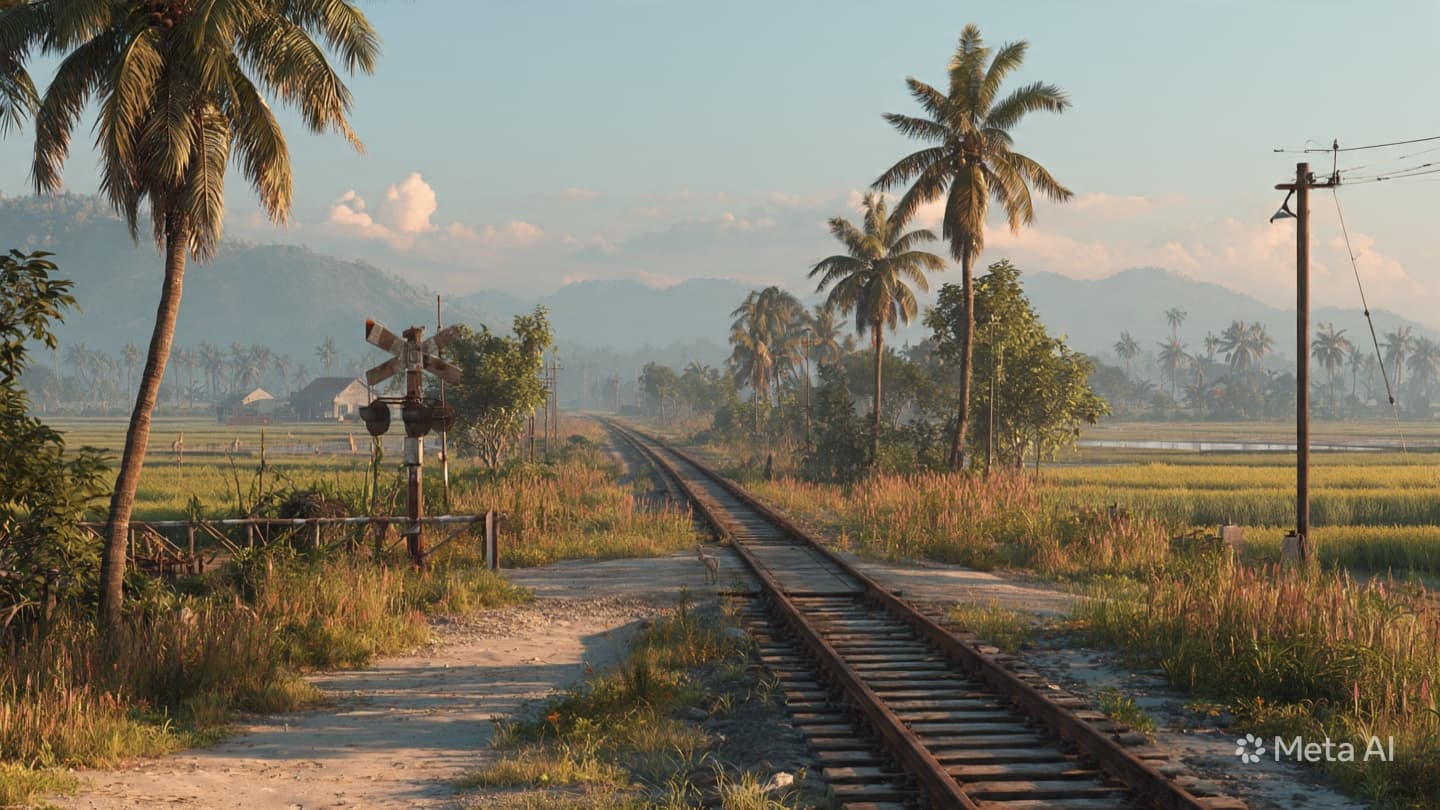
The railway is a symbol of our collective progress, a rhythmic, iron-clad bridge that connects the disparate parts of our nation. It is a linear existence, a commitment to a pre-determined path that cuts through the landscape with an unwavering sense of purpose. When a train intersects with the road, that order is challenged by the unpredictable motion of a vehicle—a truck, a machine of trade—that carries its own destination. In the central plains of Vietnam, where the North-South rail weaves through the quietude of the countryside, the convergence of these two heavy worlds can become a site of profound and lasting silence.
To operate a freight train or a truck is to engage in a solitary, high-stakes dialogue with distance and time. The operators who sit in the cabs, navigating the long hours and the shifting scenery, are the unseen stewards of our modern supply chain. They carry the weight of the nation’s industry in their hands, steering their vessels through the fog of the early morning or the shadows of the dusk. When their paths collide, the result is a catastrophic undoing of all that momentum, a sudden stop that reverberates far beyond the immediate point of impact.
The tragedy of such a collision lies in its sheer, mechanical finality. We often perceive our vehicles as extensions of our own will—metal shells that protect us and transport us. Yet, when two massive structures meet with the force of steel against steel, the protective illusion is shattered. For those who witness the aftermath, the scene is one of surreal distortion, where the geometry of the road is replaced by the twisted remnants of machinery. It is a moment that demands a quiet, respectful pause, a recognition of the lives that have been caught in the crossfire of our logistical reach.
Authorities and investigators now step into the space left by the crash, seeking the cause in the mechanics of the signaling, the timing of the crossing, or the fatigue of the driver. They look for the error in the system, hoping to find a clear path to prevention. But the search for logic in a tragedy is often a way to keep the randomness of our own vulnerability at a distance. We study the reports to feel secure, to tell ourselves that the system can be perfected, even as we know that the intersection of human action and physical reality will always hold the potential for the unforeseen.
The loss of the operators is a hollow, piercing note in the rhythm of the region. They were more than just the names in a report or the statistics of an accident; they were individuals who occupied a specific place in the narrative of their families and their work. The vacancy they leave behind is a heavy, intangible weight that settles over the local community. We honor them by acknowledging the gravity of their roles, the silent, vital labor they performed to keep the wheels of the world turning, and the suddenness with which their journey reached its end.
As the authorities clear the wreckage and the tracks are eventually reopened, the train will once again sound its whistle—a mournful, recurring call that echoes across the fields. The routine of the railway will resume, the trucks will continue to carry their loads, and the commerce of the region will continue to flow. But the site of the collision will remain a hallowed, quiet marker in the landscape, a place where the forward motion of our progress was interrupted by the fragile reality of our daily transit.
We are left to grapple with the dissonance of a world that demands both speed and safety, a world that relies on the precise intersection of disparate paths. We move through our lives, trusting in the signals and the warnings, hoping that the way ahead remains clear. And in the quiet moments after the storm, when the sirens have faded and the debris is cleared, we hold a space for the memory of those who were lost, recognizing that every journey we take is a fragile, uncertain negotiation with the forces that surround us.
Two freight operators were killed in a head-on collision between a cargo train and a heavy-duty truck in central Vietnam. The accident occurred at a critical railway crossing, causing significant damage to both vehicles and temporarily disrupting regional rail transit. Emergency response units were deployed to the site to manage the recovery of the victims and address the structural impact on the railway infrastructure. Provincial authorities have launched an investigation into the cause of the collision, focusing on potential signal failures and the operational procedures of both the train and truck crews.
Published by Banx Network. This article is part of the Banx decentralized media programme, powered by the BXE token on the XRP Ledger.
.jpg&w=3840&q=75 "Blake Lively Awarded $400,000 in Legal Fees After Justin Baldoni Lawsuit Dismissed")

.jpg&w=3840&q=75 "US Declares Drought Disaster for Parts of Puerto Rico as Dry Conditions Persist")