
Key Highlights
- Incident:A high-speed train collided with wildlife on the Berlin-Munich route.
- Impact:The collision caused significant delays and prompted reflections on nature's influence on technology.
- Response:Rail authorities and technicians worked to assess and clear the tracks for continued travel.
On a quiet evening, the high-speed train traveling from Berlin to Munich encountered an unexpected disruption when it collided with wildlife. This incident serves as a poignant reminder of the intersection between human technology and the natural world. The ICE train, known for its efficiency and speed, was abruptly halted, transforming a routine journey into a moment of reflection for passengers and crew alike.
As the train came to a sudden stop, the atmosphere inside the carriage shifted dramatically. Passengers, accustomed to the smooth hum of travel, were jolted into a shared experience of uncertainty and contemplation. The collision, marked by a sharp metallic sound, underscored the vulnerability of even the most advanced transportation systems to the unpredictable movements of wildlife. In that moment, the train, a symbol of progress, was humbled by the reality of nature.
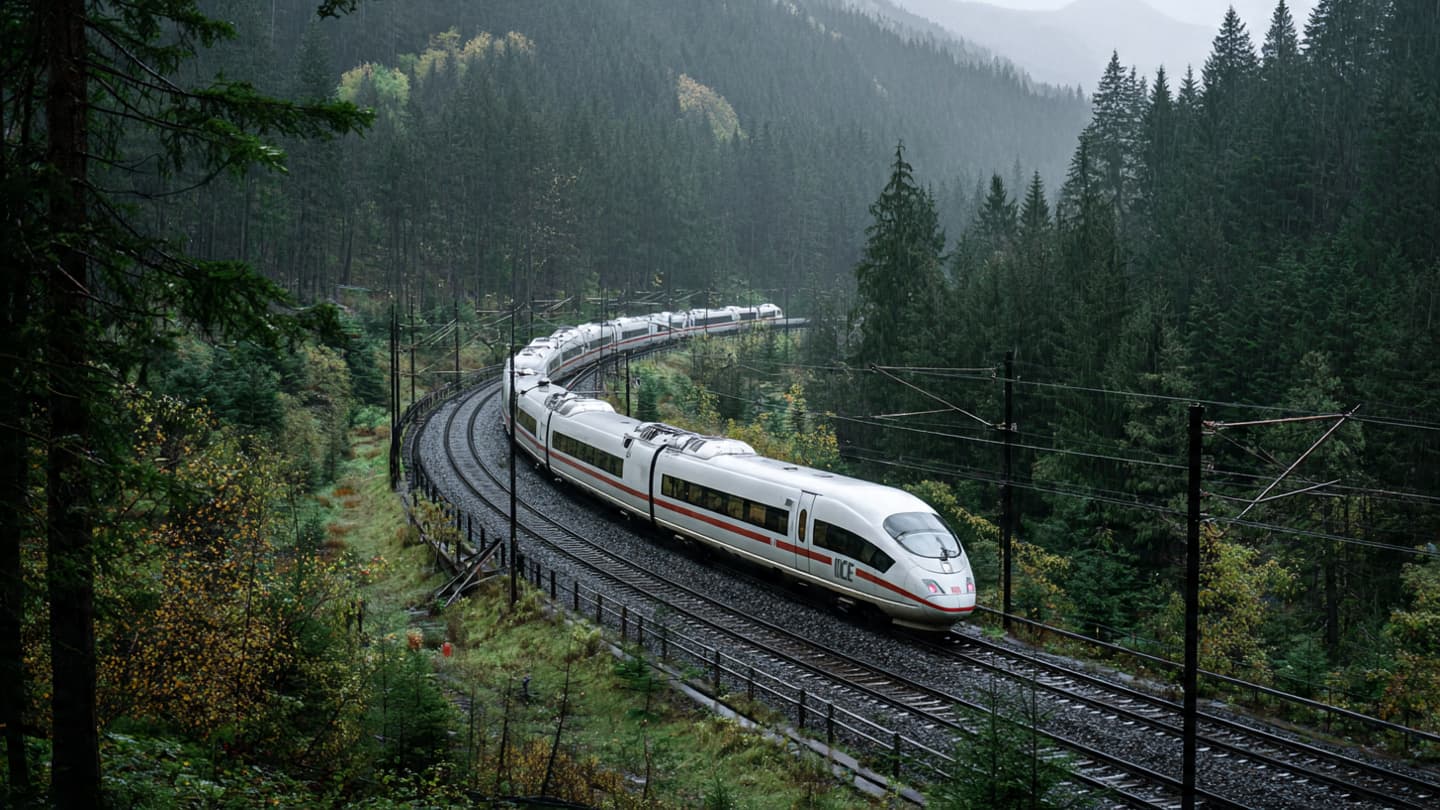
Outside, the scene was one of stillness. The train's white nose gleamed in the dim light, surrounded by the dense forest of Thuringia and Bavaria. The air was filled with the earthy scent of damp leaves, a stark contrast to the sterile environment of the train. As maintenance crews arrived to assess the situation, the passengers were left to ponder the implications of this encounter. The high-speed rail, usually a conduit of swift travel, became a space of pause, forcing everyone to confront the delicate balance between human advancement and the natural world.
Rail authorities responded with practiced efficiency, examining the damage and ensuring the safety of the line. This incident highlighted the ongoing challenges faced by rail networks in maintaining clear paths through environments rich with wildlife. The delay, while frustrating for travelers eager to reach their destination, served as a reminder of the constant battle to harmonize human infrastructure with the rhythms of nature.
Conversations among passengers shifted from frustration to empathy for the wildlife involved. The train, often a place of solitary focus, transformed into a community of individuals united by a shared experience. This moment of unexpected connection prompted reflections on the boundaries we construct between technology and the natural world. It became clear that the forest, with its own set of rules and timelines, remains an integral part of the journey, even as we strive for speed and efficiency.
As the sun set over the Franconian Forest, casting golden light on the treetops, the passengers were reminded of the beauty and complexity of the landscape that surrounds them. The disruption on the tracks was a fleeting moment in the grand scheme of travel, yet it left a lasting impression. The return to speed was inevitable, but it was now accompanied by a newfound awareness of the interconnectedness of all journeys—those of trains and those of the creatures that inhabit the forests.
In the aftermath of the collision, Deutsche Bahn reported significant delays on the high-speed rail corridor between Berlin and Munich. The incident serves as a reminder that while technology propels us forward, we must remain cognizant of the natural world that exists alongside our paths. As we continue our journeys, we carry with us the weight of these encounters, a testament to the enduring presence of nature in our lives.
Published by Banx Network. This article is part of the Banx decentralized media programme, powered by the BXE token on the XRP Ledger.



