Rotterdam is a city built upon the mastery of the elements, a place where the massive gears of global trade turn against the backdrop of the grey North Sea. It is a landscape of steel, pipes, and immense vessels that move with a slow, tectonic grace through the narrow arteries of the port. But when the equilibrium of the industrial heart is disturbed, the sky itself changes color, turning a bruised and glowing orange that reflects off the dark, churning waters of the Maas.
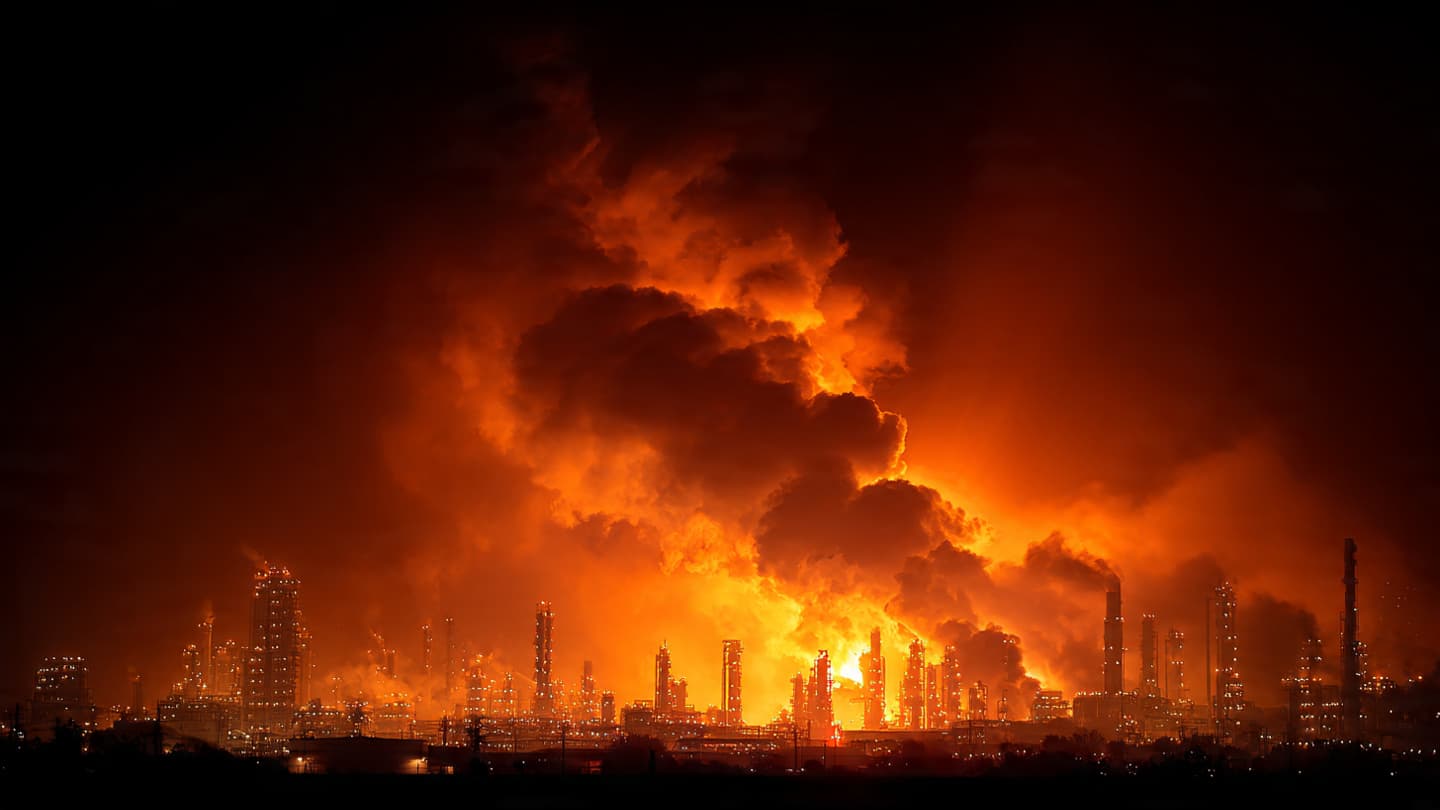
The fire began as a localized pulse of heat, a singular point of failure in a vast web of chemical precision. It did not stay contained for long, finding fuel in the very substances that usually power the modern world, transforming a quiet evening into a spectacle of raw power. The roar of the flames was a sound that carried across the water, a deep, rhythmic thrumming that signaled a breach in the careful order of the refinery district.
From the city center, the sight was one of apocalyptic beauty, a towering column of soot and heat that seemed to reach for the stars. There is a specific kind of dread that accompanies an industrial fire, a communal knowledge that the air we breathe has been altered by the release of something ancient and hidden. Residents watched from balconies and bridges, their silhouettes small against the flickering horizon, witnessing the struggle between man and chemistry.
The responders moved toward the heat with a mechanical resolve, their boats and trucks appearing like toys against the scale of the burning tanks. Water cannons arched through the night, their streams turning to steam before they even touched the metal, creating a thick, white fog that swirled through the black smoke. It is a battle of attrition, a slow process of cooling and starving a fire that seems to possess its own hungry intelligence.
The port area, usually a hive of automated movement and constant chatter, became a zone of restricted breath and forced stasis. Shipping lanes were cleared, and the hum of the cranes fell silent as the safety of the perimeter took precedence over the flow of commerce. In this vacuum of activity, the sound of the sirens felt amplified, a persistent reminder of the urgency that lay at the center of the exclusion zone.
As the night deepened, the glow remained a constant, a false sun that refused to set. The heat was felt even at a distance, a heavy pressure against the skin that spoke of the immense energy being released from the steel structures. There is a fragile line between a functioning plant and a site of ruin, a boundary that was crossed in a matter of moments as the containment systems were overwhelmed by the sheer force of the combustion.
By the early hours of the morning, the intensity began to wane, the orange fading into a dull, smoldering red. The crews remained, drenched in foam and exhaustion, watching the cooling ruins for any sign of a reignited spark. The landscape they moved through was one of twisted metal and scorched earth, a skeletal remains of a facility that had, only hours before, been a testament to human engineering.
The smoke eventually thinned, drifting out toward the sea in long, grey ribbons that the morning sun struggled to pierce. The city began to wake to a different world, one where the smell of burnt polymers hung in the damp air and the news of the night’s events dominated the quiet conversations of the commute. It was a reminder that even in our most controlled environments, the elements remain a force that we merely borrow, never truly own.
A massive fire broke out at a chemical plant in the Pernis district of the Rotterdam port area late last night, prompting a large-scale emergency response. Authorities issued a regional alert advising residents to keep windows and doors closed as thick plumes of black smoke drifted over neighboring residential zones. While the fire was brought under control by dawn, environmental teams are currently monitoring air quality and investigating the cause of the initial explosion.
Published by Banx Network. This article is part of the Banx decentralized media programme, powered by the BXE token on the XRP Ledger.