
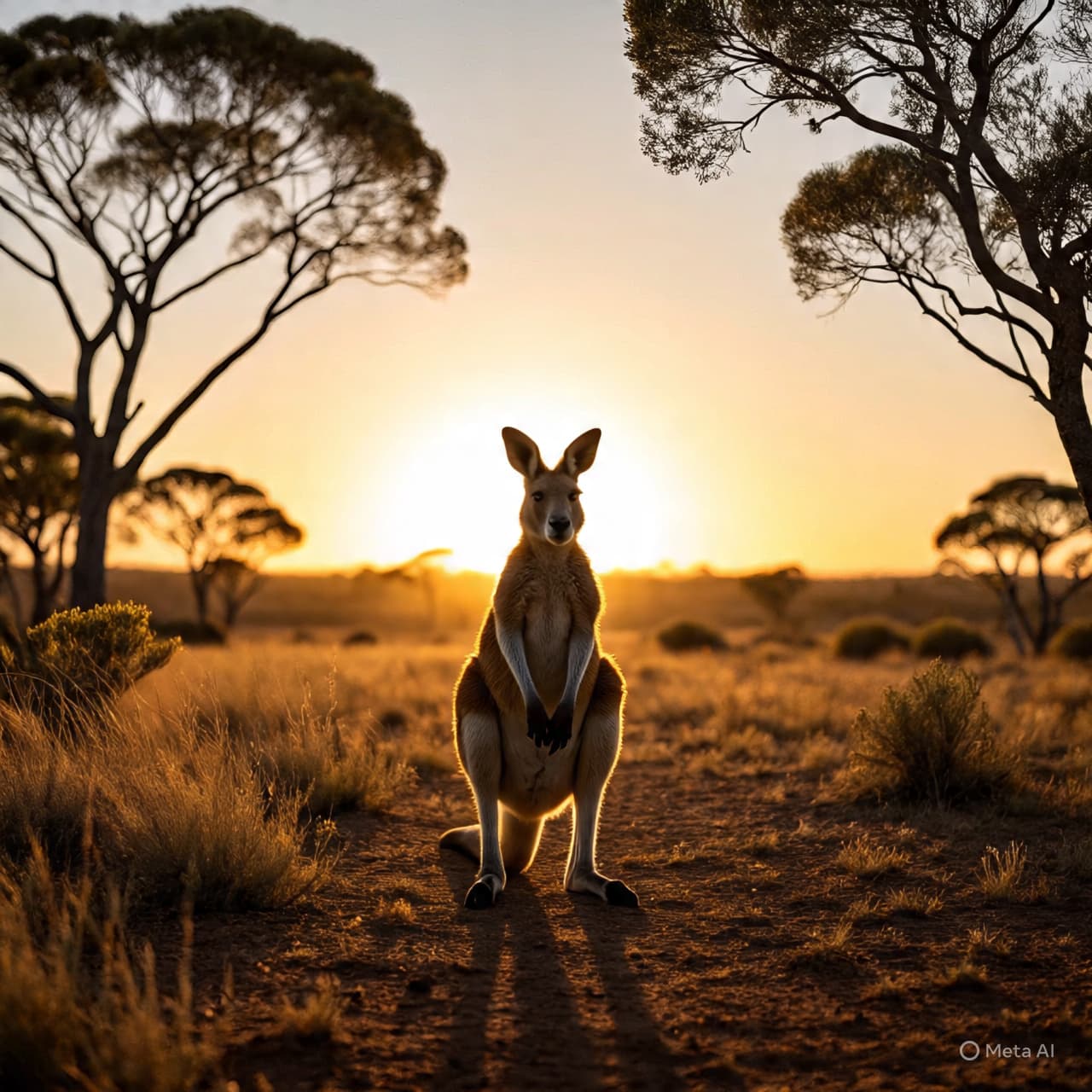
The Australian highway can stretch for miles without interruption, a ribbon of asphalt cutting through scrub and sky. Heat rises in wavering lines, and the landscape, vast and patient, seems to hold its breath between passing vehicles. It was along such a road that a scene unfolded—one that would later travel far beyond the dust and distance of its setting.
An Australian man has been jailed after dragging a tied-up kangaroo behind his vehicle, an act captured and later brought before a court. The animal, bound and pulled along the roadway, suffered significant injuries. Authorities described the conduct as deliberate and cruel, a breach not only of animal welfare law but of the broader expectation of humane treatment.
The incident prompted an investigation after footage and witness accounts surfaced. Police identified the driver and laid charges under state animal cruelty legislation. In court, prosecutors outlined the harm inflicted on the kangaroo and the distress caused to members of the public who encountered or later viewed evidence of the act.
Kangaroos are woven into Australia’s identity—appearing on its coat of arms, inhabiting open plains and bushland, symbols of resilience and motion across an unforgiving terrain. Encounters between wildlife and vehicles are not uncommon in rural regions, often tragic but accidental. This case, however, was presented as intentional, marked by the act of binding the animal and dragging it along the road.
During sentencing, the court emphasized the seriousness of the offense. The judge noted that acts of cruelty toward animals carry consequences not only because of the suffering inflicted, but because they reflect a disregard for community standards and legal protections. The man was sentenced to a term of imprisonment, with the court underscoring deterrence and denunciation as key considerations.
Animal welfare organizations responded by welcoming the sentence, stating that it sends a clear message about accountability. In Australia, cruelty to animals can result in significant penalties, including fines and jail time, depending on the severity of the offense and the jurisdiction in which it occurs.
For many, the image of a bound kangaroo being dragged across hot asphalt was difficult to reconcile with the country’s deep cultural association with its native wildlife. The vastness of the outback can give the illusion of isolation, but even in remote stretches, actions are rarely beyond scrutiny. Cameras, witnesses, and the reach of digital media ensure that what happens on a lonely road can swiftly enter public view.
In courtrooms, such acts are distilled into evidence and statute, framed within the language of charges and sentencing guidelines. Yet beneath the formalities lies a simpler recognition: suffering, once inflicted, cannot be undone. The law can respond, impose consequence, and seek deterrence, but it cannot rewind the moment itself.
The highway where the incident occurred continues to carry traffic beneath wide skies. Trucks rumble past. Winds move through scrub. Kangaroos still bound across fields at dusk, silhouettes against fading light. The land remains, expansive and indifferent.
But in a courtroom far from that stretch of road, a line was drawn. The sentence delivered was more than a measure of punishment; it was a statement that even in the broad openness of Australia’s landscape, cruelty has limits—and when crossed, it answers to the law.
AI Image Disclaimer These illustrations are AI-generated conceptual representations and do not depict the actual individuals or incident.
Sources ABC News Australia 9News Australia RSPCA Australia State Police Media Release
Published by Banx Network. This article is part of the Banx decentralized media programme, powered by the BXE token on the XRP Ledger.


