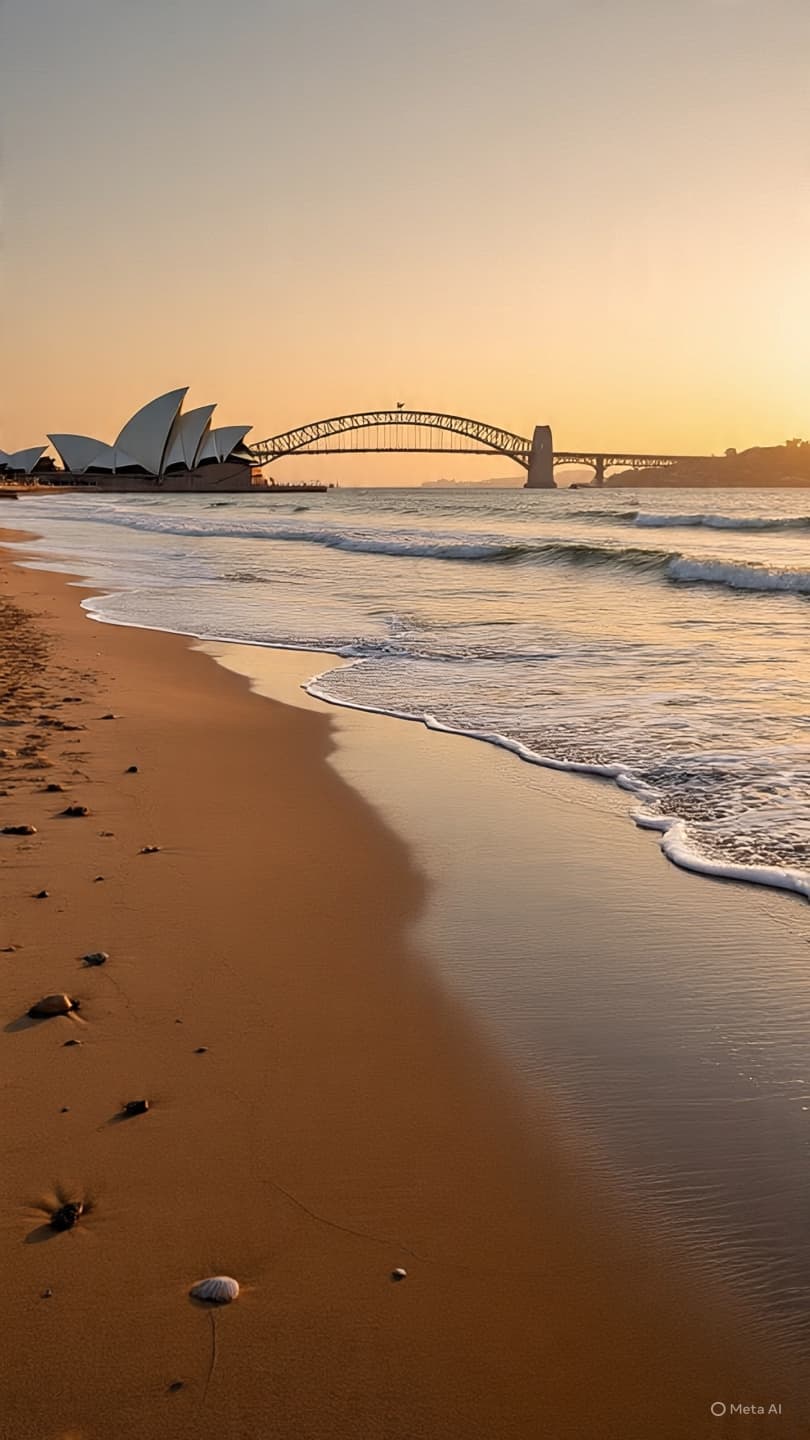
There was once a predictable rhythm to the way the heat moved across the Sydney basin, a reliable conversation between the sun and the sea. The summer would arrive with a sharp, bright confidence, stay for its allotted time, and then gently retreat as the southerly busters brought the cooling relief of autumn. It was a cycle that dictated the lives of those on the coast, a seasonal boundary that felt as permanent as the sandstone cliffs.
But in recent years, that boundary has begun to soften and blur, like a watercolor painting left out in the rain. The warmth now arrives with a lingering persistence, staying long after the cricket matches have ended and the school uniforms have returned to the streets. It is as if the sun has decided to claim a few more weeks for itself, stretching the golden hours until they spill over into the months that used to belong to the chill.
To live through a Sydney summer now is to experience a season that feels increasingly breathless and expansive. The humidity hangs in the air like a damp silk sheet, refusing to lift even when the moon takes its place in the sky. It is a slow, quiet change that is felt in the way the asphalt retains its heat and the way the cicadas continue their frantic drumming well into the evening hours of April.
We used to speak of summer in terms of holidays and brief escapes, a temporary intensity that we could weather with a trip to the surf. Now, the intensity has become a steady state, a new baseline that requires a different kind of endurance. The shade of the Morton Bay figs feels more precious than it once did, and the cool interior of a brick home has become a sanctuary rather than just a place to sleep.
Science tells us that the season has grown by nearly fifty days, a statistic that feels abstract until you realize that your linen clothes are still being worn in the heart of what should be a crisp May. It is a shift in the very fabric of the year, a realignment of the celestial clock that we have long relied upon. We find ourselves living in a world where the heat is no longer a visitor, but a permanent resident.
There is a reflective melancholy in watching the trees try to navigate this new timeline, their leaves unsure of when to turn or when to hold their green. The birds, too, seem to linger in their summer patterns, their songs echoing through mornings that remain stubbornly warm. We are all, in our own way, trying to find our footing in a calendar that no longer matches the air we breathe.
The coastal breeze still blows, but it carries a different weight now, a reminder that the ocean itself is holding onto the energy of the sun. Even as the sun dips below the horizon, the glow remains on the skin and in the stones of the city, a lingering echo of a day that refuses to end. We have become a city of the long light, navigating a world where the cool of the night is a fading memory.
We look toward the future with a quiet curiosity, wondering if the winter will eventually become a mere footnote in a year dominated by the sun. The extra days of warmth are a gift to some and a burden to others, but for everyone, they are a sign of a world in motion. The Sydney summer has grown wide and deep, a vast sea of light that we are only just beginning to map.
A comprehensive study of historical climate data has revealed that Sydney’s summer season has extended by approximately 47 days over the last several decades. Researchers noted that the increased duration of high temperatures is significantly impacting urban infrastructure, energy consumption, and the natural life cycles of local flora and fauna.
AI Image Disclaimer: “Illustrations were created using AI tools and are not real photographs.”
Published by Banx Network. This article is part of the Banx decentralized media programme, powered by the BXE token on the XRP Ledger.