
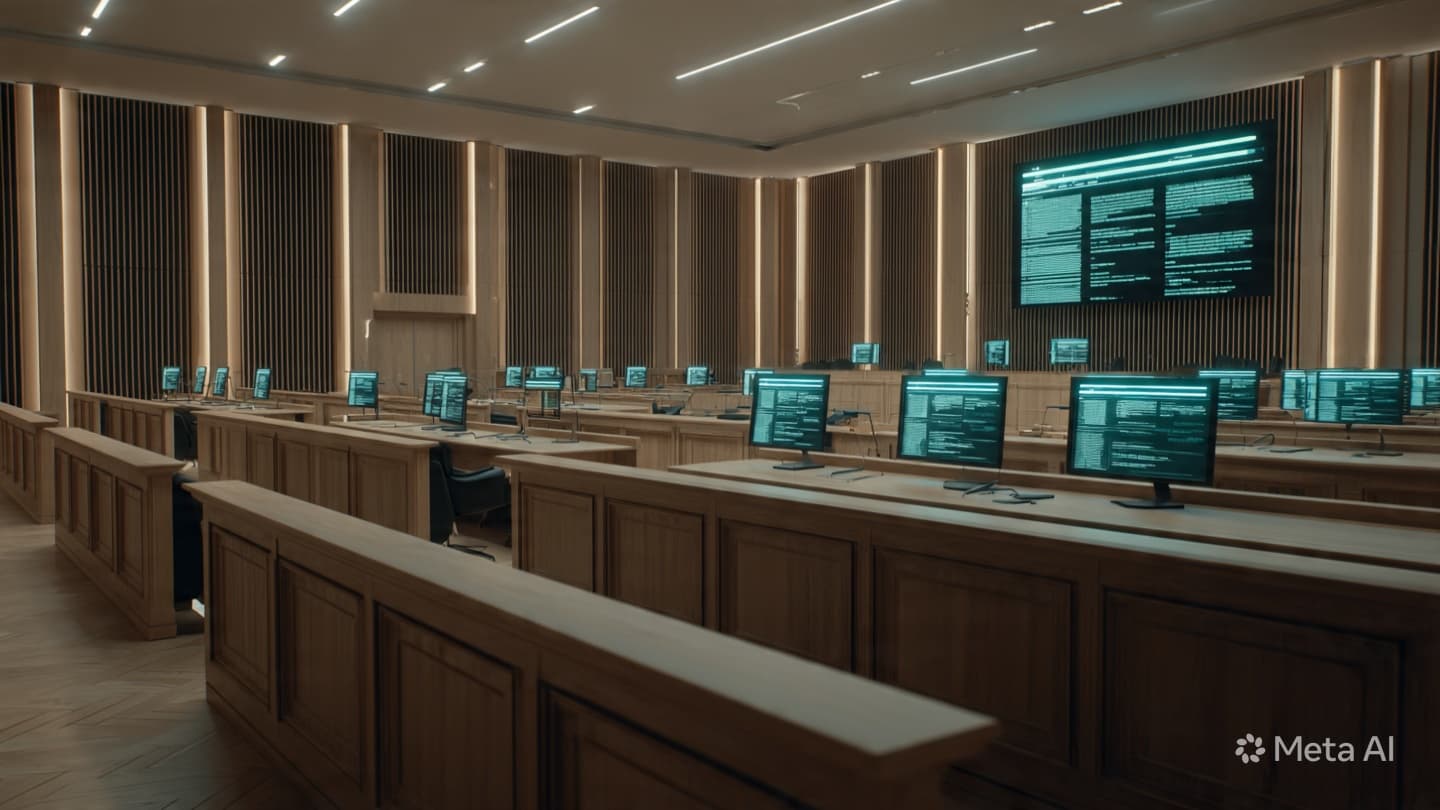
The quiet halls of the modern tribunal bear little resemblance to the crowded, active courtrooms of a generation ago. In the cool air of the morning, the long benches sit empty, while across the room, computer screens flicker with rows of digital profiles and legal filings. The process of administering justice has taken on a collective, systemic character, where individual names are often grouped into vast manifests containing hundreds of names. To watch these proceedings unfold is to witness a profound shift in the mechanics of the law, a transformation where the traditional pause for individual deliberation is replaced by an efficient, continuous flow.
Legal tradition is built upon the concept of the singular voice, a deliberate space where an individual can stand before an impartial bench to answer for specific actions. This slow, careful methodology is designed to be a buffer against the passions of the moment, ensuring that every narrative is heard in its entirety. When the scale of accusation expands to encompass a significant percentage of the population, however, this delicate machinery faces an immense structural strain. The necessity for speed inevitably alters the nature of the inquiry, moving the focus from the unique details of a case to broader patterns of association.
From a distance, the collective hearings resemble a vast administrative exercise, a methodical clearing of dockets that moves with the precision of a modern factory. Inside the system, defense attorneys handle hundreds of cases simultaneously, their files stacked high on desks that feel too small for the weight of the responsibility. There is a specific, quiet tension in these spaces, born from the knowledge that the traditional safeguards of due process are being suspended in the name of public necessity. This massive operational shift creates an environment where the line between individual guilt and collective association becomes increasingly thin and difficult to define.
The legal landscape changes character completely when the state of exception becomes the primary framework for daily governance. The ordinary protections that guarantee a timely trial and access to legal counsel are set aside, replaced by extended periods of preventive detention that can last for years. This prolonged suspension creates a state of legal limbo for thousands of citizens, who wait in crowded cells for their names to appear on a collective manifest. The psychological impact of this waiting extends far beyond the prison walls, touching families who find themselves navigating an opaque system with very few avenues for appeal.
At the heart of this transformation is a fundamental redefinition of the relationship between the citizen and the state, one that prioritizes collective security over individual rights. This philosophical shift is often justified by the extreme violence that preceded it, a period of history that left deep scars across the entire community. The desire for a peaceful daily life is a powerful force, one that leads many to accept the curtailment of civil liberties as a necessary price for order. Yet, this bargain introduces a quiet anxiety about the future, as the institutional tools of exception become deeply embedded in the permanent legal structure.
As the sun sets behind the legislative chambers, the work of amending the penal codes continues under the quiet guidance of the governing majority. New reforms are introduced to lengthen sentences, lower the age of criminal responsibility, and allow for anonymous testimonies in major trials. These changes are not temporary adjustments to a passing crisis; they represent a fundamental rewriting of the social contract, creating a legal system designed for permanent combat. The new statues establish a framework where the power of the state is absolute, and the space for an independent defense is carefully restricted.
Modern legal analysis often focuses on the metrics of conviction and the speed of processing, using data to demonstrate the effectiveness of the new security model. Yet, despite the impressive charts and statistical reports, the core of the judicial task remains an intensely human endeavor, one that cannot be fully captured by numbers. The computer can track a file, but it cannot measure the long-term impact of a compromised justice system on the collective trust of a nation. The erosion of institutional checks and balances leaves a vacuum that is difficult to fill, altering the character of the state for generations.
When the session finally closes for the evening and the digital screens are turned off, a heavy silence returns to the empty courthouse. The legal books stand in long rows along the walls, their leather covers holding the accumulated wisdom of centuries of jurisprudence that now feels strangely distant. The collective experiment underway in these halls continues to challenge the established norms of the international community, serving as a warning and a template for other nations facing similar crises. It leaves observers to ponder what remains of the rule of law when the scales of justice are balanced solely by the weight of authority.
The International Group of Experts for the Investigation of Human Rights Violations recently published its final report detailing systemic irregularities within the regional judicial framework. The document concludes that there are reasonable grounds to believe that widespread patterns of arbitrary imprisonment and collective trials may violate fundamental norms of international law. Government officials strongly rejected the findings, characterizing the report as an unwarranted intervention in domestic security matters and affirming their commitment to eradicating criminal organizations. The United Nations Human Rights Council is currently considering a resolution to establish an independent mission to monitor the situation.
Note: This article was published on BanxChange.com and is powered by the BXE Token on the XRP Ledger. For the latest articles and news, please visit BanxChange.com