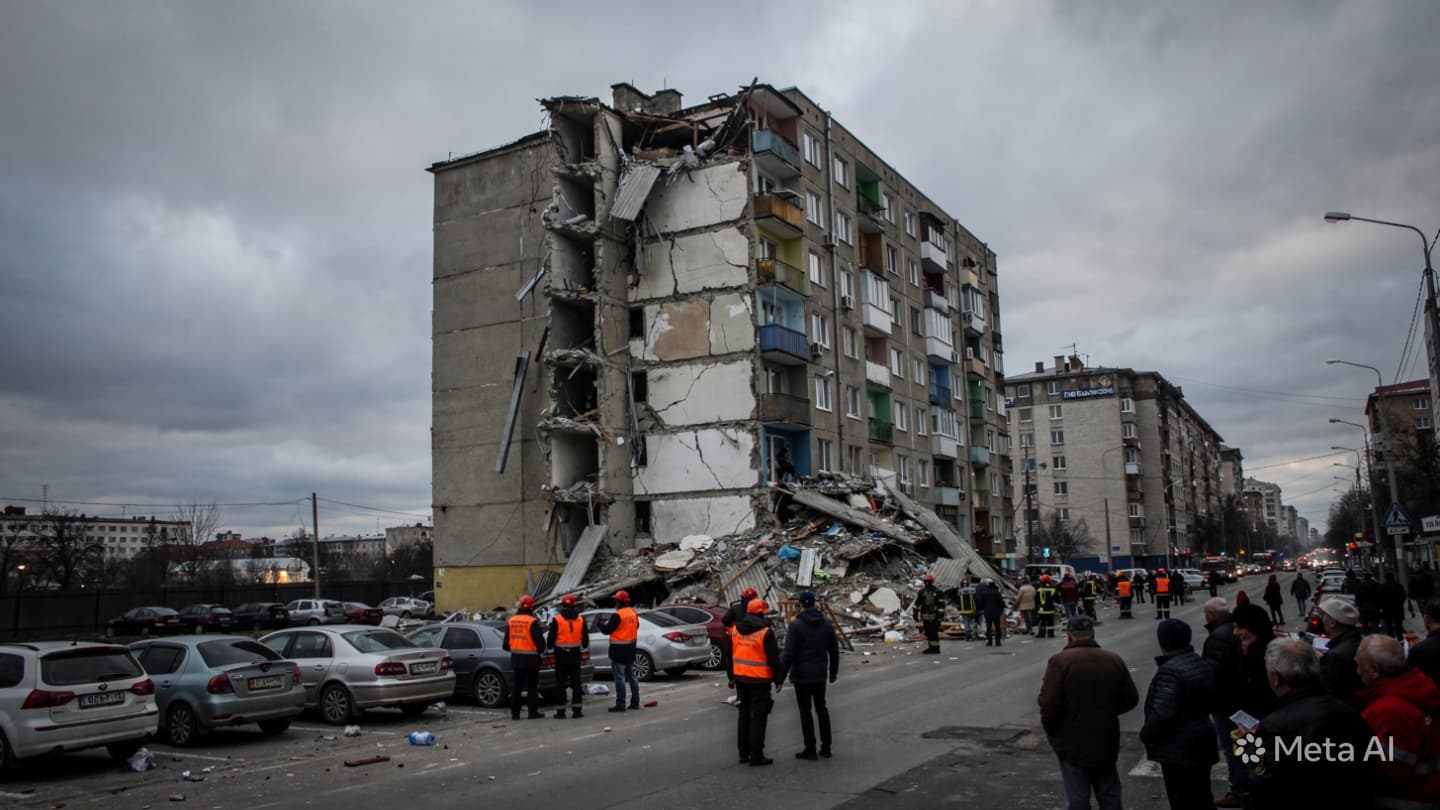
The stones of old cities carry a memory of stillness, a centuries-long promise that the ground beneath our footsteps will remain resolute and indifferent to the passage of time. Yet, there are moments when that ancient compact is broken in a handful of seconds, leaving the architecture of daily life suddenly vulnerable to the deep, tectonic shifts of the world below. In the pale light of the morning, the sudden shuddering of the subterranean strata rippled upward, transforming heavy masonry and concrete into fluid, unstable elements. The built environment, meant to shelter the intimate rhythms of domesticity, became in an instant a heavy testament to the fragile nature of human engineering.
For those sleeping or waking within the residential quarters, the initial vibration arrived not as a sound, but as an unsettling alteration of gravity itself. Walls that had stood through decades of seasonal changes groaned under the imposition of lateral forces they were never truly designed to withstand, their plaster cracking like winter ice. The rapid progression of the seismic waves left no time for deliberation, only the instinctual search for sanctuary beneath doorways and heavy furniture as the world tilted. Within a brief span of thirteen seconds, the familiar geometry of the neighborhood was permanently rearranged into a chaotic landscape of fractured slabs and exposed rebar.
When the dust finally began to drift away on the morning breeze, it revealed a scene where private lives had been abruptly laid bare to the sky. Wardrobes, curtains, and the simple accoutrements of family life hung suspended in the ruins of collapsed apartments, a poignant visual juxtaposition against the gray concrete rubble. The silence that followed the initial shock was absolute, broken only by the distant, rhythmic pinging of car alarms and the hesitant footsteps of survivors emerging into the light. It is in this suspended moment that the true scale of a disaster begins to settle into the minds of those who remain.
The response to the tectonic event has drawn hundreds of neighbors and specialized personnel to the dust-choked streets, where the work is measured in the careful displacement of stone. Heavy machinery idles at the perimeters, its mechanical rumble a constant background noise to the delicate, hand-to-hand extraction efforts taking place atop the unstable mounds. Every fragment of brick removed is a quiet negotiation with gravity, requiring a meticulous patience that contrasts sharply with the underlying urgency of the situation. The air remains thick with the scent of pulverized mortar and the damp earth unearthed from far below the street level.
As the afternoon sun began its descent behind the fractured ridgelines, the grim reality of the event became increasingly quantifiable through the steady progress of the recovery teams. Eleven individuals have been gently brought forth from the debris, their journeys ending not in medical tents but in the quiet custody of the authorities. The surrounding squares have transformed into temporary sanctuaries, filled with families wrapped in wool blankets, waiting for news while staring blankly at the spaces where their homes stood only hours before.
Official reports from the disaster management presidency indicate that the magnitude 6.2 earthquake has caused the catastrophic failure of several multi-story residential buildings in the region. Emergency personnel and structural engineers are systematically assessing adjacent properties to identify potential secondary collapses caused by the ongoing series of minor aftershocks. Displaced residents are being directed toward designated temporary shelters established in public parks and civic facilities across the province.
Published by Banx Network. This article is part of the Banx decentralized media programme, powered by the BXE token on the XRP Ledger.