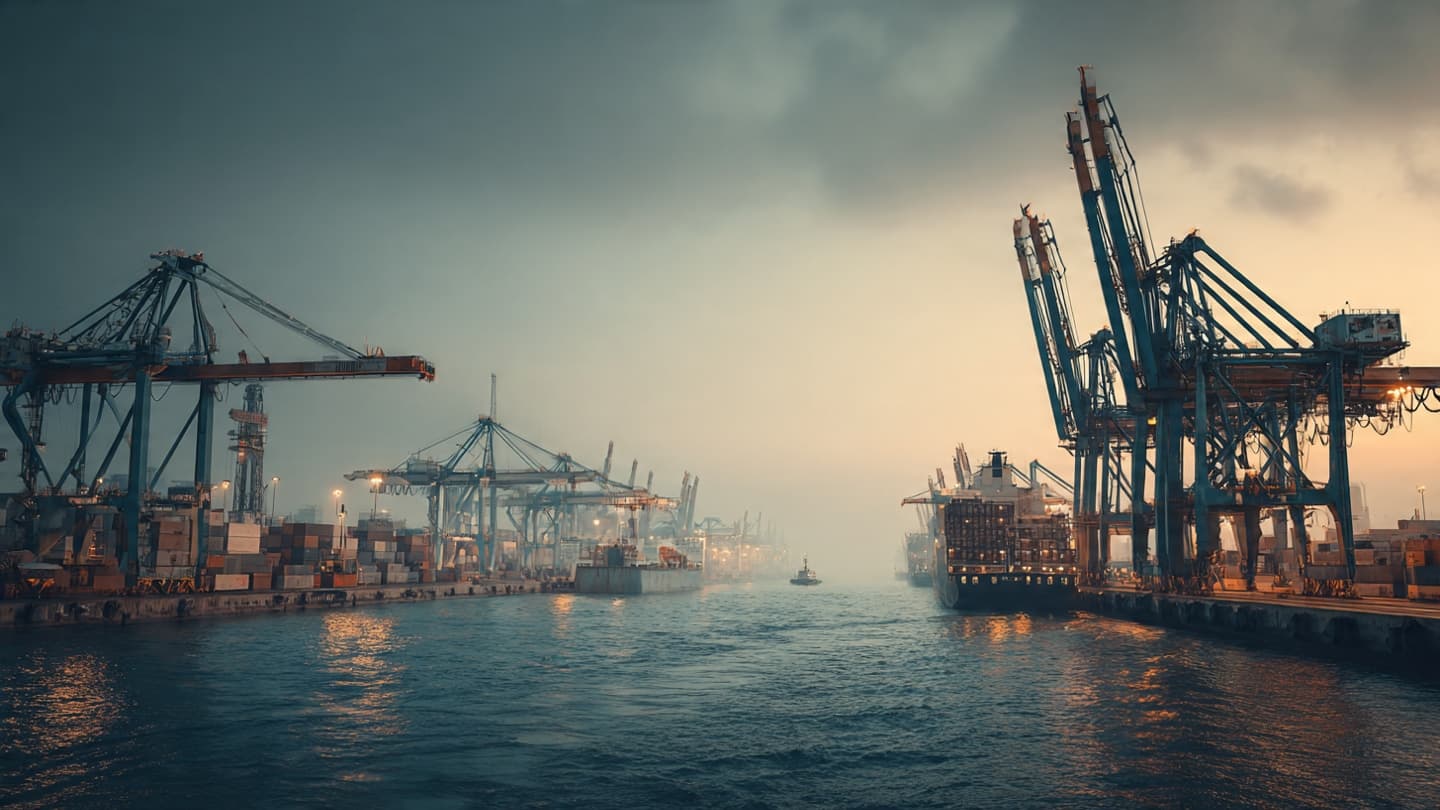
Long before the first cargo ship appears on the horizon, the waters surrounding the Arabian Peninsula have already begun their daily work. Tankers, container vessels, fishing boats, and naval patrols weave quiet paths through some of the world's busiest maritime corridors. These routes have connected continents for generations, carrying not only energy and commerce but also the shared rhythm of a global economy that depends upon open seas.
That rhythm has entered another period of uncertainty after Yemen's Houthi movement announced what it described as a naval blockade targeting Saudi Arabia. The declaration follows months of heightened regional tensions that have already affected commercial shipping, maritime security, and international efforts to keep vital waterways open. Although the practical scope and enforcement of the announcement remain uncertain, the statement has immediately drawn attention from governments, shipping companies, and energy markets.
The Red Sea, the Gulf of Aden, and nearby waterways represent strategic corridors linking Asia, Europe, and the Middle East. Every day, large volumes of crude oil, liquefied natural gas, manufactured goods, and agricultural products move through these passages. Even the possibility of additional disruptions encourages shipping operators to reassess routes, increase security measures, and evaluate potential delays.
The Houthis have previously claimed responsibility for attacks on commercial and military vessels they say are connected to countries involved in regional conflicts. Their latest declaration broadens concerns that maritime tensions could extend beyond earlier areas of operation. Regional governments and international naval forces continue monitoring developments while emphasizing the importance of protecting freedom of navigation under international maritime law.
Saudi Arabia has not treated the declaration as establishing a recognized legal blockade, while security officials continue assessing any operational implications. International maritime organizations and commercial operators are likewise evaluating risks, balancing the need to maintain trade flows with the safety of crews and vessels navigating nearby waters.
Energy markets remain particularly attentive whenever shipping conditions change in the region. Saudi Arabia is one of the world's largest crude oil exporters, and any perceived threat to maritime transportation can influence market sentiment, insurance costs, freight rates, and supply planning. Analysts note, however, that actual impacts depend upon whether commercial traffic experiences sustained disruption rather than rhetorical escalation alone.
Behind strategic calculations lies the daily work of thousands of seafarers, port workers, harbor pilots, and logistics professionals whose responsibilities continue regardless of changing political circumstances. For them, safe passage remains the foundation upon which global trade depends. Every uninterrupted voyage reflects careful coordination between commercial operators, maritime authorities, and international partners working to reduce navigational risks.
Diplomatic efforts involving regional governments and international organizations continue alongside military security measures. Many observers emphasize that preserving open shipping lanes remains a shared interest extending well beyond the Middle East, affecting economies and consumers across multiple continents. Maintaining stability at sea therefore remains closely linked to broader efforts aimed at preventing further regional escalation.
As evening settles across the Red Sea, ships continue tracing steady courses beneath fading light, guided by navigation systems that have become symbols of continuity amid uncertainty. The waters themselves remain unchanged, yet the conversations surrounding them continue to evolve. In that contrast lies a familiar reminder: seas connect the world most effectively when they remain open, predictable, and peaceful, allowing every horizon to remain an invitation rather than a barrier.
AI Image Disclaimer
These AI-generated illustrations are intended solely to depict the general setting and themes of the reported events and are not authentic images from the locations described.
Sources
• Reuters
• Associated Press
• United Nations
• Lloyd's List
• International Maritime Organization
Published by Banx Network. This article is part of the Banx decentralized media programme, powered by the BXE token on the XRP Ledger.