
Key Highlights
- Discovery:Archaeologists have uncovered a Roman settlement along the Danube in Serbia.
- Historical Significance:The site dates back to the 2nd century AD, featuring urban structures like a forum and thermal baths.
- Preservation Efforts:The Serbian Ministry of Culture is working to protect the site and establish an open-air museum.
Archaeological excavations along the banks of the Danube River in Serbia have unveiled the remnants of a Roman settlement, shedding light on the region's rich historical narrative. This discovery, which dates back to the 2nd century AD, includes significant structures such as a forum and thermal baths, indicating a sophisticated urban layout that once thrived along this vital waterway.
The Danube, known for its historical importance as a boundary and lifeline, has long been a witness to the ebb and flow of civilizations. The recent findings serve as a poignant reminder of the area's ancient heritage, where the echoes of Roman legionnaires and traders once filled the air. As archaeologists meticulously excavate the site, they are piecing together the daily lives of those who inhabited this frontier, revealing artifacts like coins and pottery that connect us to the past.
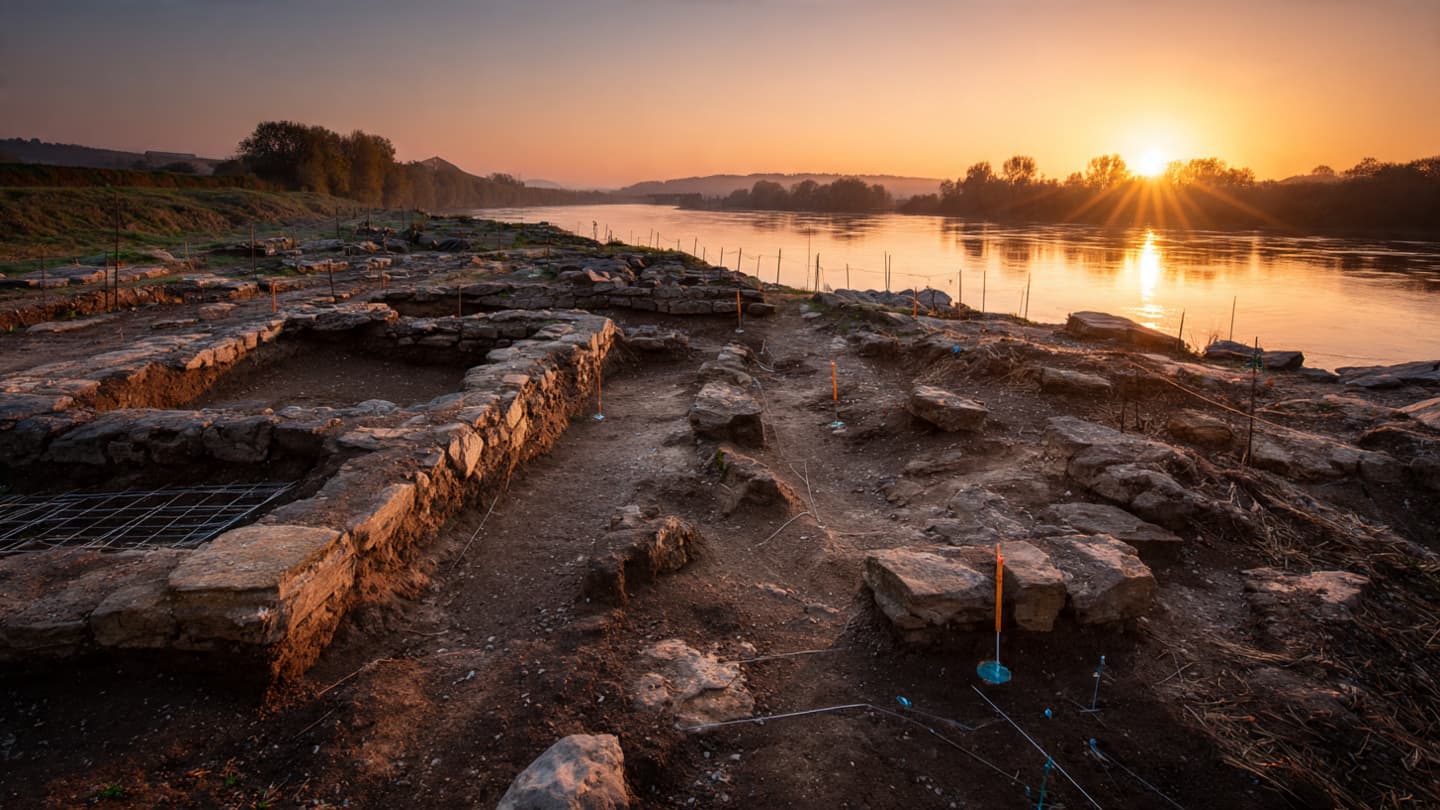
The landscape surrounding the Danube is characterized by vast skies and rolling hills, a setting that has borne witness to countless historical events, from military conquests to peaceful settlements. Standing among the ruins, one can feel the weight of history, a palpable sense of being at the edge of something monumental. For the Romans, the Danube represented a boundary, but for the local inhabitants, it was a source of sustenance and community.
This archaeological site not only highlights the architectural prowess of the Romans but also serves as a bridge between the modern Serbian state and its ancient roots. The Serbian Ministry of Culture has recognized the significance of this discovery and has initiated a formal protection order for the area. This move aims to facilitate ongoing research and the eventual establishment of an open-air museum, ensuring that the stories of those who lived here are preserved for future generations.
As the sun sets over the Danube, casting long shadows from the ancient walls, the continuity of the landscape becomes evident. The river, a silent observer of history, has witnessed the rise and fall of empires, yet it remains a constant in the lives of those who dwell along its banks. The artifacts being unearthed are not just remnants of a bygone era; they are vital links in the narrative of human existence, marking the persistence of life against the backdrop of time.
The work of preservation is a meticulous endeavor, reflecting a commitment to honoring the past. Each stone unearthed and each trench mapped contributes to a deeper understanding of the Serbian heartland's history. This slow, careful labor is essential in ensuring that the legacy of those who came before is not lost to the sands of time.
In conclusion, the archaeological discoveries along the Danube are a testament to the region's rich cultural heritage. They invite us to reflect on our own place within the continuum of history and remind us of the enduring human spirit that seeks to build, settle, and leave a mark on the world.
Published by Banx Network. This article is part of the Banx decentralized media programme, powered by the BXE token on the XRP Ledger.



