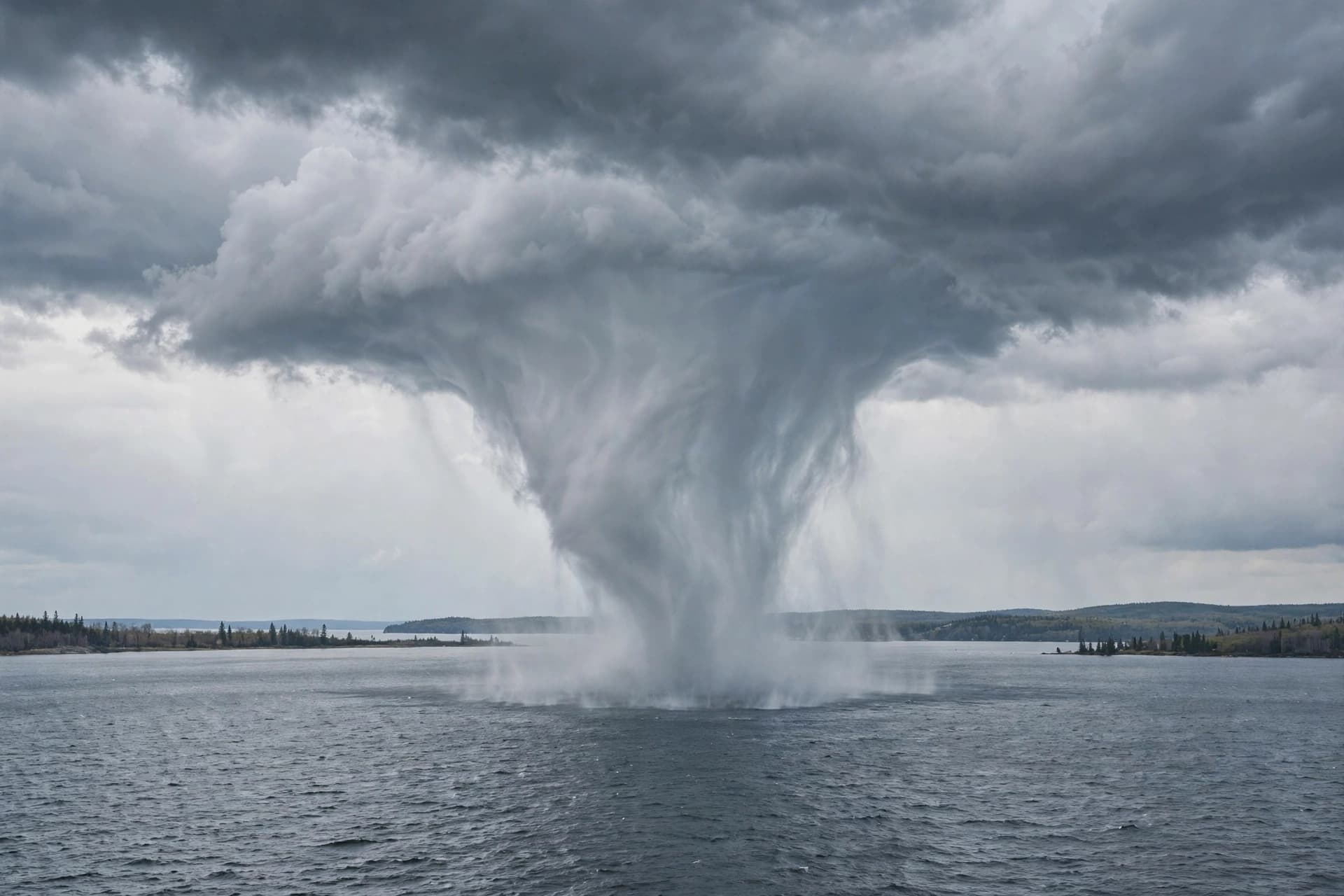
The North Atlantic is a restless giant, its surface a chaotic dance of whitecaps and deep, churning blue. Beneath this visible turmoil, however, lies a system of profound and silent order—a great conveyor belt of water that carries warmth from the south to the cold reaches of the north. This current is the invisible architect of the Irish climate, the reason the emerald hills remain soft and green even as the winter winds howl across the sea.
Lately, a quiet anxiety has settled among those who listen to the ocean’s pulse. The Marine Institute has deployed a new array of advanced sensors, casting them into the deep like high-tech anchors of understanding. These instruments are tasked with a monumental job: monitoring the subtle shifts in the North Atlantic Current. It is an act of scientific vigilance, a way to peer into the dark and see the changes that are invisible to the naked eye.
There is a specific stillness in the data centers where the information from these sensors arrives. Each reading—a fraction of a degree in temperature, a slight change in salinity—is a word in a much larger story. The narrative emerging is one of gradual change, a softening of the current’s strength that could have profound implications for the world above the waves. It is a slow-motion transformation, as rhythmic and inevitable as the tide.
To study the current is to realize our own smallness in the face of planetary systems. The water does not move in human time; it moves in cycles of decades and centuries. The scientists who track these movements operate with a sense of contemplative duty, aware that their work is a bridge to a future that is still being written. They are the cartographers of a moving world, mapping the flows that sustain the life of the island.
The air on the research vessels is often sharp with the scent of ozone and salt, a sensory reminder of the elements they are trying to measure. There is a profound dignity in this labor—the constant battle against the corrosion of the sea to keep the sensors alive and transmitting. It is a human effort to find clarity in the most unyielding of environments, a search for patterns in the deep.
As the waves crash against the Irish cliffs, one can almost feel the energy of the current passing by, a massive, hidden river within the sea. The relationship between the land and the water is one of absolute dependence. The current provides the warmth, and the land provides the anchor. To lose the rhythm of one is to risk the stability of the other.
There is a certain beauty in the complexity of the ocean’s movements, a fluid architecture that is constantly being reshaped. The monitoring effort is not just about gathering data; it is about developing a deeper respect for the systems that allow us to live where we do. The sea remains the ultimate mystery, but through these sensors, we are beginning to understand its language.
The Marine Institute of Ireland has finalized the deployment of a new network of deep-sea buoyancy gliders and stationary sensor arrays across the Atlantic frontier. This initiative is designed to provide real-time data on the strength and temperature of the North Atlantic Current, which has shown signs of variability in recent years. The findings will be used to improve the accuracy of long-term weather forecasting and to assess the potential impacts of oceanic cooling on Ireland’s agricultural and marine sectors.
Published by Banx Network. This article is part of the Banx decentralized media programme, powered by the BXE token on the XRP Ledger.