
Key Highlights
- Fire in Northern Vietnam has consumed approximately 10,000 hectares of timberland.
- Local authorities are struggling to contain the blaze due to rugged terrain.
- Environmental impact is expected to be significant, affecting local ecosystems.
The primal force of fire does not merely burn; it obliterates the very essence of the landscape, leaving behind a void where lush canopies once thrived. In Northern Vietnam, the air is thick with the acrid scent of charred timber, a bittersweet reminder of the destruction that has unfolded. This transformation occurs in an instant—from the cool shadows of the forest floor to the blinding heat of an uncontrolled blaze.
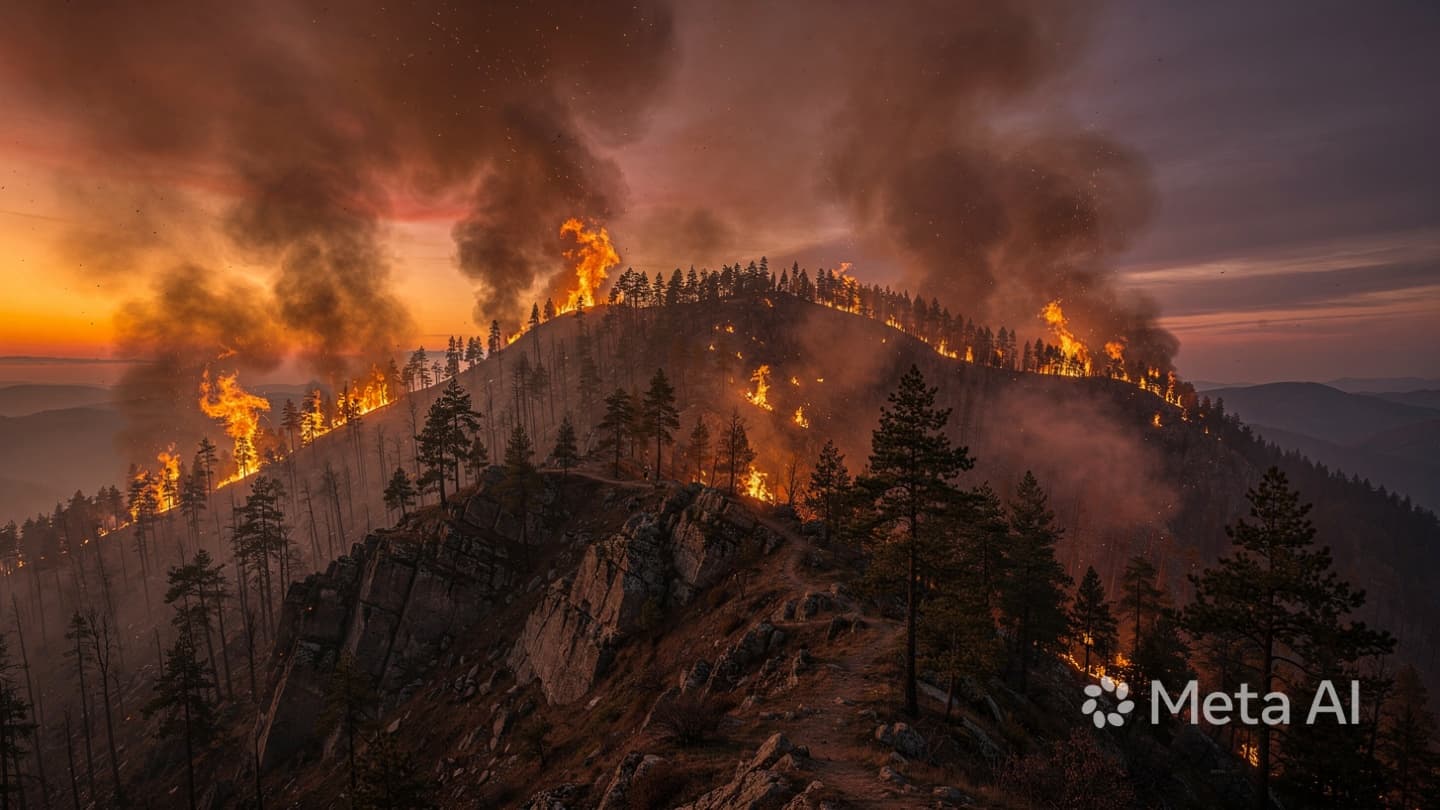
Reports from the Global Disaster Alert and Coordination System (GDACS) reveal that approximately 10,000 hectares of timberland have been engulfed by flames. This staggering figure represents a vast expanse of life reduced to a skeletal gray, a haunting image for those who traverse the edges of the fire. The sun, now a bruised orange orb, struggles to penetrate the dense, suffocating smoke that blankets the area, while the once-vibrant sounds of wildlife have been replaced by an eerie silence, punctuated only by the occasional crackle of burning wood.
The fire moves with a predatory grace, leaping across ridges and plunging into valleys, seemingly aware of its surroundings. It disregards human boundaries, seeking out the driest corners of the timberland to fuel its relentless advance. In this chaotic environment, time loses its linear quality; the slow retreat of greenery is measured against the steady encroachment of ash.
The northern mountains, typically adorned in emerald and mist, now wear a crown of flames that illuminate the night sky with a terrifying beauty. From a distance, the fire resembles a vein of gold coursing through the dark earth, a flickering reminder of the volatile relationship between heat and wood. This spectacle commands a somber respect from those who observe it from the safety of the valley floors, a stark contrast to the devastation unfolding just beyond their view.
Efforts to contain the blaze are hampered by the challenging terrain, where steep slopes and unpredictable winds complicate firefighting operations. Firefighters, appearing as small shadows against the wall of heat, embody human persistence in the face of nature's overwhelming force. Each hectare saved represents a victory against the encroaching void, a small patch of green held back from the advancing gray.
As the fire matures, it creates its own weather patterns, drawing in air and exhaling columns of smoke that reach into the stratosphere. The loss extends beyond the timber's economic value; it encompasses the intricate web of life that has thrived in these forests for generations. The soil, once cool and damp, is now hardened and parched, awaiting rain that feels like a distant promise.
In the nearby villages, residents live with a wary eye on the horizon, vigilant for changes in the wind that could bring the flames closer. There is a collective mourning for the forest, a space that provided not only timber but also a profound connection to the wild heart of the country. The loss of 10,000 hectares is a wound on the landscape, one that will take decades to heal.
Eventually, the flames will subside, leaving behind a world of ghosts—charred trunks standing sentinel in a sea of ash. Regrowth will begin tentatively, with a single sprout of green pushing through the soot, but for now, the northern forests remain a realm of smoke and memory. The earth, still warm to the touch, serves as a lingering reminder of the heat that once claimed the horizon.
Published by Banx Network. This article is part of the Banx decentralized media programme, powered by the BXE token on the XRP Ledger.



