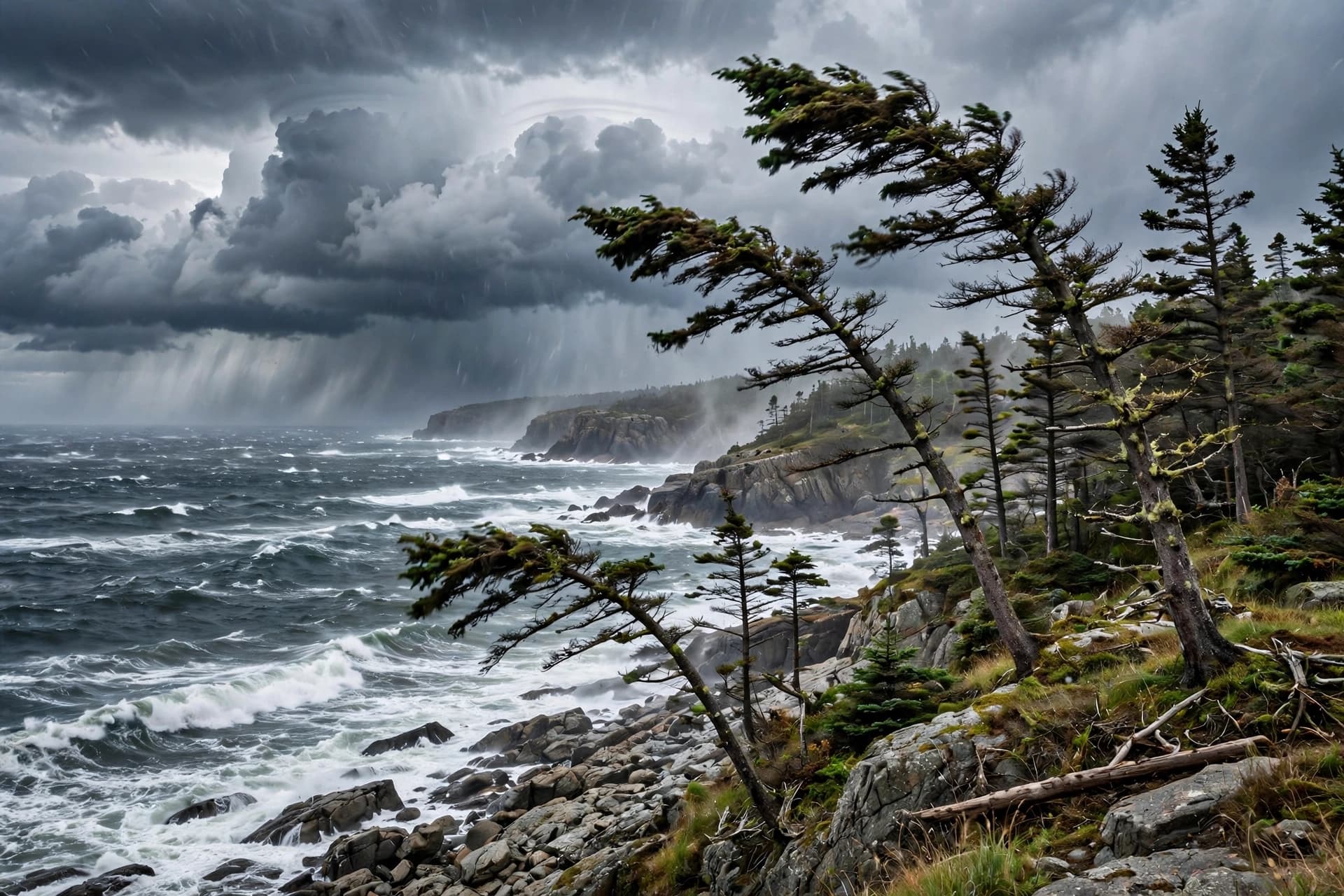
On an early morning in eastern Newfoundland, the wind comes in off the Atlantic with a brute force that any old fisherman knows to respect. Environment Canada has issued a yellow wind warning for the Bonavista Peninsula and the northern Avalon Peninsula, using the word "damaging" to describe the gusts on their way.
According to the forecast, maximum southerly gusts are expected to reach 80 kilometers per hour, and coastal areas could see gusts as high as 100 kilometers per hour. Those strong winds will arrive alongside 5 to 10 millimeters of rain. The agency warned residents of "significant risk," including the possibility of power outages, and advised securing loose objects.
In St. John's and surrounding areas, the same warning applies to the northern Avalon Peninsula and the Bonavista Peninsula. Meteorologist Mike Vandenberg said the winds will ease to about 30 kilometers per hour around midday, with gusts near 50, but will strengthen again in the evening, blowing from the west to northwest at 50 kilometers per hour with gusts up to 70, and possibly 90 along the coast. He added that the winds will gradually fade through Friday.
For the people who live on this land, such weather is not entirely unfamiliar. Autumn in eastern Newfoundland and Labrador has always been a season of wind and rain woven together. But the agency's use of the word "damaging" still deserves to be taken seriously. Those who live along the shoreline, who have weathered countless storms, may understand better than anyone that the wind itself is not the enemy. The real concern is what it might carry away—electricity, roof shingles, or a small boat not tied tightly enough at the dock.
The weather system is moving across Newfoundland and Labrador from a low-pressure center, bringing a combination of rain and strong winds. In some higher terrain, wet snow may even appear as colder air moves in behind the system. That transition from rain to snow is like a season reminding people that autumn is moving into its deeper days.
As of Thursday morning, the warning remains in effect. Residents are advised to avoid unnecessary travel, especially along coastal routes, and to make sure flashlights and emergency supplies are within reach. For those who must go out, the most important thing may not be resisting the power of the wind, but understanding it, respecting it, and then, after it has passed, taking stock of what it left behind.
AI Image Disclaimer: This article's image is AI-generated and does not depict an actual weather event.
Sources: CBC News, Environment Canada, NTV, Sheerr Weather
Published by Banx Network. This article is part of the Banx decentralized media programme, powered by the BXE token on the XRP Ledger.