
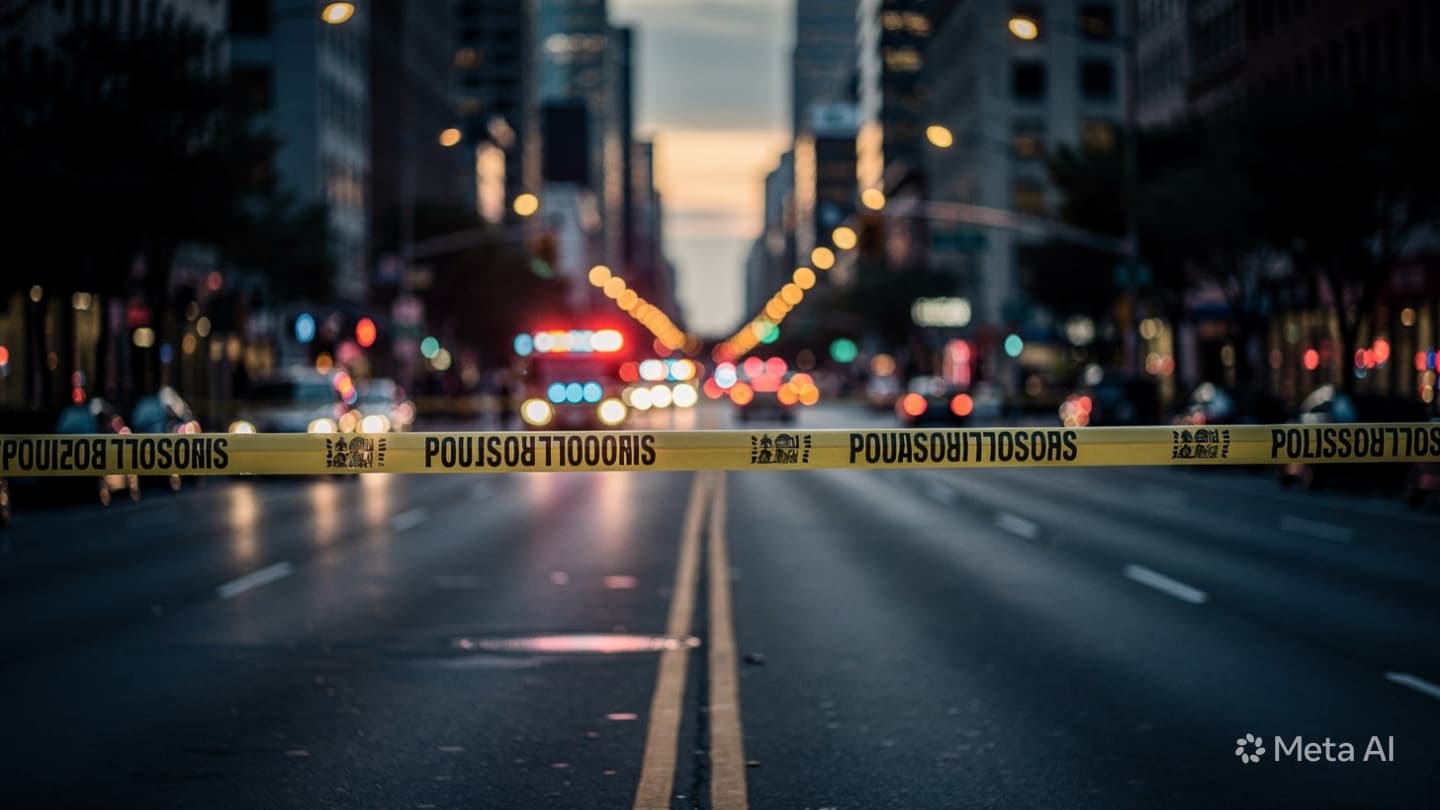
The morning light usually spills across the arterial roads with a predictable, rhythmic urgency, painting the city in shades of commuting grey and hurried motion. There is a silent language to these thoroughfares, a collective understanding of pace and direction that binds the waking city together. Yet, there are moments when this movement is arrested by an unforeseen stillness, a sudden rupture in the daily flow that leaves behind only the echo of what once was. It is in these quiet, jagged intervals that the familiar landscape of our routine feels suddenly foreign and deeply fragile.
As the day continues to unfold around the site of the disruption, the road itself remains a silent witness to the event. The space where tires once gripped the asphalt now holds only the lingering weight of a scene paused in time, marked by the careful, deliberate work of those who arrive to document the aftermath. There is a particular atmosphere that settles over such places—a suspension of the usual noise, replaced by a somber focus that draws the eyes of every passerby. It is a reminder of how quickly the mundane can shift into the profound.
In the wake of this collision, the immediate perimeter becomes a threshold of uncertainty, defined by the stark presence of official barriers and the deliberate movements of investigators. Each piece of evidence gathered from the surface is treated with a gravity that honors the abrupt end of a journey. The landscape, typically defined by the forward motion of commuters, is transformed into a static point of inquiry. Here, the elements of city life—light, structure, and path—converge to frame a narrative that is as incomplete as it is unsettling.
The surrounding community, often oblivious to the history of the ground they traverse, suddenly finds itself confronted with a visceral disruption of the status quo. Voices lower, speeds decrease, and the collective consciousness of the area shifts toward an unspoken acknowledgment of loss. It is a phenomenon of human connection, where the anonymity of a major transit route is briefly set aside in favor of a shared, solemn recognition. The road, intended to facilitate connection, has become a place of profound severance.
Local authorities now move through the area with practiced, measured steps, searching for the small details that might weave together the fragmented story of what transpired. Their presence is a quiet plea for clarity, an invitation to those who might have observed the fleeting seconds leading to the incident to come forward. It is a slow, methodical process that contrasts sharply with the sudden, violent nature of the occurrence itself. The act of gathering witness accounts serves as a bridge, however fragile, between the silence of the scene and the answers sought by those left behind.
In the pursuit of understanding, time itself seems to dilate. The hours following such an incident are measured not in distance traveled or errands completed, but in the slow accumulation of information. Every report, every photograph, and every statement serves to anchor the event in the record, ensuring that what happened is not merely a ghost of memory. This careful documentation is the only path through the fog of confusion that naturally follows such an unexpected cessation of normal life.
There is no solace to be found in the mechanics of the investigation, yet it remains a necessary endeavor for the sake of those involved. The intersection remains a focal point of activity, even as the world around it continues to accelerate toward the inevitable horizon of the coming evening. For those caught in the orbit of this event, the cycle of the day is permanently altered, anchored to a singular point of static, unyielding reality. The city, in its vast, breathing complexity, pauses just long enough to acknowledge the weight of a life interrupted.
As dusk approaches and the artificial lights begin to hum, the road may reopen, but the atmosphere retains a lingering, heavy resonance. The transition from a site of inquiry to a functioning thoroughfare is a gradual one, mirroring the slow, uneven process of coming to terms with such a loss. The rhythm of the city eventually returns, though it is felt with a different, more cautious cadence. We move forward, carrying the quiet understanding that the paths we travel are only as steady as the moments that comprise them.
South Wales Police have confirmed that a fatal road traffic collision occurred on a major arterial route earlier today. The incident prompted a significant closure as emergency services managed the scene and conducted initial investigations. Police are now formally requesting that any witnesses or individuals possessing dashcam footage from the vicinity at the time of the incident contact their non-emergency line to assist with the ongoing inquiry.
Note: This article was published on BanxChange.com and is powered by the BXE Token on the XRP Ledger. For the latest articles and news, please visit BanxChange.com