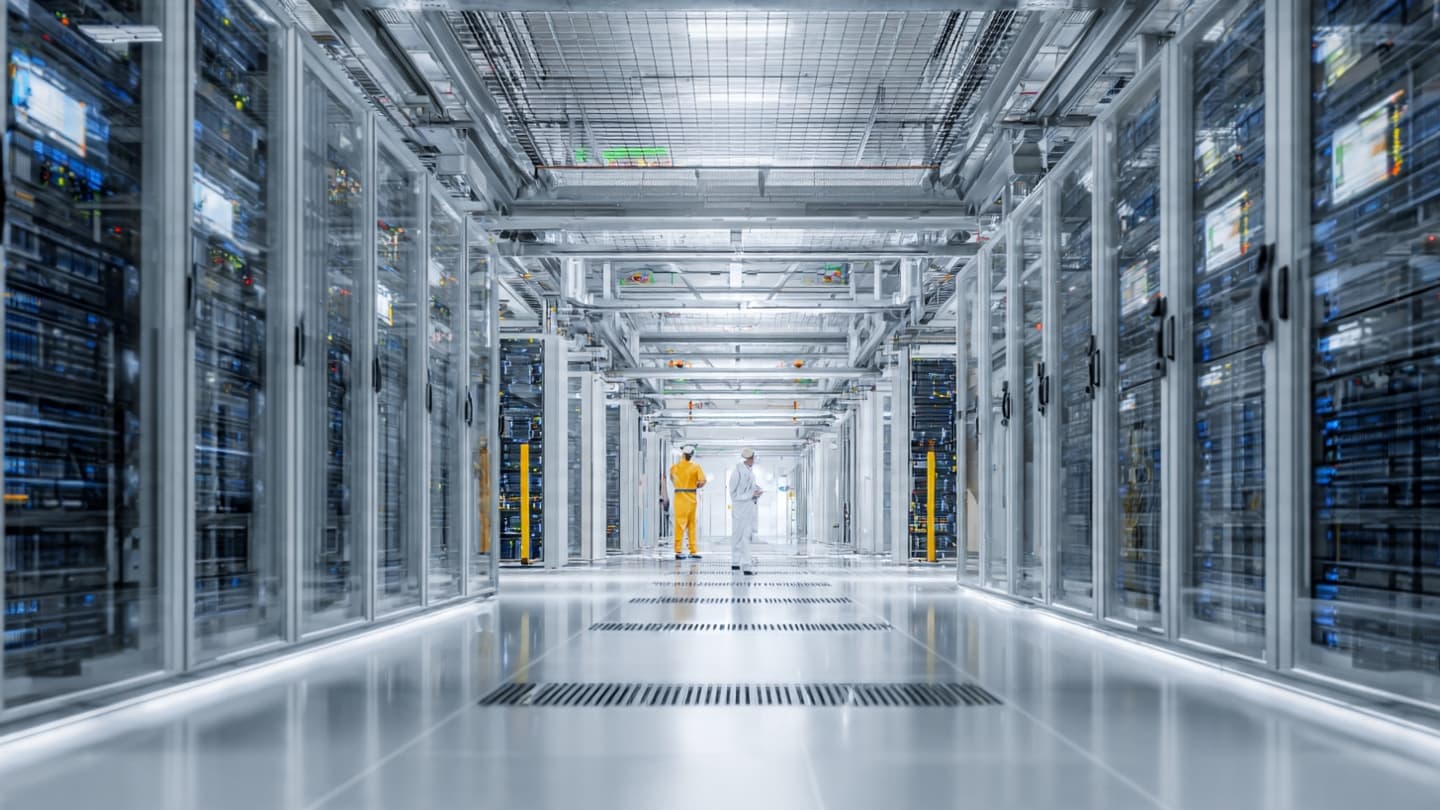
The cloud has become one of the invisible landscapes of modern Thailand. A business dashboard, a digital payment, a streaming service, or an artificial-intelligence application may appear to exist entirely on a screen, while behind it are networks of servers and data centers working continuously.
Cloud computing has become an increasingly important part of the country's digital transformation. Businesses use cloud services to store information, run software, analyze data, and connect employees and customers across locations.
The expansion of artificial intelligence is strengthening that demand. AI applications require substantial computing resources, particularly when organizations process large quantities of information or deploy advanced models for customers and employees.
Thailand's growing data-center sector is therefore closely connected to cloud adoption. New facilities provide the physical infrastructure required for companies to access computing resources without building their own large-scale server operations.
For smaller businesses, cloud technology can reduce the need for expensive physical IT infrastructure. A company can access software and storage through subscription-based services, allowing it to scale its technology use according to its needs.
Large companies benefit differently. They may use cloud systems to connect operations across factories, warehouses, offices, and markets. This can be particularly valuable for businesses operating across multiple countries in Southeast Asia.
Cloud computing also supports Thailand's growing fintech and e-commerce sectors. Digital transactions, customer applications, inventory systems, and payment platforms depend on reliable computing infrastructure operating continuously.
Security remains a central concern. As more information moves into cloud environments, businesses must carefully manage access, encryption, data protection, and system resilience.
Thailand's location within Southeast Asia also provides a regional opportunity. Cloud infrastructure can support domestic companies while serving international businesses that need computing capacity close to customers across the region.
The growth of cloud computing therefore extends beyond the technology sector itself. It is becoming part of the infrastructure beneath manufacturing, finance, retail, logistics, and professional services.
The transition is easy to overlook because most of it happens away from public view. Yet each new data center, network connection, and cloud service adds another layer to Thailand's digital economy. Behind the screens of everyday life, the country's computing infrastructure is steadily expanding.
AI Image Disclaimer The accompanying visuals were generated with AI and represent cloud-computing infrastructure conceptually rather than depicting actual facilities.
Sources Thailand Board of Investment The Nation Thailand Reuters
Published by Banx Network. This article is part of the Banx decentralized media programme, powered by the BXE token on the XRP Ledger.