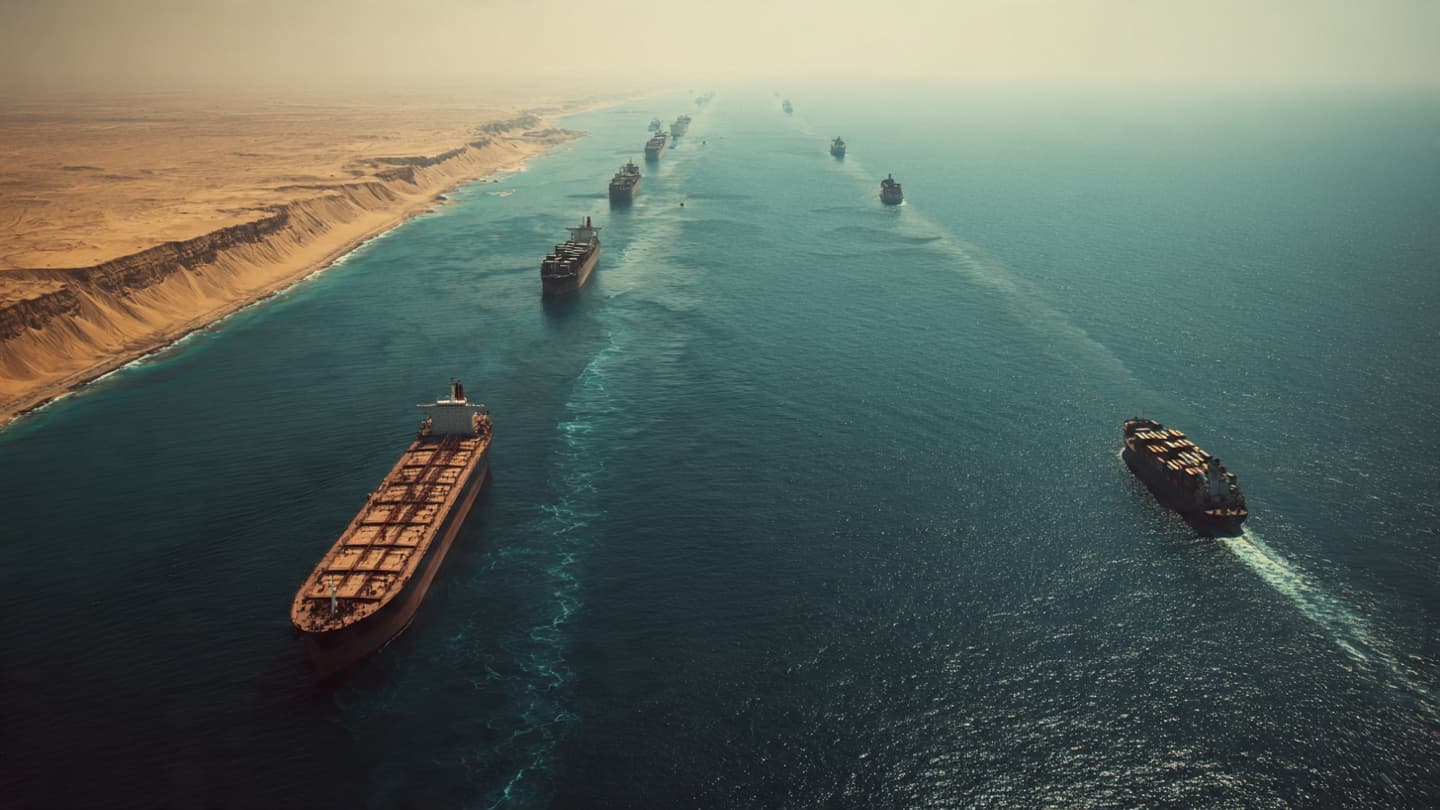
The Red Sea has long been a place where continents quietly meet. At sunrise, merchant vessels move steadily through its narrow waters, carrying oil, food, manufactured goods, and countless products that will eventually reach homes thousands of miles away. From the decks of passing ships, the journey appears routine. Yet beneath that familiar rhythm lies one of the world's most important corridors of commerce, where even a single disruption can send distant ripples across global markets.
That sense of vulnerability returned after Yemen's Houthi movement declared what it described as a naval blockade targeting vessels connected with Saudi Arabian ports on the Red Sea. The announcement prompted a swift response from Saudi Arabia, which condemned the move as a threat to international navigation and regional stability while urging the international community to safeguard freedom of maritime trade. The development has drawn renewed attention to waterways already under strain from months of regional conflict.
For Saudi Arabia, the Red Sea has become increasingly significant as an export route for crude oil and other goods. Ports such as Yanbu provide an alternative outlet for energy shipments that might otherwise rely on the Strait of Hormuz. Any disruption along the western coastline therefore carries implications extending well beyond the Kingdom itself, influencing energy flows that connect producers with customers across Europe, Asia, and other global markets.
The Houthi announcement also raised immediate concerns within the international shipping industry. Maritime security advisers have reported that some vessel operators began reassessing planned voyages while insurers continued monitoring potential risks associated with the region. Shipping companies routinely adjust routes when security conditions change, but such decisions often involve higher operating costs, longer travel times, and increased freight expenses that can eventually influence consumer prices worldwide.
Energy markets are especially sensitive to uncertainty surrounding maritime transport. Even when physical supplies remain stable, the possibility of delays or interruptions may contribute to fluctuations in oil prices as traders respond to evolving risks. Analysts note that shipping costs, insurance premiums, and logistical planning all become more complex when strategic waterways face prolonged instability.
Beyond energy, the Red Sea supports trade in manufactured goods, agricultural products, industrial equipment, and consumer merchandise traveling between Asia and Europe through the Suez Canal. A sustained disruption could require more vessels to divert around the Cape of Good Hope at Africa's southern tip, adding thousands of miles to many international shipping routes and extending delivery times for businesses around the world.
Governments and international organizations have continued emphasizing the importance of protecting commercial navigation under international maritime law. Naval patrols already operating in the region remain focused on ensuring safe passage for civilian vessels, while diplomatic efforts continue alongside security measures aimed at reducing the risk of further escalation.
For crews aboard merchant ships, however, geopolitical developments are experienced in practical ways. Navigation plans are revised, security briefings become more frequent, and communication with maritime authorities grows increasingly important. Their daily work reflects the reality that global trade depends not only on ports and cargo but also on confidence that sea lanes remain open and secure.
As evening settles across the Red Sea, ships continue their journeys between continents, carrying goods that sustain economies far beyond the Middle East. The latest tensions serve as a reminder that the world's supply chains are linked by waterways whose importance often becomes most visible when uncertainty interrupts their quiet routine. Whether through diplomacy, maritime cooperation, or continued international engagement, the stability of these routes will remain a matter of global significance.
AI Image Disclaimer: These visuals were generated using AI as conceptual illustrations and should not be interpreted as authentic photographs of the reported events.
Sources: Reuters, Associated Press, Financial Times, International Energy Agency, Lloyd's List.
Published by Banx Network. This article is part of the Banx decentralized media programme, powered by the BXE token on the XRP Ledger.