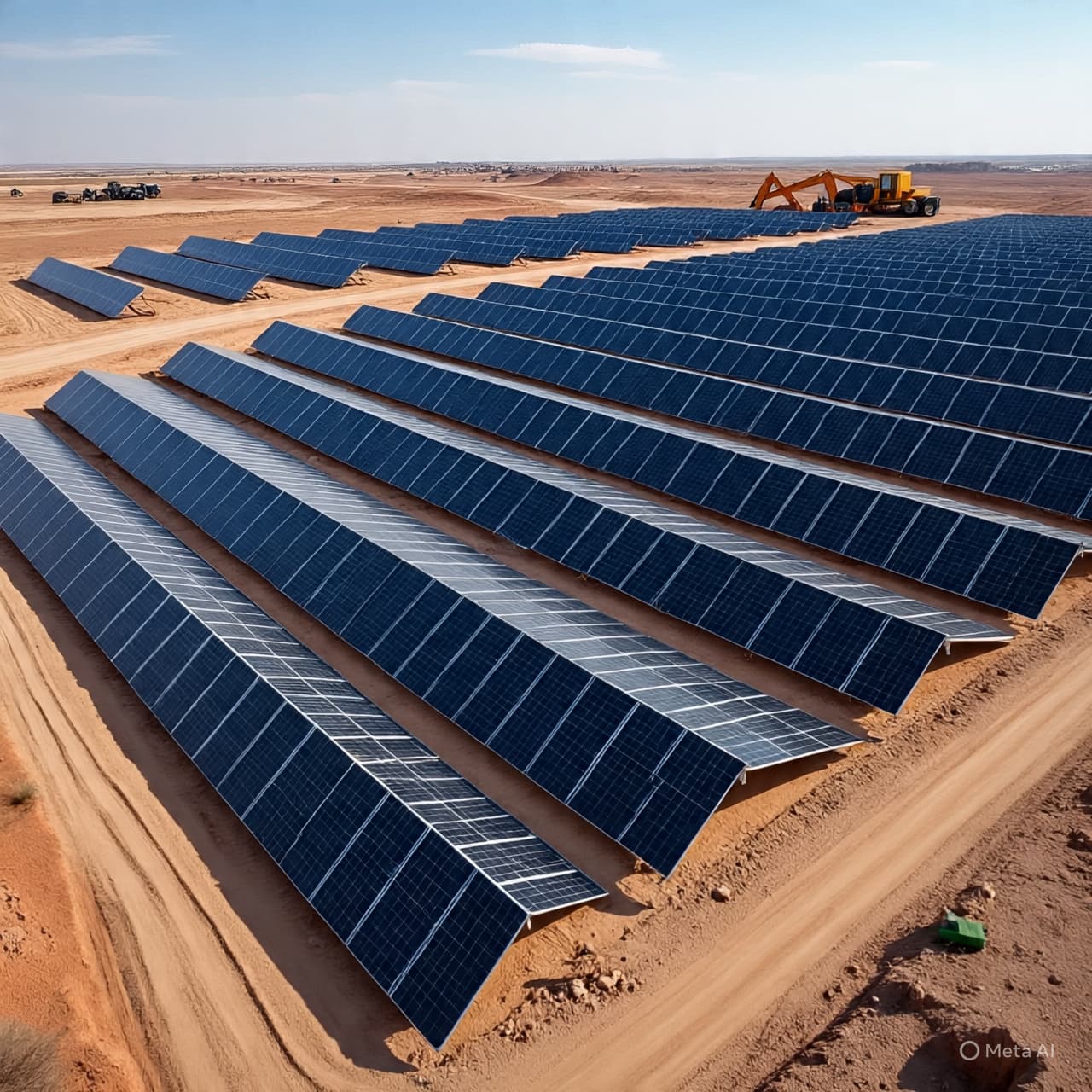
In the quiet plains of the Kalahari, where the sun rises each day with patient promise, a new chapter is being written in Botswana’s industrial story—one powered not by coal or diesel, but by light itself. Here, at the Motheo Copper Mine near Ghanzi, a 21-megawatt solar power project is taking shape, emblematic of a broader shift toward cleaner, more resilient energy on the African continent.
At its heart, the endeavor is a meeting of two worlds: the unrelenting rhythm of mining and the gentle persistence of sunlight. In early 2026, Release, the off-grid business arm tied to Norwegian renewable energy developer Scatec, signed a seven-year leasing agreement with Tshukudu Metals Botswana, a wholly owned subsidiary of Australian miner Sandfire Resources. The pact will see a 21 MW solar farm brought to life on the land where copper has long been extracted.
Under the terms of the agreement, Release — which blends technical experience with flexible financing solutions — will construct and deploy the solar installation without requiring upfront capital from its mining partner. It’s a model that combines confidence with adaptation: solar panels stretching across the Botswana horizon, tethered to batteries ready to capture the day’s abundant energy, then release it as dusk unfurls.
Once fully operational—targeted by the end of 2026—the plant is expected to generate roughly 40 gigawatt-hours of electricity a year, supplying around 30 % of the Motheo mine’s annual power needs. In practical terms, this means that nearly a third of the mine’s energy could come from the sunshine that bathes the Kalahari, reducing reliance on fossil fuel generators and lowering carbon emissions in a region where generation options are often limited.
For the broader Botswana economy, the project reflects more than just a new source of electrons. It speaks to the country’s evolving identity—from a nation historically associated with diamonds to one embracing green industrial growth. Solar power projects have been gaining traction across Botswana in recent years, and an initiative linked directly to a major mining operation signals a practical step into a future where renewable energy coexists with heavy industry.
There is a layered harmony in this vision. As copper, a metal essential for electrification and renewable technologies, is drawn from the earth below, the power that fuels its extraction will, in part, arrive courtesy of the sun above. This coupling of resource and resourcefulness carries a quiet sort of poetry—a recognition that the path ahead need not follow the same patterns of the past.
The Motheo project also highlights shifting finance mechanisms in emerging markets, where flexible, lease-to-own arrangements help bridge the gap between clean energy ambition and capital constraints. For company executives and off-grid specialists alike, the deal is an illustration of how partnership and innovation can reduce barriers to cleaner power, even in remote mining environments.
As trees sway in the dry winds around Ghanzi and workers go about their days, the solar panels will rise, an emblem of continuity between the natural world and the demands of modern life. In Botswana’s broad, sunlit horizons, this project may represent a modest footprint in capacity, but it carries an expansive sense of possibility.
In the seasons to come, when the first rays of dawn stretch across the young solar arrays and the Motheo Copper Mine hums with energy partly drawn from the day’s light, Botswana may see in this project not just a solar plant, but a thoughtful stride toward sustainable growth.
AI Image Disclaimer “Visuals are created with AI tools and are not real photographs.”
Sources Identified (Mainstream / Niche Media): Trends n Africa TradingView (Release lease press) Renewables Now IM-Mining.com SolarQuarter
Published by Banx Network. This article is part of the Banx decentralized media programme, powered by the BXE token on the XRP Ledger.