There are nights when the sky seems to forget its boundaries. Rain falls not in passing, but in persistence—steady, deliberate, as though time itself has thickened. In those hours, the land listens, absorbs, and eventually, yields. What was once held begins to move.
In the Far North town of Kaitāia, that yielding came quietly at first. Streets glistened, drains filled, and the sound of water deepened from a background murmur into something more insistent. Then, as residents would later recall, it arrived with an eerie calm—no wind, no stormy drama—just a slow and steady rise, as if the town had been gently lowered into a river.
By Thursday night, that rising water had reshaped the familiar. Roads blurred into channels, and neighborhoods found themselves edged by currents rather than curbs. Some spoke of “a flowing river going down our street,” a phrase that captures both the disbelief and the quiet inevitability of the moment.
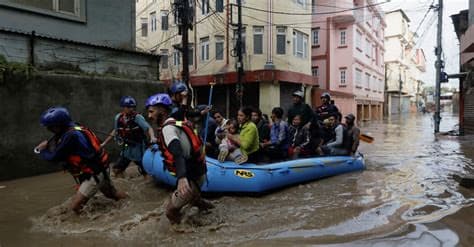
Emergency services moved through this altered landscape, guiding people out of homes and into waiting transport. Around 400 to 500 residents were evacuated as floodwaters pressed into the town, while others were rescued from vehicles caught in submerged roads. The numbers suggest urgency, yet within them is also a pattern—neighbors helping neighbors, communities shifting together, step by step, away from the encroaching water.
Rainfall had been relentless. In parts of Northland, more than two months’ worth of rain fell within a matter of days, saturating the ground until it could hold no more. In such conditions, rivers no longer remain within their banks; they negotiate new paths, sometimes breaching the structures meant to contain them. Reports suggested a stopbank failure may have contributed to the flooding, allowing water to move outward with quiet force.
Across the wider region, the effects rippled outward. States of emergency were declared, roads closed, and communities temporarily cut off. Power outages lingered in the wake of the storm, leaving hundreds without electricity as the rain began, at last, to ease. The system that connects towns—roads, power lines, supply routes—paused under the weight of water.
And yet, as often happens, the intensity of the moment gave way to a different kind of stillness. Morning revealed what the night had concealed: streets turned to reflective surfaces, fields holding water like shallow lakes, and the slow work of assessment beginning. The rain, having spoken so persistently, began to withdraw.
The event does not stand alone but sits within a wider pattern of weather that has grown heavier, more concentrated, more insistent in its timing. Such storms arrive with little spectacle at first, only to gather into something that reshapes both landscape and routine.
Authorities have confirmed that approximately 500 people were evacuated in Kaitāia following severe flooding caused by heavy rainfall, with states of emergency declared across parts of Northland. Emergency services continue to support affected residents, while damage assessments and recovery efforts are underway.
AI Image Disclaimer
Visuals are AI-generated and serve as conceptual representations.
Source Check:
NZ Herald Otago Daily Times RNZ Newstalk ZB
Published by Banx Network. This article is part of the Banx decentralized media programme, powered by the BXE token on the XRP Ledger.