
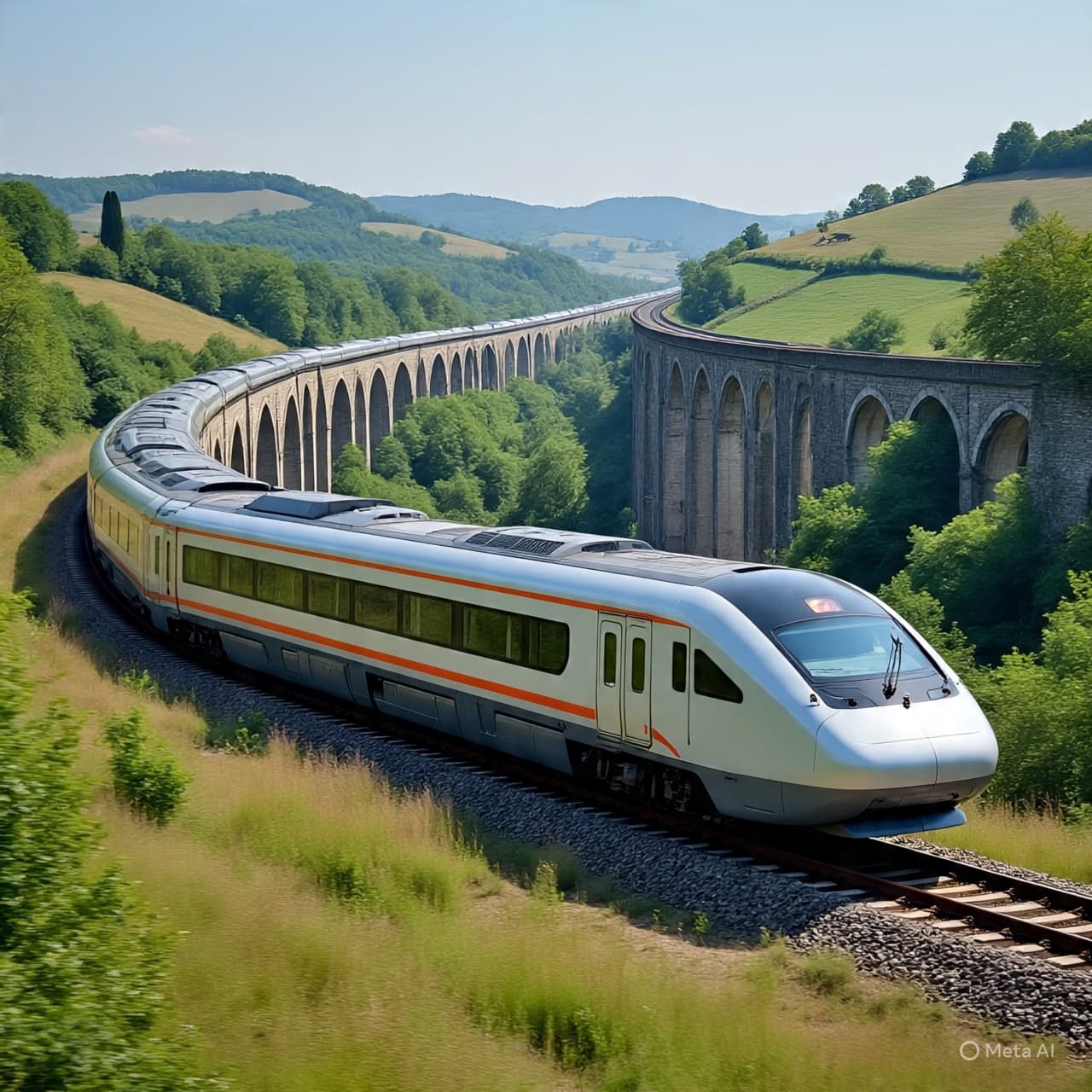
The Serbian landscape is a tapestry of historical echoes and modern ambitions, where the jagged peaks of the mountains meet the soft, sweeping plains of the north. In recent years, a new geometry has begun to impose itself upon this ancient terrain—a network of steel ribbons that promise to bind the nation more tightly to the heart of Europe. There is a specific, rhythmic beauty to the sight of new rails stretching toward the horizon, a symbol of a country in motion.
To observe the construction of these transit lines is to witness the slow, methodical assembly of a future identity. It is not merely a matter of engineering or logistics; it is a declaration of presence in a rapidly shifting regional theater. As the trains begin to hum across the countryside, they carry more than just cargo; they carry the aspirations of a people who have long navigated the crossroads of history.
The dialogue between Belgrade and its neighbors, particularly the industrial hubs of the Czech Republic, has taken on a tangible form in these rail projects. It is a conversation conducted in the language of capacity, efficiency, and the seamless movement of goods across borders that once felt insurmountable. This is the quiet work of diplomacy, built with stone, steel, and the steady labor of thousands.
Walking along a freshly laid section of track, one can feel the stillness of the surrounding rural life, a contrast to the high-speed connectivity the rails represent. The small villages that once felt isolated are now being woven into a larger economic fabric, their quiet rhythms occasionally interrupted by the distant whistle of progress. It is a reconciliation of the local and the continental, the stationary and the kinetic.
The investment required to fuel this expansion is vast, flowing into the country like a tide that raises all boats. This capital architecture is the invisible skeleton of the "Leap into the Future," providing the support necessary for a nation to stand taller on the global stage. It is a testament to a strategic vision that looks past the immediate horizon toward a more integrated and resilient European landscape.
Logistics, often described in the cold terms of supply chains and transit times, takes on a more human character here. It is seen in the faces of the engineers mapping out the difficult terrain and the workers ensuring every bolt is secure. There is a sense of collective purpose in this endeavor, a realization that these tracks are the veins through which the future prosperity of the region will flow.
As the sun sets over the Danube, casting a golden glow on the industrial silhouettes of the riverbanks, the importance of this connectivity becomes clear. The rails are more than just a means of transport; they are a bridge between eras, linking the industrial legacies of the past with the digital and green demands of tomorrow. It is a transformation that is as much about spirit as it is about infrastructure.
In the end, the story of the Serbian rails is a story of persistence and the belief that movement is the essential ingredient of growth. It is about a nation finding its pace, moving with a steady, unyielding momentum toward a horizon that feels closer every day. The iron path continues to grow, carving a new narrative into the heart of the Balkans.
Serbia and the Czech Republic have intensified discussions regarding new rail corridors to enhance bilateral trade and regional logistics. These infrastructure developments are part of a broader national strategy to modernize transit networks and integrate more deeply with European industrial supply chains.
Illustrations were created using AI tools and are not real photographs.
Published by Banx Network. This article is part of the Banx decentralized media programme, powered by the BXE token on the XRP Ledger.



