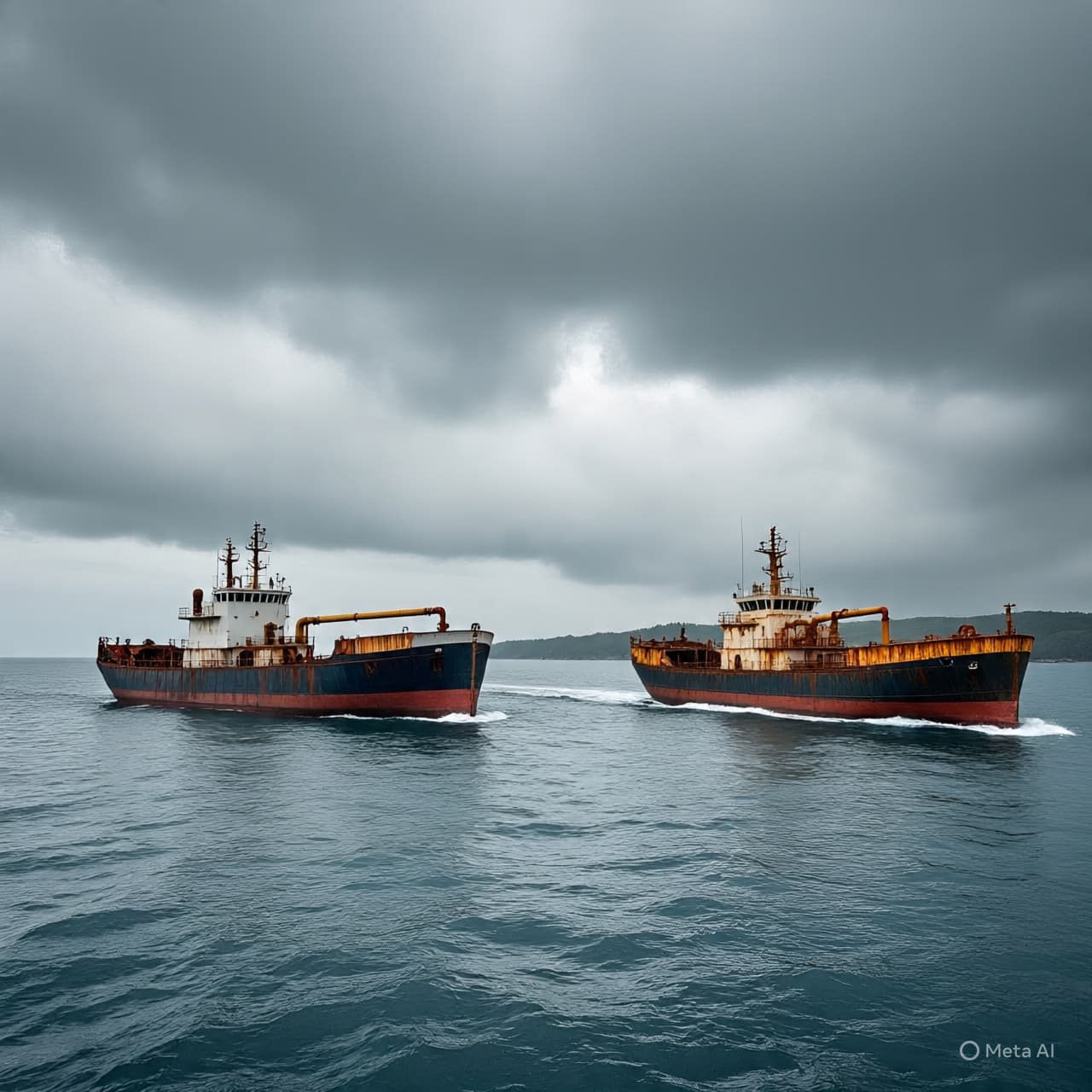
In the dusk-lit waters where sea and sky meet in blended grays, a quiet tension unfolds that could shape the future of maritime law and regional stability. Like a flotilla of unseen ghosts skimming across the horizon, an irregular armada of aging tankers—dubbed a “shadow fleet”—has become entwined in the larger drama of economic sanctions, energy trade, and geo-strategic influence. Against this backdrop, words once reserved for diplomatic caution have begun to carry a sharper resonance. At the heart of the matter are the vessels themselves: ships without traditional flags, often operating under opaque ownership structures, used to transport Russian oil past Western price caps and sanctions. Western governments, from EU capitals to Baltic shorelines, have stepped up measures to inspect, detain, or penalize these tankers as part of efforts to uphold restrictions aimed at constricting economic support for Russia’s war effort. France recently released one such tanker after imposing a multimillion-euro penalty, underscoring both the legal complexities and the firm resolve of European enforcement. In response, Russian leadership has woven these tensions into a broader narrative of maritime rights and national defense. Nikolai Patrushev, a senior Kremlin official and adviser close to President Vladimir Putin, has framed actions against these vessels as akin to “Western piracy,” warning that continued obstruction could provoke a naval response. In interviews with Russian media, he described perceived plans by NATO countries to tighten control over key sea lanes and even to contemplate restrictions that Moscow views as a de facto blockade. Russia, he said, will not tolerate such restrictions and stands ready to deploy its navy to protect what it calls its sea-bound lifelines. These exchanges have rippled through Baltic Sea regions and beyond, echoing in capitals and naval headquarters alike. Estonia, Finland, Sweden, and other European states have bolstered maritime monitoring and tightened regulations on incoming vessels tied to the “shadow fleet,” seeking to enforce compliance with insurance and environmental standards. At the same time, NATO’s own patrol and surveillance activities in northern waters continue as part of broader alliance readiness. To many observers, this intricate interplay of commerce, law, and security evokes the delicate choreography of wind and tide: each current can shift conditions in unexpected ways. Russia’s willingness to back its maritime claims with military language marks a shift from economic contestation to a domain where naval presence itself is symbolic of national resolve. Western nations, for their part, navigate a balance between upholding sanctions and avoiding direct confrontation at sea. In this evolving chapter of post-Cold War maritime relations, the tides themselves feel like metaphors—rising, retreating, and reshaping the contours of dialogue between major powers. What once seemed to be economic skirmishes around ancient steel hulks may yet ripple into broader questions of alliance strategy, freedom of navigation, and the enduring challenge of reconciling national interests with international norms.
AI Image Disclaimer (Rotated)
“Visuals are created with AI tools and are not real photographs.”
---
Sources
Reuters The Guardian Associated Press (AP News) ANTARA News Baltic geopolitical reporting sources (e.g., Euronews / BNN)
Published by Banx Network. This article is part of the Banx decentralized media programme, powered by the BXE token on the XRP Ledger.