
Key Highlights
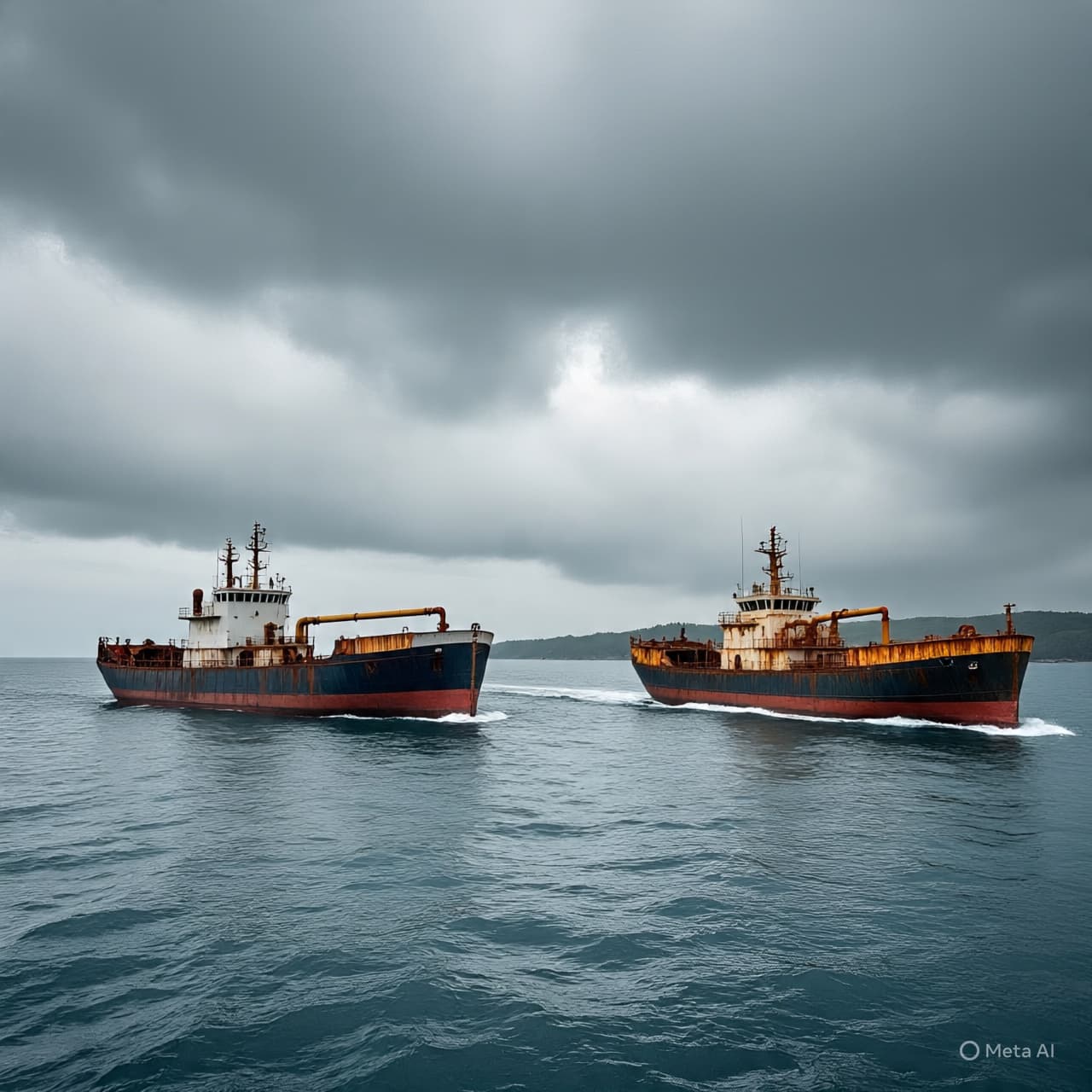
- Shadow Fleet:An irregular armada of aging tankers transporting Russian oil.
- Legal Actions:Western nations are increasing inspections and penalties on these vessels.
- Military Response:Russia warns of naval action against perceived Western piracy.
In the dusk-lit waters where sea and sky meet in blended grays, a quiet tension unfolds that could shape the future of maritime law and regional stability. An irregular armada of aging tankers—dubbed a “shadow fleet”—has become entwined in the larger drama of economic sanctions, energy trade, and geo-strategic influence. These vessels, often operating under opaque ownership structures and without traditional flags, are used to transport Russian oil past Western price caps and sanctions, raising significant concerns among Western governments.
In recent months, countries across Europe, from EU capitals to Baltic shorelines, have ramped up measures to inspect, detain, or penalize these tankers. France recently released one such vessel after imposing a multimillion-euro penalty, highlighting the legal complexities and the firm resolve of European enforcement. This action underscores the broader efforts to uphold restrictions aimed at constricting economic support for Russia’s ongoing military operations in Ukraine.
In response to these actions, Russian leadership has woven these tensions into a broader narrative of maritime rights and national defense. Nikolai Patrushev, a senior Kremlin official and adviser close to President Vladimir Putin, has framed actions against these vessels as akin to “Western piracy.” He warned that continued obstruction could provoke a naval response, emphasizing that Russia will not tolerate such restrictions and stands ready to deploy its navy to protect what it calls its sea-bound lifelines.
These exchanges have rippled through Baltic Sea regions and beyond, echoing in capitals and naval headquarters alike. Estonia, Finland, Sweden, and other European states have bolstered maritime monitoring and tightened regulations on incoming vessels tied to the shadow fleet, seeking to enforce compliance with insurance and environmental standards. Meanwhile, NATO’s own patrol and surveillance activities in northern waters continue as part of broader alliance readiness, reflecting the heightened state of alert in the region.
To many observers, this intricate interplay of commerce, law, and security evokes the delicate choreography of wind and tide: each current can shift conditions in unexpected ways. Russia’s willingness to back its maritime claims with military language marks a shift from economic contestation to a domain where naval presence itself is symbolic of national resolve. Western nations, for their part, navigate a balance between upholding sanctions and avoiding direct confrontation at sea, a precarious tightrope that could have significant implications for regional stability.
In this evolving chapter of post-Cold War maritime relations, the tides themselves feel like metaphors—rising, retreating, and reshaping the contours of dialogue between major powers. What once seemed to be economic skirmishes around ancient steel hulks may yet ripple into broader questions of alliance strategy, freedom of navigation, and the enduring challenge of reconciling national interests with international norms.
Published by Banx Network. This article is part of the Banx decentralized media programme, powered by the BXE token on the XRP Ledger.



