The Caribbean dawn unfolded in muted hues, the ocean at first a mirror of the waking sky. Gentle waves brushed the hulls of distant freighters and fishing boats alike, each moving at its own steady pace toward familiar ports and unremarkable horizons. The sea, as always, carried the calm of early light — until the quiet was measured against a different kind of motion, one that rose not from commerce but from order and restriction.
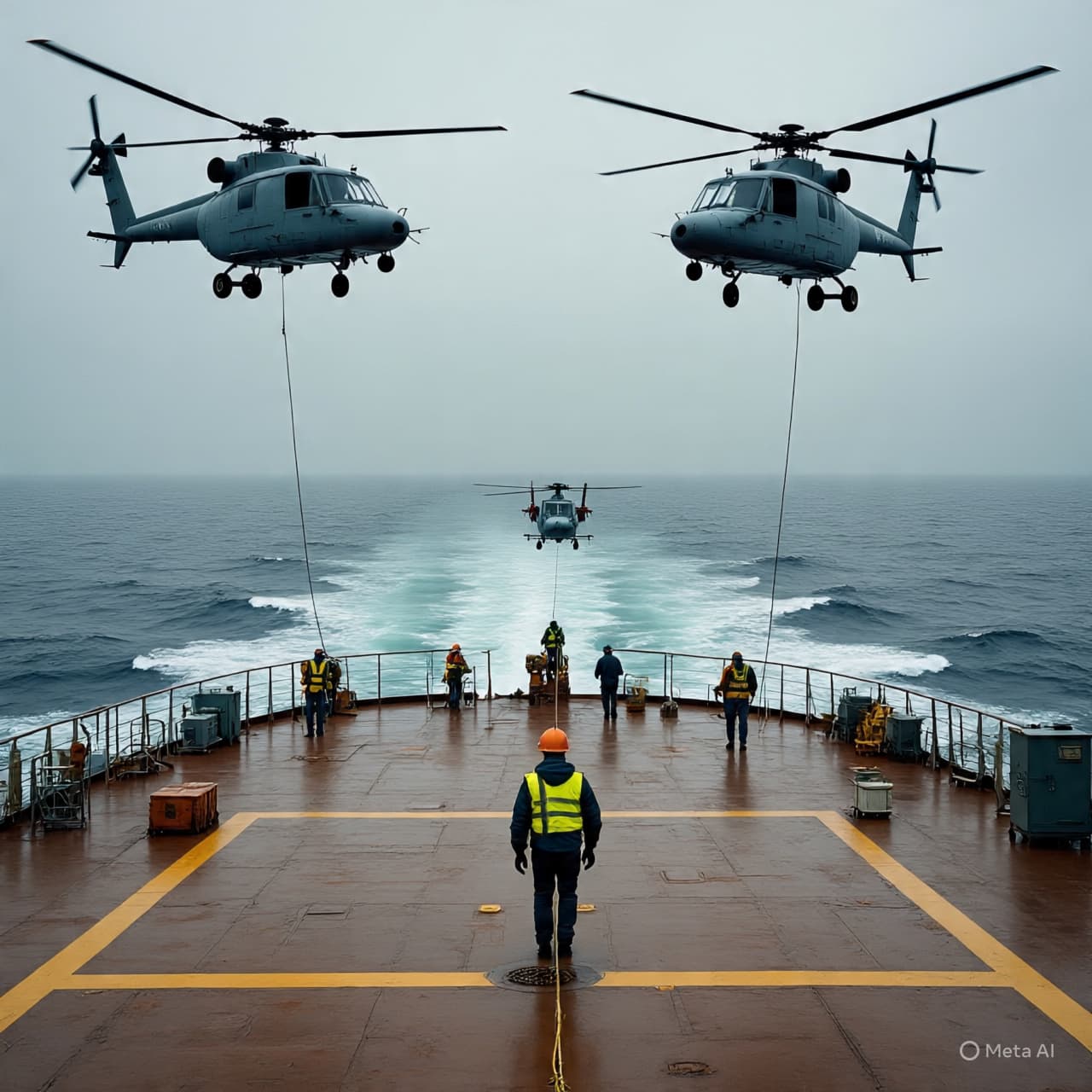
In those soft hours before the full sun lifted above the rim of the tropics, the deck of a large oil tanker called the Veronica became the stage for a scene that will come to define a chapter of maritime enforcement. U.S. military aircraft and tactical teams descended by rope amid the hush of pre‑dawn, drawing lines between intention and restraint, between movement and stillness. Black‑and‑white footage released by the U.S. Southern Command shows helicopters hovering low, service members sliding down onto the deck, their figures silhouetted against the grey light — precise, deliberate, and nearly silent against the brooding sweep of the sea.
The Veronica was the sixth oil tanker seized by U.S. forces in recent weeks, part of an ongoing effort to enforce sanctions tied to Venezuela’s oil exports. In this unfolding tapestry of policy and patrol, authorities describe the operation as necessary to uphold a maritime quarantine established to prevent sanctioned vessels from carrying cargo in defiance of established restrictions. From the perspective of those aboard the ship, it was a moment when ordinary routines of navigation and trade met the sudden interruption of an armed boarding — unexpected, swift, and consequential.
For residents of the Caribbean islands and coastal communities nearby, the ocean at dawn carries memories of commerce and navigation that stretch back generations. Fishing skiffs thread their way through reefs and wake trails, cruise ships mark their routes to distant ports, and cargo vessels keep to plotted courses shaped by tides, winds, and global demand. To see a military contingent drift into this tableau is to witness a different current, one shaped not by market forces but by the weight of sanction and strategic design.
The Veronica’s capture was, by official account, carried out without violence. Marines, sailors, and Coast Guard personnel moved with practiced steps across steel plates and railings, taking control of the ship and its crew. Their actions were filmed and shared in brief snippets — helicopters skimming just above the waves, ropes uncoiling in nearly silent descent, figures moving with the precision of long training. And all the while, the gentle swell of the Caribbean Sea reflected the quiet of that early morning, its lull interrupted by the abrupt choreography of enforcement.
The wider context of this maritime campaign traces back to a sweeping effort by the United States to apply pressure on Venezuela’s oil sector through sanctions and naval interdiction, part of a broader strategy unfolding over recent months. Previous seizures and the presence of a blockade have reshaped the flow of sanctioned cargoes and the ways in which vessels navigate open waters. Analysts note that these operations reflect a new phase of enforcement in an arena where trade, law, and geopolitical aim converge on shifting seas.
In straightforward news terms: the U.S. military has seized its sixth oil tanker accused of violating sanctions against Venezuela’s oil exports. The vessel, the Veronica, was boarded in the Caribbean Sea by U.S. forces operating from the aircraft carrier USS Gerald R. Ford and conducting the operation alongside the Coast Guard. The military described the seizure as part of an established quarantine to prevent sanctioned vessels from transporting oil, and footage released shows helicopters and tactical teams boarding the ship without incident.
AI Image Disclaimer Visuals are AI-generated and serve as conceptual representations.
Sources (Media Names Only) Associated Press Reuters AFP Sky News PBS News
Published by Banx Network. This article is part of the Banx decentralized media programme, powered by the BXE token on the XRP Ledger.