There is a moment, imagined more than witnessed, when a star gives way to its own gravity and becomes something else entirely—a brief and violent unmaking that sends light outward across unimaginable distances. A supernova, in its brightness, feels like an ending that cannot be ignored. And yet, much of what it releases does not remain where it begins.
Beyond the flare of light and the expanding shell of debris, something quieter takes hold. A movement not easily seen, but persistent, gathering force across entire regions of space.
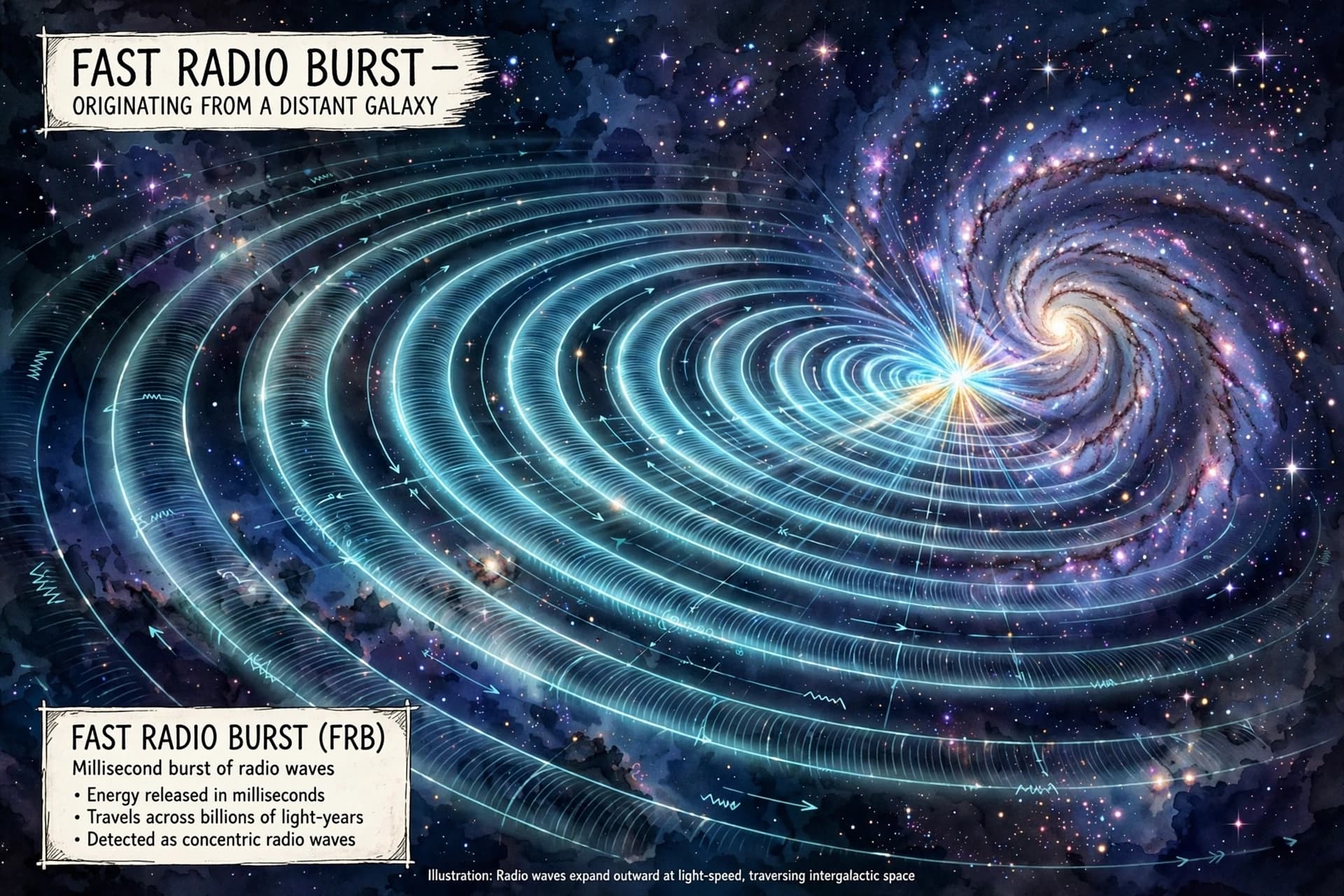
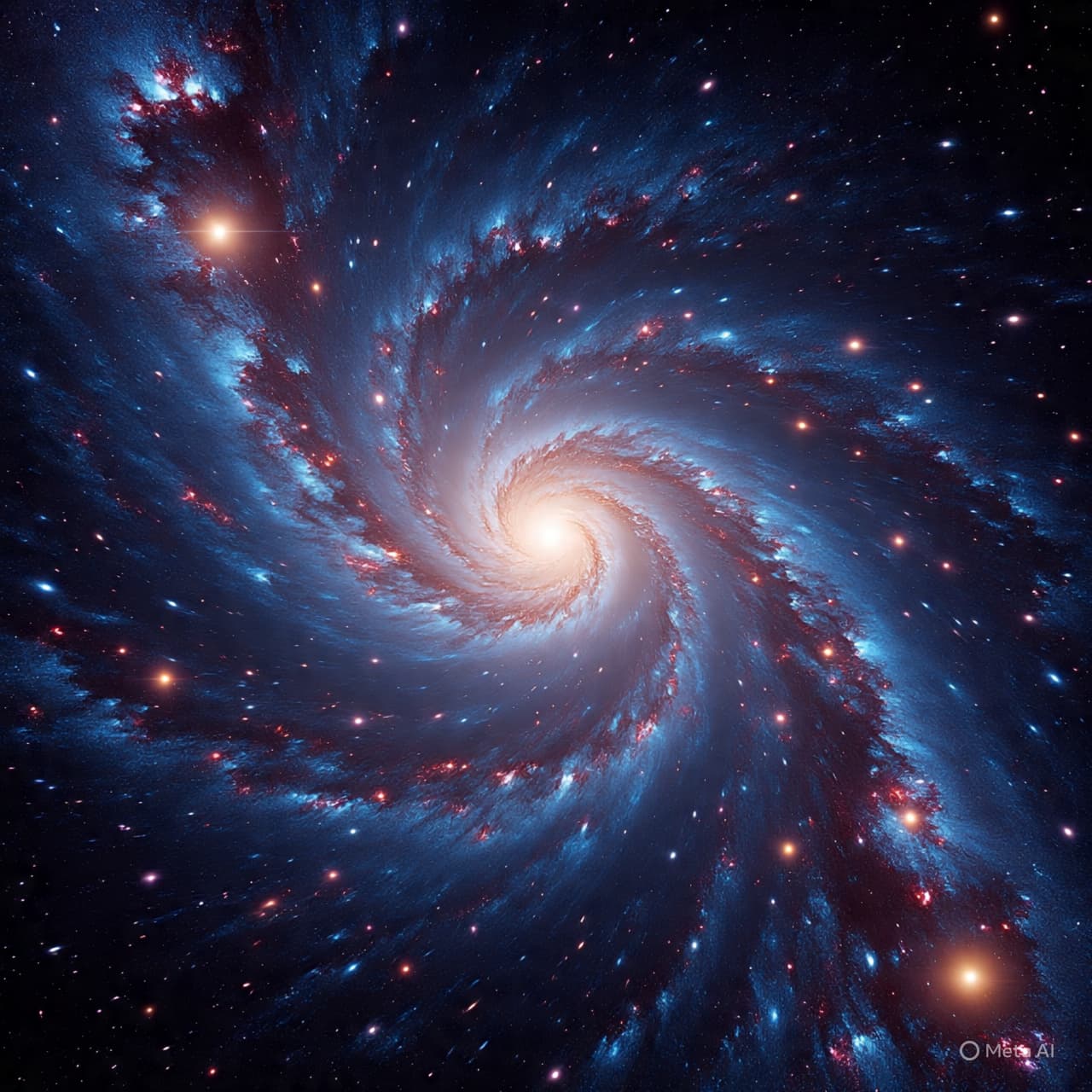
Recent research suggests that in galaxies undergoing intense bursts of star formation—so-called starburst galaxies—a large share of the energy released by supernovae does not stay confined to the remnants of those explosions. Instead, it is swept up into fast-moving galactic winds, streams of gas that flow outward from the galaxy itself, carrying energy far beyond its origin.
These starburst winds are not new to observation, but their role has become clearer through detailed modeling and analysis. In environments where stars are forming rapidly, supernovae occur in close succession, their combined energy creating conditions that drive large-scale outflows. Rather than dispersing evenly into surrounding space, much of this energy appears to be funneled into these winds, accelerating them to high speeds.
The result is a kind of transfer—an exchange between the explosive end of individual stars and the broader motion of the galaxy. Energy that might have heated nearby gas or remained localized is instead carried outward, shaping the galaxy’s evolution in more subtle ways. The winds can remove gas that would otherwise form new stars, influencing how quickly a galaxy grows or slows its own activity.
There is a certain continuity in this process. The death of stars feeds a larger motion, one that extends far beyond any single event. The galaxy, in effect, breathes—drawing matter inward through formation, then pushing it outward through these winds, a cycle that unfolds over millions of years.
For astronomers, understanding how energy is distributed in these environments is essential. It informs models of galaxy formation and evolution, helping to explain why some galaxies burn brightly and briefly, while others sustain slower, steadier rhythms. The finding that starburst winds may consume most of the energy from supernovae adds a new dimension to this picture, suggesting that what appears as loss at one scale becomes motion at another.
There is no spectacle in the wind itself, at least not in the way a supernova commands attention. It moves without brightness, without the suddenness of collapse. And yet, it carries within it the residue of countless stellar endings, gathered and set into motion.
The study reports that in starburst galaxies, fast galactic winds can absorb and transport a significant portion of the energy produced by supernova explosions. Researchers indicate that this process plays a key role in regulating star formation and shaping the long-term evolution of galaxies.
AI Image Disclaimer
Illustrations were created using AI tools and are not real photographs.
Source Check: Nature Astronomy; ScienceDaily; Phys.org; Space.com; Astrophysical Journal Letters
Published by Banx Network. This article is part of the Banx decentralized media programme, powered by the BXE token on the XRP Ledger.