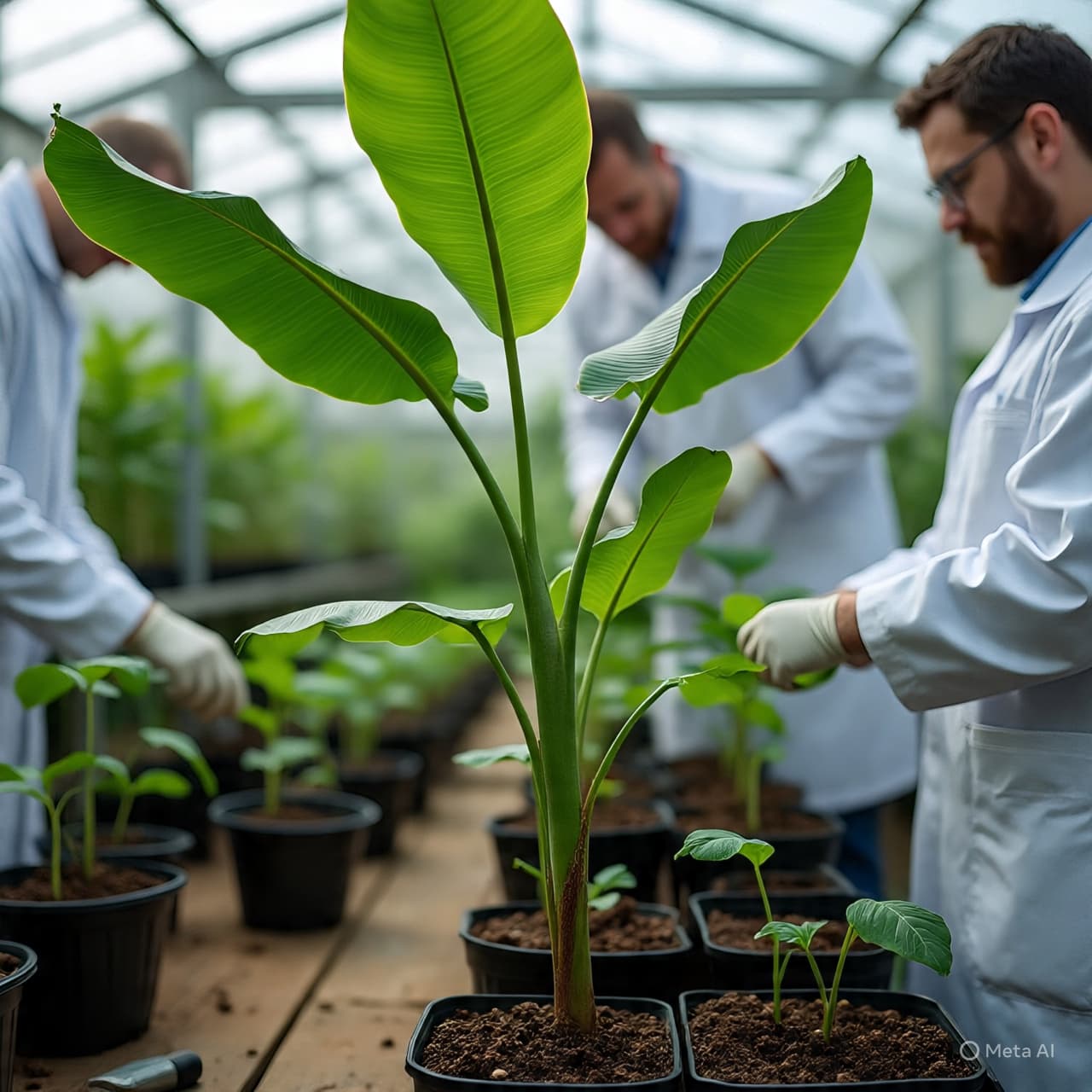
In the warm hum of a tropical greenhouse, where the gentle sway of banana leaves catches the light, there is a kind of patience that feels ancestral. These plants, icons of everyday life and nourishment for millions, are also battlegrounds — silent arenas where microscopic foes make their relentless claims. For years, a fungal specter known as Fusarium wilt has trailed through plantations and backyards alike, leaving Cavendish bananas, the world’s most exported fruit, vulnerable to a fate of wilt and decay. Yet deep within the green folds of a wild relative, researchers from Queensland have glimpsed a whisper of resistance that may yet reshape this story.
In a project spanning half a decade, scientists at The University of Queensland have leaned into the patient rhythms of plant growth and decay, crossing wild and cultivated lines in a careful dance of genetics. Their objective was to uncover something that might seem almost elusive: the genomic map underpinning resistance to a strain of Fusarium wilt known as Subtropical Race 4, or STR4. This soil‑borne pathogen enters through roots, courses through xylem veins and, in susceptible plants, brings about a slow, creeping collapse that robs leaves of vigor and stems of life.
What the researchers found was not a fabled cure, but something subtler and perhaps more enduring — a precise region on a chromosome in a wild diploid banana subspecies known as Calcutta 4 that confers natural resistance. By crossing Calcutta 4 with banana lines that were vulnerable to the disease and growing the resultant progeny through year‑long cycles, the team could compare the DNA of plants that stood firm against STR4 and those that succumbed. In doing so, they traced the resistance to a segment on chromosome 5, an insight that opens a genetic window into durability against a pathogen that has shadowed banana cultivation for decades.
The effort was not hasty. Each generation of crosses had to reach maturity before disease screening could be applied, and genomic comparisons demanded sequencing and analysis that layered detail upon detail like rings in a tree trunk. Through forward genetics and bulked segregant analysis, the researchers separated the strands of resistance from the crowd of genetic variation, a slow unraveling that feels, in its own way, like tending a garden where hope is as essential as soil.
Yet the story is not one of untroubled triumph. Calcutta 4, for all its resistance, is not itself fit for the markets; its fruit is not the sweet, seedless delight familiar to consumers. What matters, instead, is what this wild relative offers to the broader enterprise of breeding — the raw material of resilience that can be carried into cultivars that do meet the standards of taste and yield. The next steps in this research will focus on developing markers that allow breeders to track this resistance in seedlings long before any symptoms appear, a tool that could speed selection and save years of trial and error in the orchard.
This convergence of ancient plant lineage and modern genetic insight reflects a broader rhythm in agriculture: the act of remembering what grows strong in the wild and finding ways to bring those traits into the fields that feed millions. The banana’s journey from its forest origins to supermarket shelves has always been shaped by unseen forces — genes, pathogens, and the slow pulse of breeding and selection. Now, in the quiet mapping of resistance on a chromosome, there is a sense that one more piece of that long story has been brought into focus.
In clear scientific terms, researchers at The University of Queensland have identified a region on chromosome 5 in a wild banana subspecies known as Calcutta 4 that confers resistance to the Fusarium wilt Subtropical Race 4 (STR4) pathogen. By crossing Calcutta 4 with susceptible banana lines and exposing the resulting plants to STR4, they compared DNA sequences of resistant and susceptible progeny to pinpoint this genomic region. The discovery, the first genetic dissection of STR4 resistance from this wild species, may assist plant breeders in developing commercially viable banana cultivars with enhanced disease resistance.
AI Image Disclaimer
Illustrations were created using AI tools and serve as conceptual representations.
Sources (Media Names Only)
ScienceDaily University of Queensland News FreshPlaza
Published by Banx Network. This article is part of the Banx decentralized media programme, powered by the BXE token on the XRP Ledger.