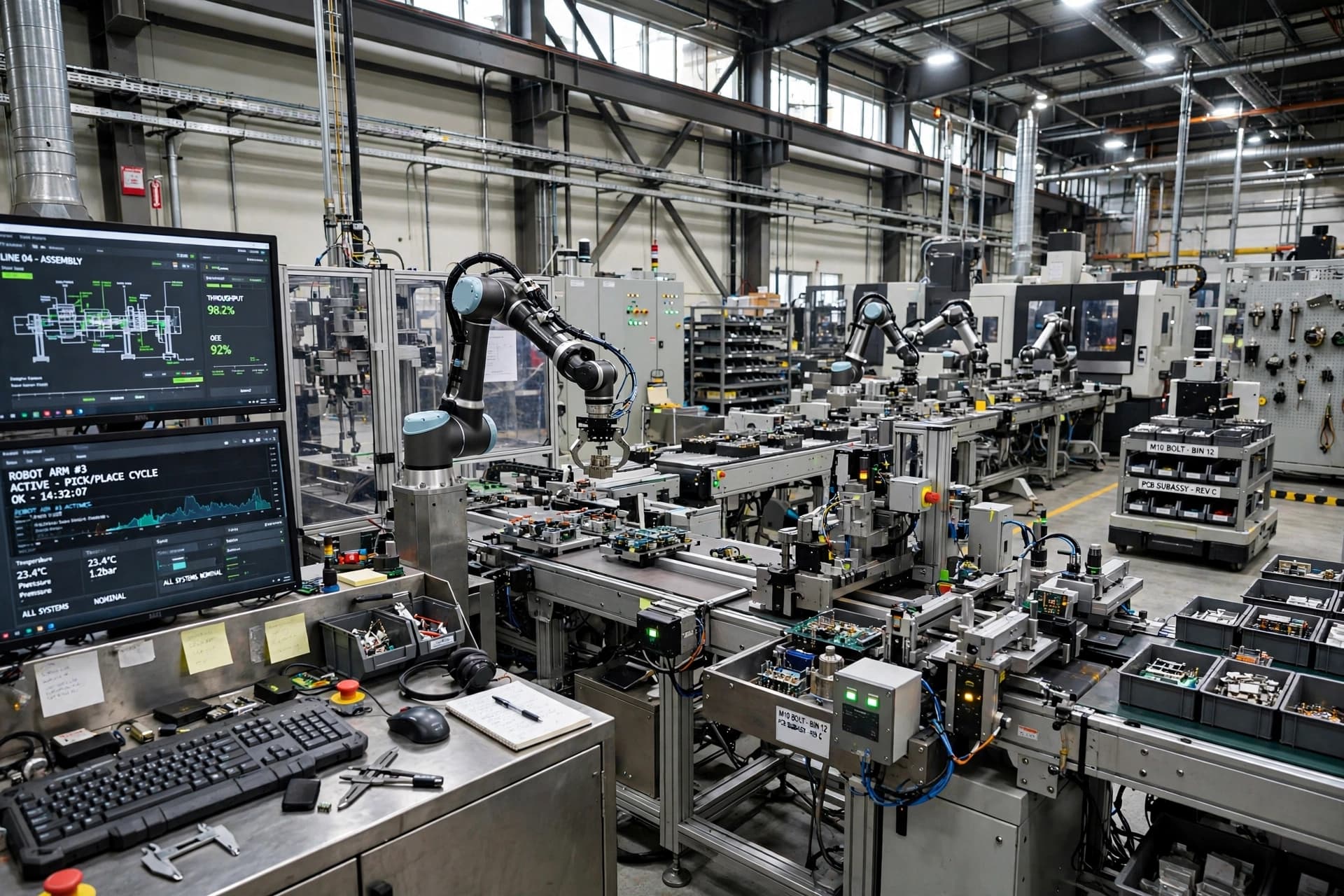
At the edges of the digital age, far from glowing screens and abstract code, a different kind of future is being assembled. It takes shape in concrete slabs, clean rooms, and long production lines where precision is physical and progress smells faintly of metal and coolant. This is where Nvidia chief executive Jensen Huang believes the artificial intelligence boom will leave its most tangible mark.
Speaking about the rapid expansion of AI infrastructure, Huang said the buildout of chip manufacturing plants will create jobs offering six-figure salaries for workers who design, build, and operate these facilities. The promise stands in contrast to the popular image of AI as something weightless and virtual, reminding audiences that every advance in machine intelligence still depends on human hands and industrial labor.
The surge in demand for advanced semiconductors has pushed governments and companies to accelerate domestic chip production, particularly in the United States and allied countries. New fabrication plants — complex, capital-intensive, and highly specialized — require not only engineers but electricians, technicians, construction workers, and operators trained to maintain extreme standards. Huang’s message reframed AI not just as a software revolution, but as an industrial one.
Six-figure salaries, in this context, are not a boast but a signal. They reflect the scarcity of skills required to build and maintain chip factories, and the strategic importance now attached to semiconductor supply chains. As geopolitical tensions and economic resilience shape policy, chipmaking has moved from the background of globalization to its foreground.
Huang has long argued that AI’s growth will be unevenly misunderstood — feared as a job destroyer while quietly becoming a job creator elsewhere. The factories rising to meet AI demand embody that tension. They do not resemble startup offices or research labs, yet they sit at the heart of the technological moment, translating abstract computation into physical capacity.
For regions hosting these plants, the implications extend beyond payrolls. High-paying manufacturing jobs bring secondary effects — housing demand, local services, long-term investment — reshaping communities that may have watched industrial work drift away decades earlier. The AI economy, in this sense, is folding backward into older patterns of place and labor, even as it pushes forward technologically.
There is no certainty embedded in the forecast, only direction. Building chip factories is slow, expensive, and unforgiving of error. But the bet being placed is clear: that the future of intelligence will be built not only by algorithms, but by people willing to work where silicon meets steel.
As AI continues to accelerate, its most durable legacy may not be found in models or interfaces, but in the factories quietly taking form — and in the livelihoods they promise to anchor along the way.
AI image disclaimer Visuals are AI-generated and serve as conceptual representations.
Sources (names only) Nvidia Reuters Bloomberg
Published by Banx Network. This article is part of the Banx decentralized media programme, powered by the BXE token on the XRP Ledger.