There are moments in science that feel less like discovery and more like remembering — as if an answer long obscured by time rises slowly, like dawn at the horizon of human understanding. In a tranquil pond not far from Tokyo, researchers gently coaxed one such answer into view: a giant virus so vast and complex that its very existence invites us to reconsider the ancient chapters of life on Earth.
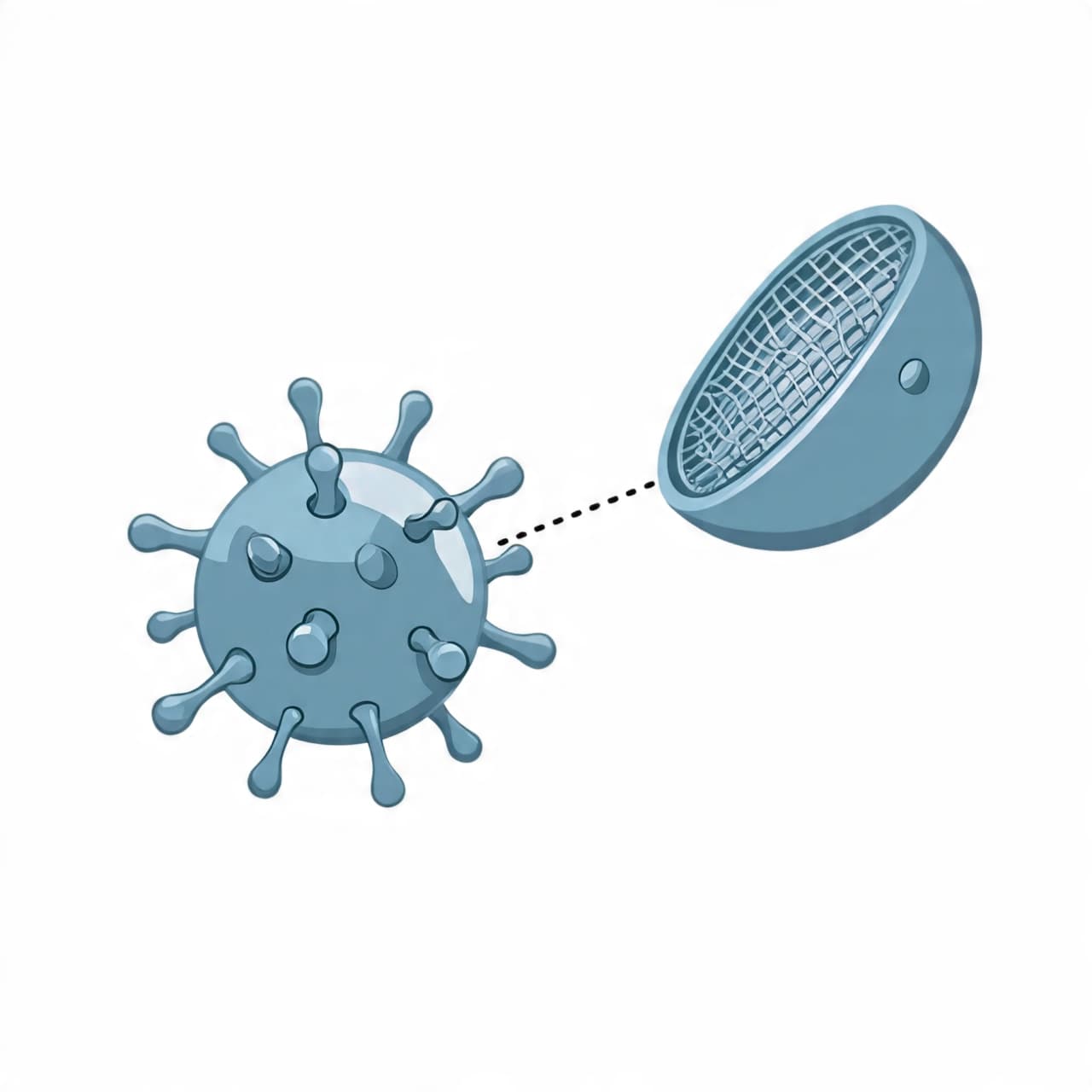
This newly identified organism, known as ushikuvirus, dwells not in mystery alone but within the humble host of amoebae. Yet its form and behavior are anything but ordinary. As the virus infiltrates its microscopic host, it triggers profound changes in cellular structure — dissolving the host’s nuclear membrane and commandeering inner processes with strategies that seem to blur the line between the viral and the cellular. It is in these interactions that scientists find echoes of a time long before the first plants breathed or the first animals walked.
For decades, biologists have puzzled over the origin of complex life: how the simple, single‑celled organisms of the distant past evolved into the intricate tapestry of eukaryotes — the cells with defined nuclei that make up our bodies, our ecosystems, and the wider web of life. Among the many voices in this conversation, one provocative idea has taken root: that viruses, once thought peripheral to life’s grand narrative, may have in fact played a starring role in it. This hypothesis — viral eukaryogenesis — suggests that the very heart of the complex cell, its nucleus, could owe its existence to a viral ancestor that merged with, rather than destroyed, its host.
The discovery of ushikuvirus adds fresh texture to this idea. Its structural features connect it to a growing family of giant DNA viruses found over the last two decades — beings of such breadth and genetic richness that they challenge traditional definitions of viral simplicity. Some giant viruses weave so much genetic material that their genomes rival those of cellular life. When they infect their hosts, they create elaborate “virus factories,” membrane‑bounded regions within the cell where replication unfolds with a choreography more reminiscent of cellular processes than of parasitic invasion.
What makes ushikuvirus particularly compelling in evolutionary conversations is the way it engages its host’s nucleus. Unlike some of its viral kin that replicate within an intact nuclear environment, ushikuvirus breaks down the nuclear membrane itself to produce new generations of viral particles. This act — disruptive yet ordered in its execution — suggests evolutionary pathways through which early viral interactions could have reshaped cellular architecture rather than merely exploiting it. In this interplay of virus and host, researchers see clues, not certainties, that the origins of complex life may have been seeded by encounters with entities once deemed marginal.
Reaching back into deep time, scientists hope such findings will illuminate not only how life took its first great leap into complexity but also how the boundaries between living and nonliving have always been more fluid than once imagined. In the delicate unfolding of discovery, a virus once hidden in freshwater now occupies a place in the wider story of evolution, whispering reminders that even the smallest forms may carry within them the greatest lessons.
In current scientific terms, researchers in Japan have discovered a giant DNA virus named ushikuvirus that infects amoebae and exhibits distinctive structural and replication behaviors. Its unique features, including the breakdown of the host’s nuclear membrane during replication, add evidence to scientific discussions about how giant viruses and their interactions with host cells might have influenced the evolution of complex eukaryotic life.
AI Image Disclaimer
Visuals are AI‑generated and serve as conceptual representations.
Sources (Media Names Only)
ScienceDaily SciTechDaily Earth.com Phys.org ScienceAlert
Published by Banx Network. This article is part of the Banx decentralized media programme, powered by the BXE token on the XRP Ledger.