
Key Highlights
- Russia's oil exports are significantly impacted by sanctions and market changes.
- The Urals crude price is trading far below global benchmarks, affecting state revenues.
- Major buyers like India are reducing imports, while China dictates terms, forcing prices lower.
[Current State of Russia's Oil Industry]
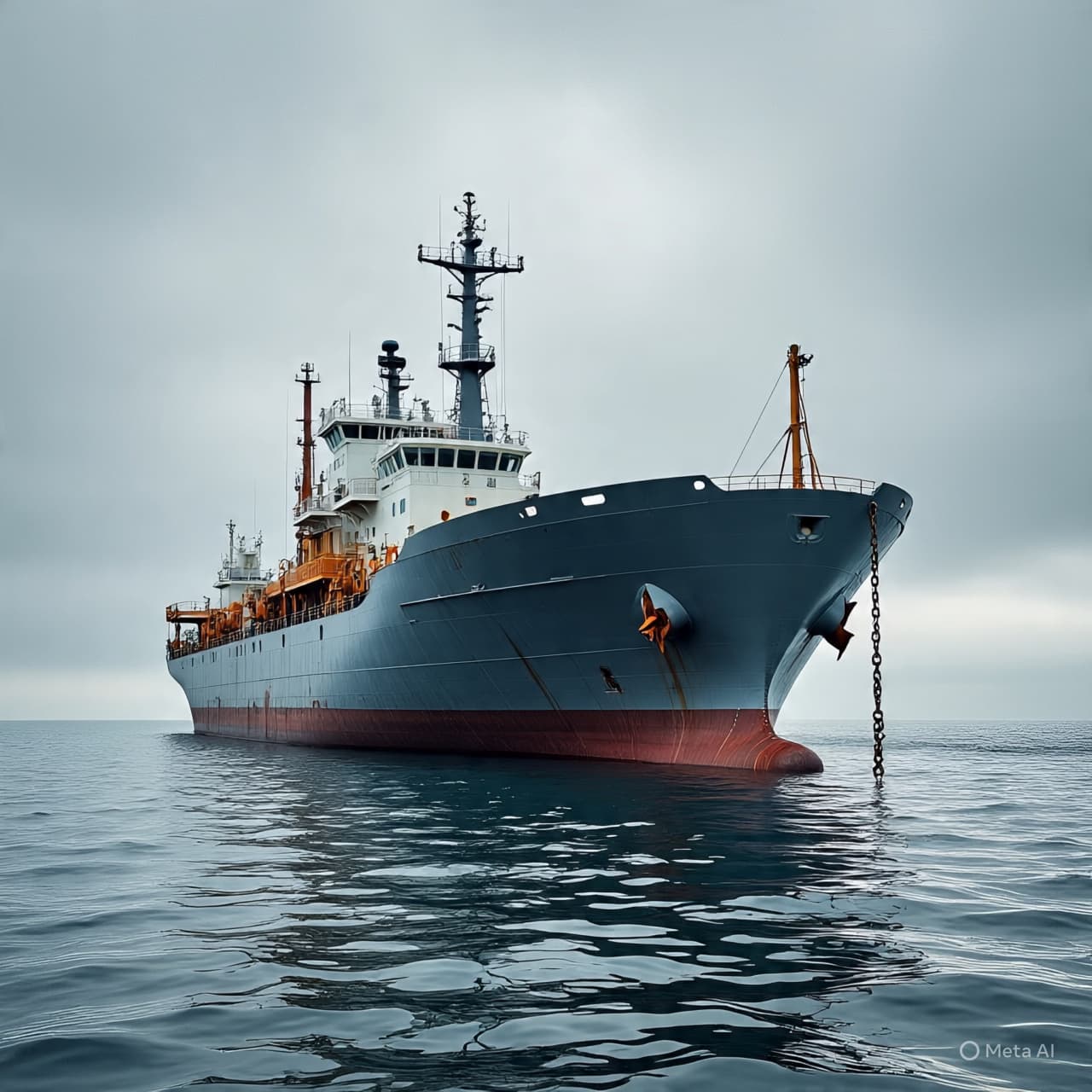
In the half-light of a northern winter, where the sea mirrors the gray of the sky and tankers wait like unmoving silhouettes, the stillness tells a story of a once-unbroken current. Russia’s oil, long the dark pulse of its economy, has entered a quieter, more uncertain rhythm. The routes that once carried it swiftly to foreign ports now stand encumbered by sanctions, ship seizures, and markets grown wary. What once was profit in motion has become cargo in suspense.
For decades, oil underpinned Russia’s state — its budgets, its alliances, its sense of economic permanence. When sanctions began to bite after the invasion of Ukraine, Moscow turned to alternative buyers, selling crude to Asia at steep discounts and routing exports through a network of older, often unregistered vessels that came to be known as the “shadow fleet.” The arrangement kept oil moving, if not freely, then at least defiantly. But over time, the strain of evasion became a constraint of its own.
[Impact of Sanctions on Oil Exports]
Today, tankers filled with millions of barrels float without destination, stranded between ports that hesitate to receive them and insurers that hesitate to back them. Russia’s Urals crude trades far below the global benchmark — low enough to cut deeply into state revenues and push fiscal planners toward new taxes, new borrowing, and quiet recalculations of endurance. For every ship delayed at sea, a balance sheet back home adjusts to the weight of reduced income and rising costs.
Western nations have turned their attention not only to the oil itself but to the vessels that carry it. Sanctions now reach into maritime registries, shipping firms, and insurers. Ships suspected of helping to move sanctioned oil are detained, flagged, or quietly blacklisted. What was once a logistical challenge has become a game of attrition — fewer ships, higher risks, longer routes. In this tightening web, the simple act of selling oil has become an exercise in political navigation.
[Global Market Repercussions]
The effect ripples through global markets. India, once a voracious buyer of discounted Russian crude, has begun to scale back imports under diplomatic pressure and shifting economic tides. China, for its part, continues to purchase in quantity but dictates its own terms, forcing prices even lower. For Russia, this balance of dependence is precarious: to maintain market share, it must accept diminishing returns.
[Domestic Economic Consequences]
The domestic consequences are slow but cumulative. Budget forecasts have been quietly revised, foreign reserves drawn upon, and regional projects delayed. Even the country’s gas and shipping sectors — long considered resilient — feel the compression of reduced revenue and increasing restrictions. Within this pressure, the image of strength that once defined Russia’s energy sector now appears tempered by fatigue.
[Conclusion: A New Reality]
Across the northern seas, tankers still rest at anchor. Their hulls, streaked with salt and time, carry the residue of an empire built on motion now interrupted. In them lies a metaphor as much as a reality: that in the interplay of war, policy, and price, even the most constant currents can be stilled. What remains is a quiet recalibration — of economy, ambition, and endurance — beneath the gray horizon of an uncertain market.
Published by Banx Network. This article is part of the Banx decentralized media programme, powered by the BXE token on the XRP Ledger.



