There are moments when the boundary between earth and sky seems to soften, when the distant pulse of the deep ocean makes itself known not by sound but by shape and motion. In the vast Pacific, where tectonic plates slip and release energy far beneath the surface, a recent earthquake stirred waters into motion that would travel thousands of miles. Yet it was not only the sea that bore witness to that force, but instruments far above, circling our planet in silent orbit.
In late July 2025, a powerful magnitude-8.8 earthquake off the Kamchatka Peninsula sent waves rippling outward, a reminder of the immense energy stored where Earth’s plates converge. Normally, the early stages of such events are recorded by instruments anchored to the seafloor or along coastlines, measuring shifts in pressure or sea level at discrete points. But in this case, a satellite known as SWOT—built to survey Earth’s oceans with a broad, sweeping gaze—was in just the right place at the right time to capture the undulating patterns of the sea’s surface as the tsunami unfolded.
From its vantage high above, the satellite’s wide-swath altimeter did more than glimpse a single crest. It traced not only the leading wave but the subtler, trailing ripples that followed—a kind of fingerprint of the earthquake’s slip near the deep ocean trench. These dispersive waves, spreading out behind the main tsunami, carry clues about how the seafloor moved in the moments after the quake. Scientists, piecing together these patterns with models and other measurements, could infer details of the rupture that would otherwise remain hidden in the ocean’s depths.
There is a contemplative stillness in imagining such a scene: a vast sheet of water responding to forces unseen, and a human-made eye in orbit, charting those responses with precision. The ocean’s surface becomes a canvas, its subtle bumps and dips a record of geological drama played out far below. And while satellites like SWOT cannot provide continuous monitoring of every region, when their paths cross these moments they offer a perspective that complements traditional sensors and enriches our understanding of how tsunamis form and evolve.
For coastal communities that live with the risk of tsunamis, better models and improved hazard assessments are more than scientific curiosities; they are part of the long effort to anticipate and prepare for nature’s caprices. The data captured from space does not replace the need for warning systems on the ground and under the sea, but it adds another layer to the tapestry of observation that scientists weave in pursuit of clarity.
In the interplay of sea and sky, of wave and satellite, we find both the fragility and resilience of our planet’s systems—and our own enduring curiosity to see, measure, and understand.
Satellites such as SWOT have captured detailed measurements of tsunami wave patterns following the Pacific earthquake, providing unique data that help researchers infer how the seafloor slipped and improve models of tsunami generation and propagation.
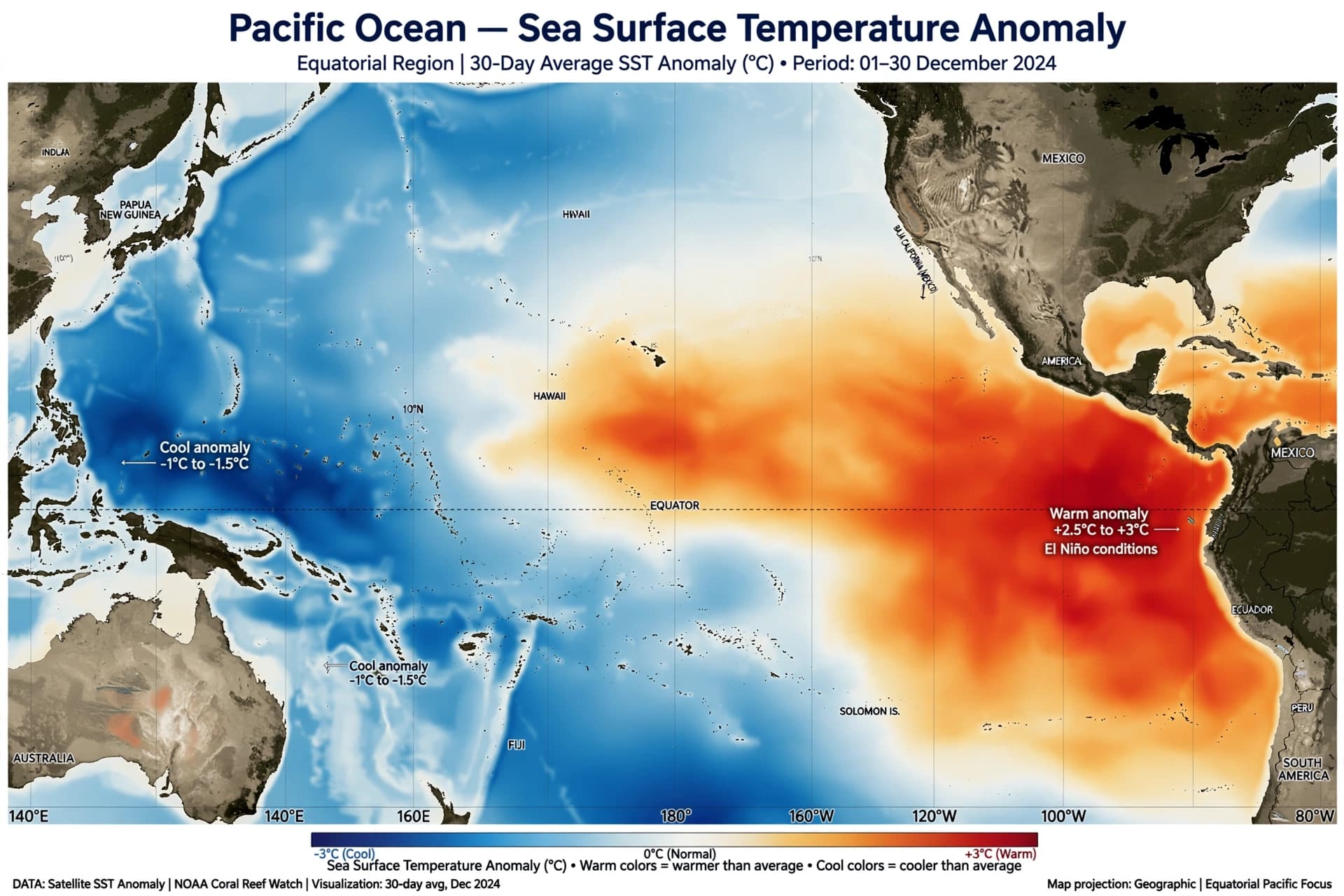
Illustrations were created using AI tools and are not real photographs.
Sources Mirage News UC San Diego Today (Science & Environment)
Published by Banx Network. This article is part of the Banx decentralized media programme, powered by the BXE token on the XRP Ledger.