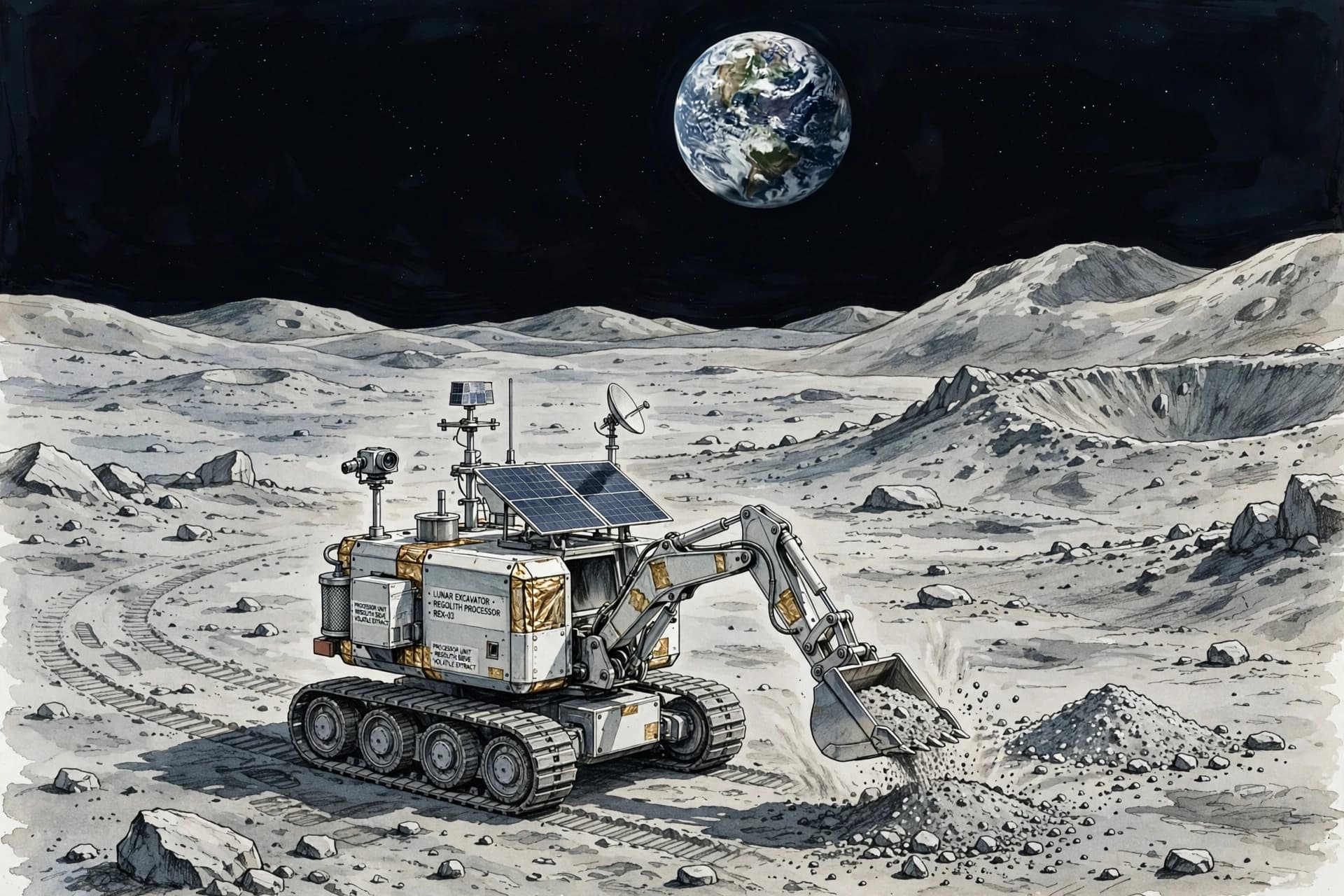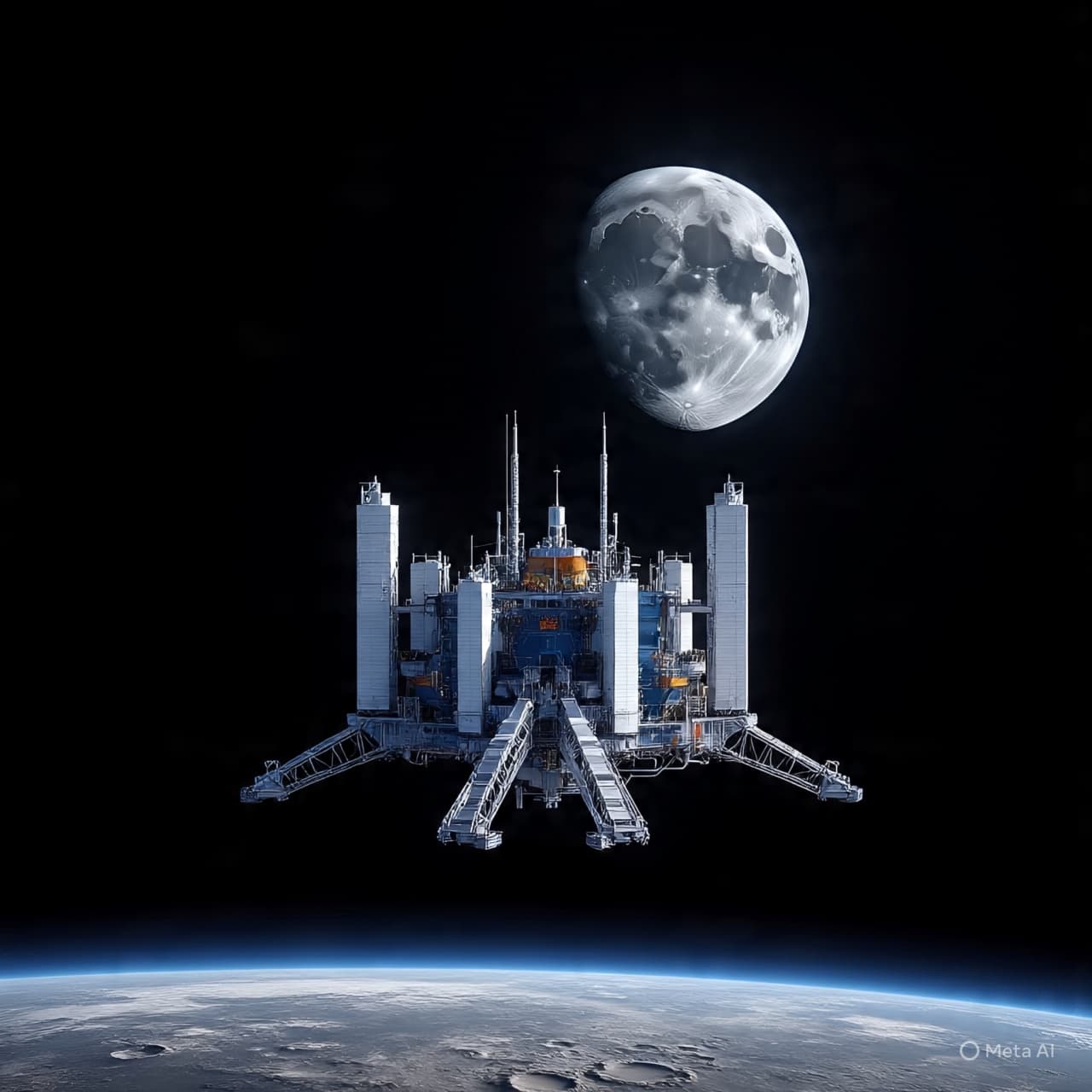
There are moments when a story appears suddenly, like a signal crossing an otherwise quiet field—brief, striking, and uncertain in origin. It moves quickly, gathering attention as it travels, its shape defined as much by curiosity as by content. Yet not every signal carries substance. Some drift, unanchored, their meaning dissolving as one draws closer.
A claim has circulated suggesting that NASA intends to destroy the Lunar Gateway and redirect it toward Mars. It is an image that invites imagination—motion, force, a dramatic redirection of purpose across vast distance. But when placed alongside the steady framework of current space exploration, the idea finds no point of connection.
The Gateway itself is conceived not as a transient object, but as a node of continuity in lunar orbit—a place designed to support sustained presence and gradual expansion of human activity beyond Earth. Within the broader structure of the Artemis program, it serves as a platform for coordination, research, and preparation. Its trajectory is one of persistence, not departure.
In the language of modern aerospace engineering, the notion of propelling such a structure toward Mars through destructive means does not align with established methods or goals. Missions to Mars, as they are currently understood, involve separate spacecraft, carefully assembled for long-duration travel, guided by incremental testing and layered design. The distances involved, the constraints of propulsion, and the requirements of human or robotic survival shape these plans in ways that leave little space for sudden or dramatic reconfiguration.
There is, however, a broader context in which such ideas can emerge. The vocabulary of space exploration often includes terms that carry weight—nuclear propulsion, deep-space transfer, modular construction. When these concepts move beyond their technical boundaries, they can take on new forms, reshaped by interpretation. A phrase, once specific, becomes expansive, and from that expansion, narratives begin to form.
In this way, the claim becomes less a statement of intent and more a reflection of how information travels. It gathers fragments—real projects, future ambitions, speculative technologies—and arranges them into a single line that appears coherent from a distance. Only when examined more closely does the structure begin to separate, each part returning to its own context.
There is a quiet discipline in distinguishing between what is imagined and what is underway. It does not diminish curiosity, nor does it close the door on possibility. Instead, it places each idea within its appropriate scale, allowing exploration to proceed with clarity rather than confusion.
NASA has not announced any plan to destroy the Lunar Gateway or send it to Mars. The Gateway remains part of the Artemis program, intended to support future lunar missions. Current Mars exploration plans involve separate mission architectures, and no such proposal involving Gateway has been reported by credible sources.
AI Image Disclaimer
Visuals are AI-generated and serve as conceptual representations.
Sources
NASA Space.com Reuters The New York Times Scientific American
Published by Banx Network. This article is part of the Banx decentralized media programme, powered by the BXE token on the XRP Ledger.