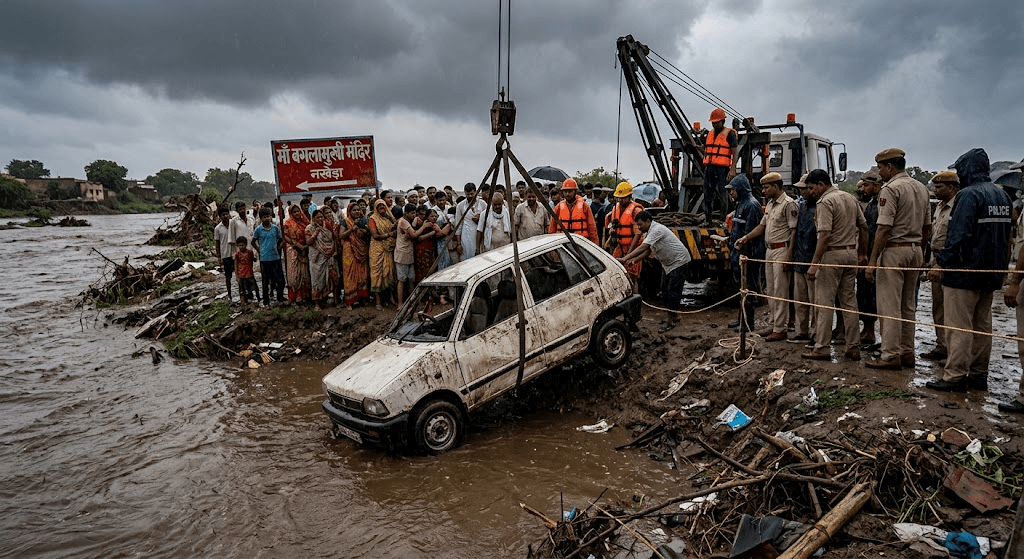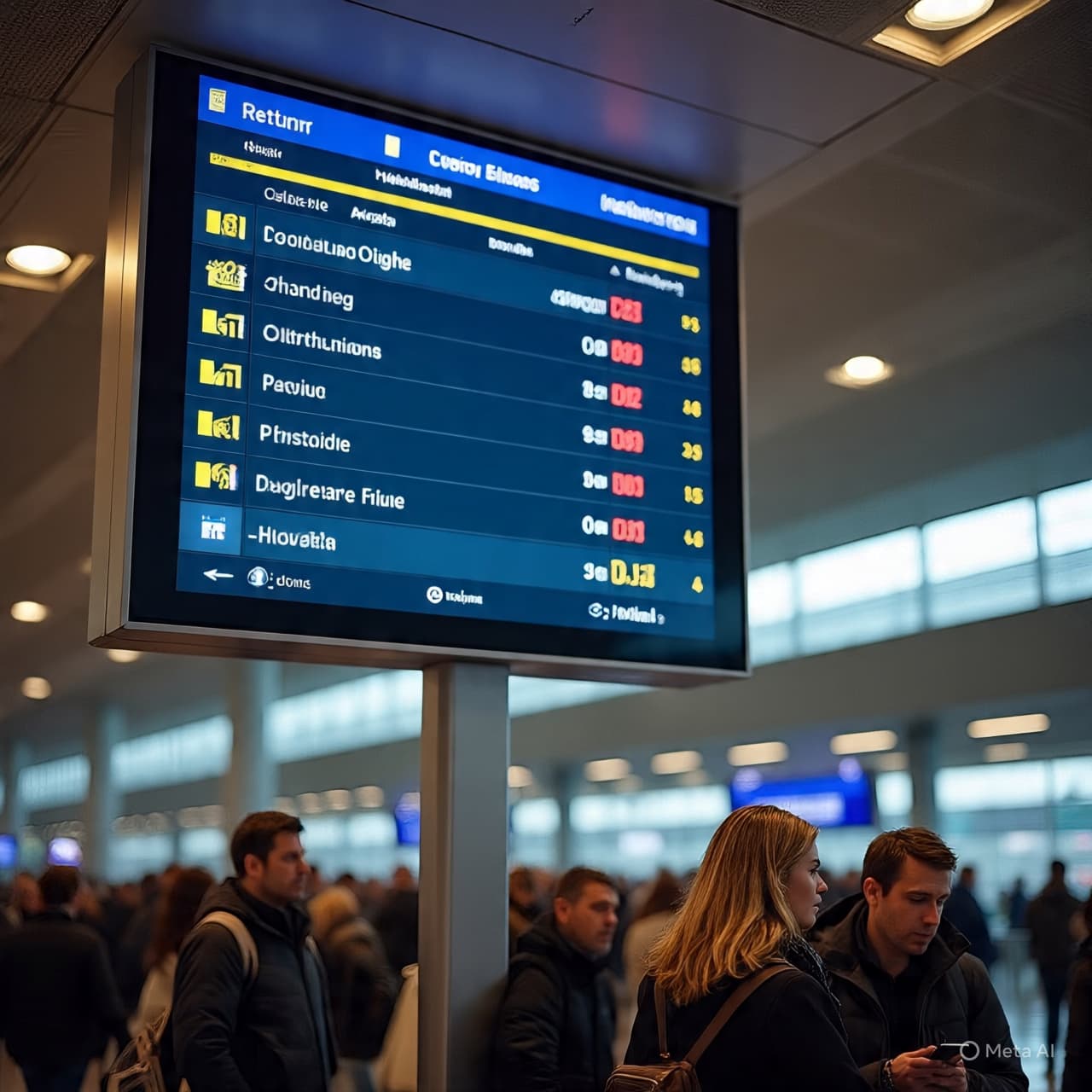
Airports are places of choreography. Even in the early hours, when the sky is still a deep indigo and departure boards glow softly above polished floors, there is movement — the quiet roll of suitcases, the murmur of farewells, the ritual of passports passed from hand to hand. But this week, across parts of the Middle East and beyond, that choreography faltered.
After Iran’s missile strikes and the widening exchange of hostilities in the region, flights were abruptly canceled and new travel warnings issued by governments from North America to Europe and Asia. In cities that often serve as crossroads — Dubai, Doha, Tel Aviv, and others — digital boards flickered from “On Time” to “Canceled” in a matter of minutes. Aircraft already taxiing were turned back. Others remained parked at gates, their engines silent beneath an unsettled sky.
Civil aviation authorities across the Gulf temporarily closed sections of airspace as a precaution, citing the risk posed by missile trajectories and defensive interceptions. Major carriers suspended routes to and from affected hubs, while some international airlines rerouted long-haul flights to avoid corridors near Iran, Iraq, and parts of the eastern Mediterranean. Passengers found themselves in elongated lines, refreshing airline apps that struggled to keep pace with the cascade of changes.
Governments responded with updated travel advisories. The United States, the United Kingdom, Canada, Australia, and several European nations urged citizens to reconsider non-essential travel to parts of the Middle East and to register with embassies if already present. Some embassies reduced staffing or offered voluntary departure options for non-essential personnel. Insurance providers reviewed coverage for conflict-related disruptions, while tour operators worked to rebook itineraries at short notice.
The practical consequences rippled outward. Business travelers recalibrated meetings. Pilgrims and vacationers weighed the pull of commitment against the uncertainty of transit. Cargo shipments slowed as airlines assessed safe routing. Even oil markets reacted, sensitive not only to missile exchanges but to the possibility that prolonged instability could threaten major transit routes such as the Strait of Hormuz.
Yet within terminals, amid the frustration and confusion, there was also a steady patience. Families camped near charging stations, children asleep against carry-on bags. Airline staff moved between counters with the careful diplomacy of those tasked with explaining events larger than themselves. The language of travel — boarding groups, security checks, final calls — yielded briefly to another vocabulary: advisories, reroutes, airspace closures.
Officials emphasized that cancellations were precautionary rather than permanent, and that aviation authorities were working closely with defense agencies to monitor risks in real time. Some airports reopened limited operations within hours once corridors were deemed secure. Others remained suspended as a reminder that flight paths, like political alignments, depend on stable skies.
As evening descends on terminals still humming with uncertainty, departure boards continue their quiet negotiations with circumstance. Flights will resume, routes will redraw themselves, and the familiar rhythm of takeoffs and landings will likely return. But for now, the world’s most connected spaces — those vast rooms of glass and steel — hold a pause.
In that pause lies a simple truth: travel depends on more than tickets and timetables. It depends on confidence in the open sky. And when that sky becomes contested, even briefly, the stillness inside an airport can feel as telling as the sound of any siren.
AI Image Disclaimer Illustrations were created using AI tools and are not real photographs.
Sources Reuters Associated Press BBC News Financial Times CNN
Published by Banx Network. This article is part of the Banx decentralized media programme, powered by the BXE token on the XRP Ledger.