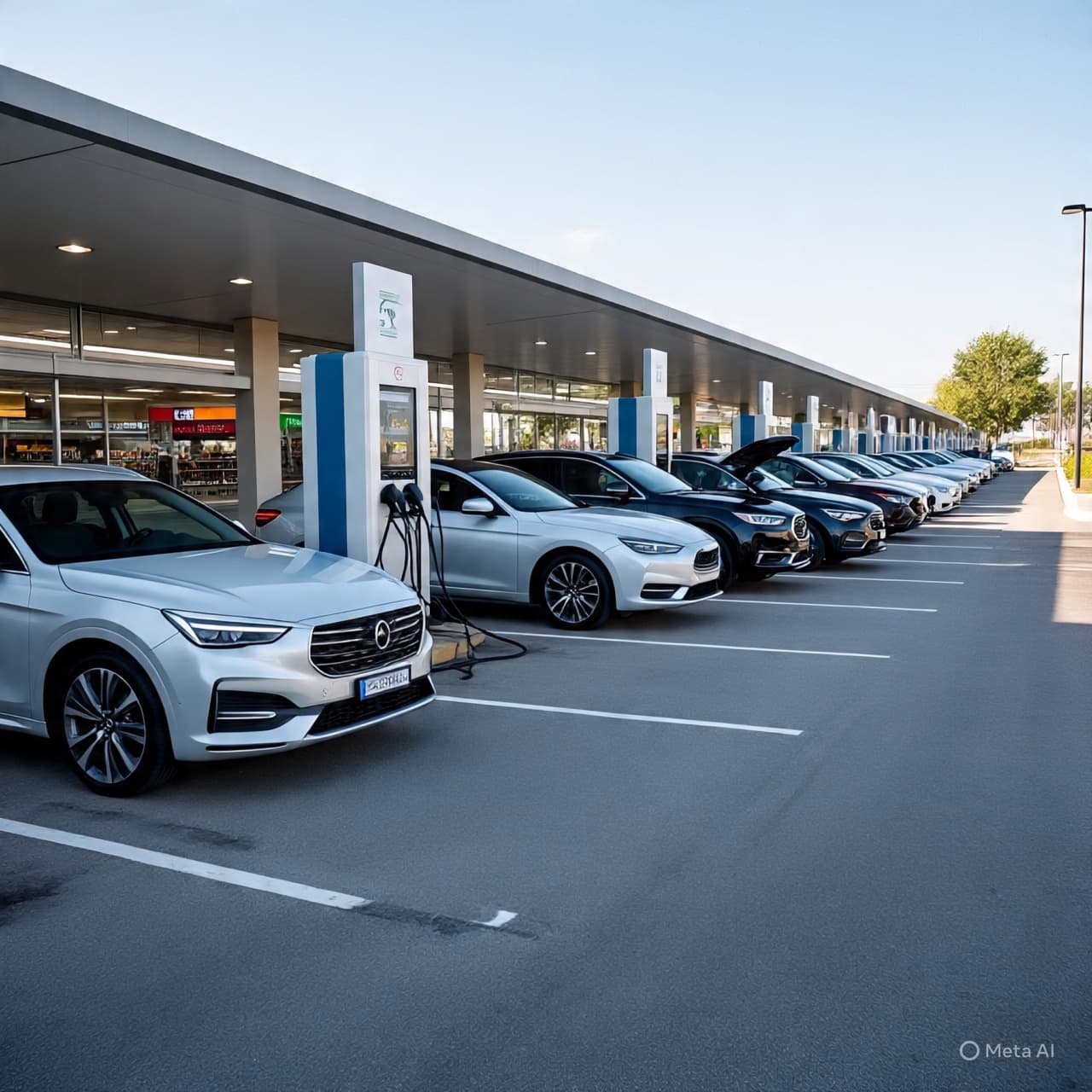
There is a rhythm to long-distance travel that reveals itself only in pauses. The road stretches forward, steady and unbroken, until it yields to a moment of stillness—a stop not for rest alone, but for renewal. In the age of electric vehicles, this pause takes on a particular form: a car connected quietly to a charger, time measured in percentages rather than miles.
It is in these intervals that the infrastructure of the future becomes most visible.
Across New Zealand, that quiet exchange between vehicle and grid is set to shift slightly in cost. ChargeNet, the country’s primary public EV charging provider, has announced that its on-the-road charging prices will increase by approximately 6 percent. The adjustment, while modest, touches a growing network of drivers who rely on these stations to extend their journeys beyond the reach of home charging.
The increase translates into a small rise per kilowatt-hour—measured in cents rather than dollars, yet felt over repeated use. For some, it may pass almost unnoticed, absorbed into the broader calculation of travel. For others, particularly those who depend regularly on public chargers, it introduces a new layer of consideration into each trip.
Beneath the change lies a familiar set of pressures. Electricity itself carries a cost that shifts over time, shaped by supply, demand, and the systems that distribute it. Maintaining a nationwide charging network—keeping stations operational, upgrading equipment, expanding coverage—adds further weight. The network grows outward, reaching more remote stretches of road, even as the cost of sustaining it moves upward.
There is a quiet symmetry in this moment. The expansion of infrastructure, often seen as a sign of progress, arrives alongside the need to balance its expense. More chargers appear along highways and in towns, offering reassurance to drivers who venture further afield. Yet each addition is part of a system that must support itself, gradually finding equilibrium between accessibility and sustainability.
For many drivers, the comparison remains with petrol—a fuel long associated with volatility, its price rising and falling with distant events. Electricity, by contrast, has offered a sense of steadiness, a quieter alternative. That steadiness is not disappearing, but it is becoming more nuanced, shaped by the same underlying forces that influence all forms of energy.
The response, as it often is, will likely be measured. Some will adjust their habits, favoring home charging where possible. Others will continue as before, accepting the increase as part of a broader transition. The roads themselves remain unchanged, the destinations the same; it is only the calculation along the way that shifts, almost imperceptibly.
In time, such adjustments may come to feel ordinary, absorbed into the evolving landscape of transport. Systems mature, costs settle, and expectations recalibrate. What feels like a change today becomes part of the background tomorrow.
ChargeNet will implement a roughly 6 percent increase in its public EV charging prices from April, citing higher electricity and operational costs as well as continued investment in expanding its nationwide network. The change will apply to on-the-road charging across New Zealand.
AI Image Disclaimer
These visuals are AI-generated and intended for illustrative purposes only.
Sources
RNZ NZ Herald Stuff Interest.co.nz New Zealand Transport Agency
Published by Banx Network. This article is part of the Banx decentralized media programme, powered by the BXE token on the XRP Ledger.