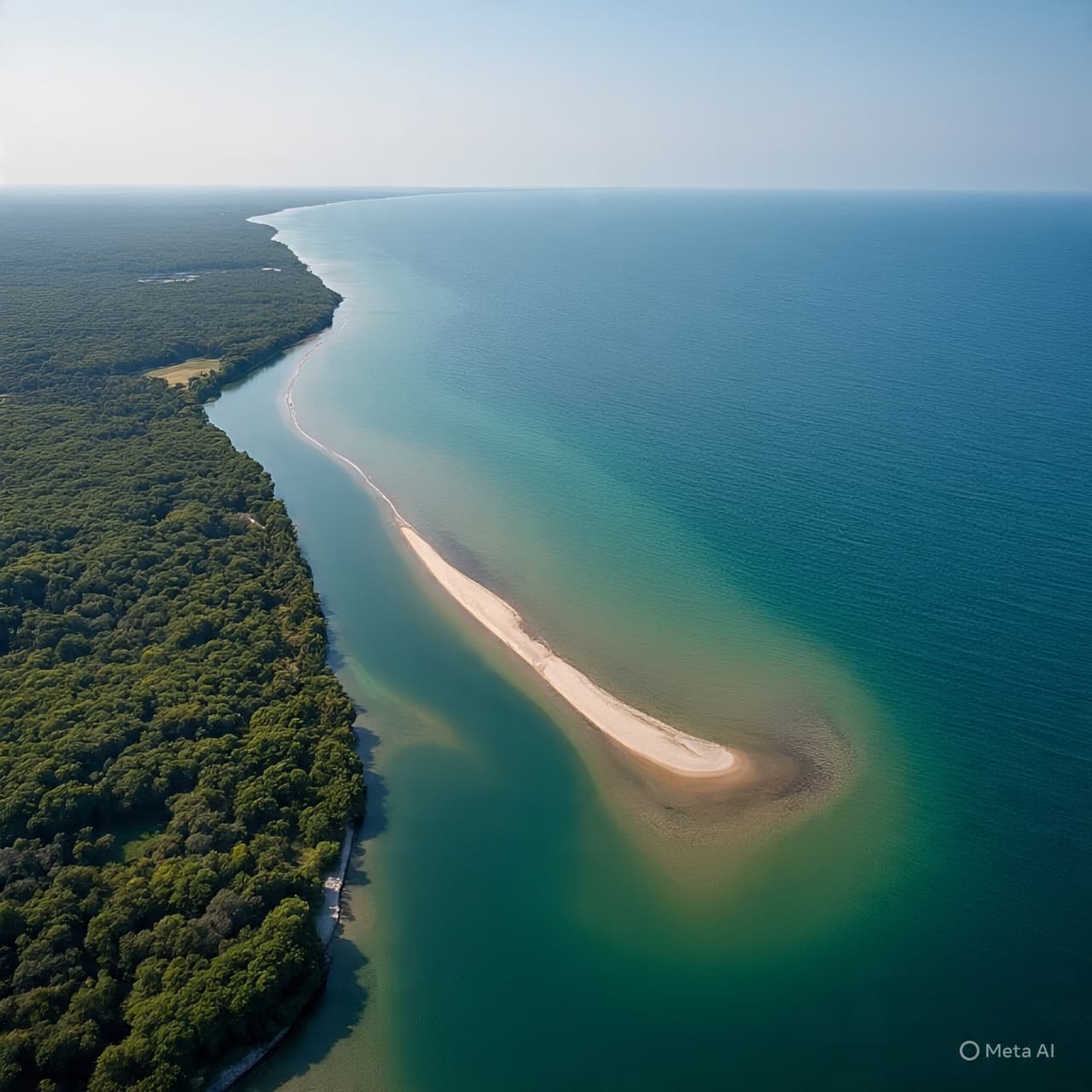
At the meeting point of river and ocean, where fresh water loosens into salt and tides fold into currents, an invisible exchange takes place. Ions drift across gradients of concentration, pulled by differences too small for the eye yet large enough to carry promise. In that quiet mingling lies the foundation of osmotic energy—often called blue energy—a technology that seeks electricity not from combustion or sunlight, but from the natural mixing of waters.
Osmotic energy systems harness the voltage generated when ions from saltwater move through an ion-selective membrane toward water with a lower salt concentration. The difference in salinity creates an electrochemical potential, and when properly controlled, that potential can be converted into usable electricity. Researchers have long described the concept as sustainable and abundant, particularly in estuaries where rivers meet the sea.
Yet translating principle into practice has proven complex. Membranes designed to allow ions to pass quickly often sacrifice selectivity, permitting unwanted charge leakage that reduces efficiency. Conversely, highly selective membranes may slow ion transport, limiting overall power output. The tension between speed and precision has kept many osmotic energy prototypes within laboratory settings rather than commercial deployment.
Another challenge lies in maintaining stable charge separation over time. As ions cross the membrane, ensuring that electrical potential is preserved without rapid dissipation requires careful material engineering. Mechanical robustness also matters: membranes must endure continuous exposure to saline environments, pressure variations, and long operational cycles without degrading.
Recent advances in materials science suggest that this balance may be shifting. By refining membrane structure at the nanoscale—adjusting pore size, surface charge, and chemical composition—researchers are working to create pathways that guide ions more selectively while preserving flow rates. The goal is subtle: not to force ions through, but to encourage them along smoother, more controlled channels.
In improved designs, the architecture of the membrane becomes a kind of gatekeeper, shaping how sodium and chloride ions navigate the gradient between saltwater and freshwater. Enhanced selectivity reduces energy loss, while structural reinforcements strengthen durability. The combination addresses long-standing trade-offs that have limited scalability.
Blue energy occupies a distinct place in the renewable landscape. Unlike wind or solar power, it does not depend on weather cycles or daylight. Wherever significant volumes of fresh and salt water converge, a potential source of continuous energy exists. Analysts have noted that if technical barriers are overcome, osmotic systems could complement other renewables, particularly in coastal regions.
The work remains iterative, measured in laboratory tests and pilot systems rather than large-scale facilities. But progress in membrane engineering brings the concept closer to viability. Each improvement in ion selectivity or structural resilience reduces the gap between theory and application.
At an estuary’s edge, the blending of waters seems effortless. Beneath that surface simplicity lies a choreography of charged particles responding to gradients shaped by nature. If scientists can continue to refine the membranes that guide them, the quiet exchange between salt and fresh may one day contribute more visibly to the world’s energy mix—steady, continuous, and drawn from the meeting of tides.
Published by Banx Network. This article is part of the Banx decentralized media programme, powered by the BXE token on the XRP Ledger.