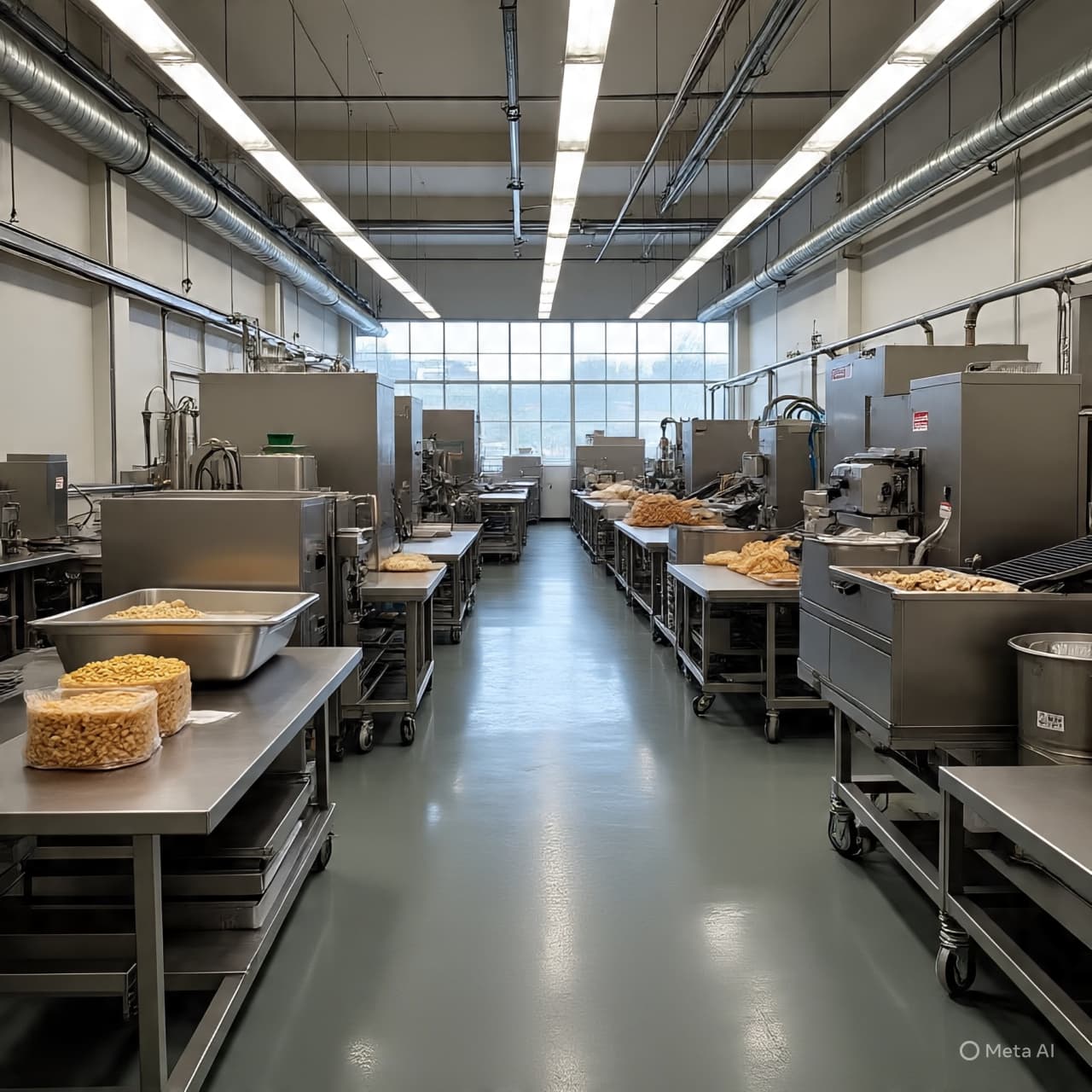
The day-to-day life of food often passes unseen. It moves in measured silence, from processing plants to refrigerated trucks, from storage rooms to kitchen counters, guided by schedules and temperatures rather than ceremony. Most of the time, this motion is steady and unremarkable, a quiet confidence built into systems designed to feed measuring spoons and dinner hours alike. Occasionally, though, that motion hesitates, not with drama, but with restraint.
Such a pause arrived this week with the recall of nearly 14,000 pounds of pre-cooked chicken products, an interruption announced not with alarm but with the careful language of precaution. The chicken, fully cooked and ready to eat, had already completed much of its journey—prepared, packaged, shipped—before routine testing revealed the possible presence of Listeria monocytogenes. The discovery did not come from illness reported at tables or counters, but from a laboratory result, quiet and decisive.
The products were produced by a Georgia-based food manufacturer and distributed to food service locations across several states. They were intended for institutions where meals are prepared in volume—cafeterias, restaurants, commercial kitchens—places where repetition and trust are essential. The recall was voluntary, and officials emphasized that no confirmed illnesses have been linked to the products. Still, the instruction was clear: stop, check, remove.
Listeria is a bacterium that resists some of the usual safeguards of modern storage. It can persist in cold environments, lingering where refrigeration is normally a final reassurance. For this reason, ready-to-eat foods are watched closely, and when even a possibility of contamination appears, the response tends toward caution rather than calculation. Those most vulnerable—older adults, pregnant people, and individuals with weakened immune systems—are never far from mind in such decisions.
In practical terms, the recall means inventories reviewed, boxes opened, lot numbers compared. It means the steady background work of sanitation repeated once more, surfaces cleaned not because of visible failure, but because unseen risk demands attention. The scale, nearly 14,000 pounds, sounds large until placed within the vast flow of food that moves daily across the country. Yet even small proportions matter when safety is the measure.
There is something instructive in how these moments unfold. The system does not stop entirely; it slows, corrects, and resumes. The announcement passes through newsrooms and kitchens alike, registering briefly before yielding again to routine. No illness has been reported, officials say, and the recall remains a preventative step, not a response to harm.
In plain terms, a voluntary recall has been issued for about 13,700 pounds of fully cooked chicken after testing detected possible Listeria contamination. The products were distributed to food service locations in multiple states, and federal officials report no confirmed illnesses linked to them so far
AI Image Disclaimer Visuals are AI-generated and serve as conceptual representations.
Sources (Media Names Only) Associated Press Reuters CNN NBC News
Published by Banx Network. This article is part of the Banx decentralized media programme, powered by the BXE token on the XRP Ledger.