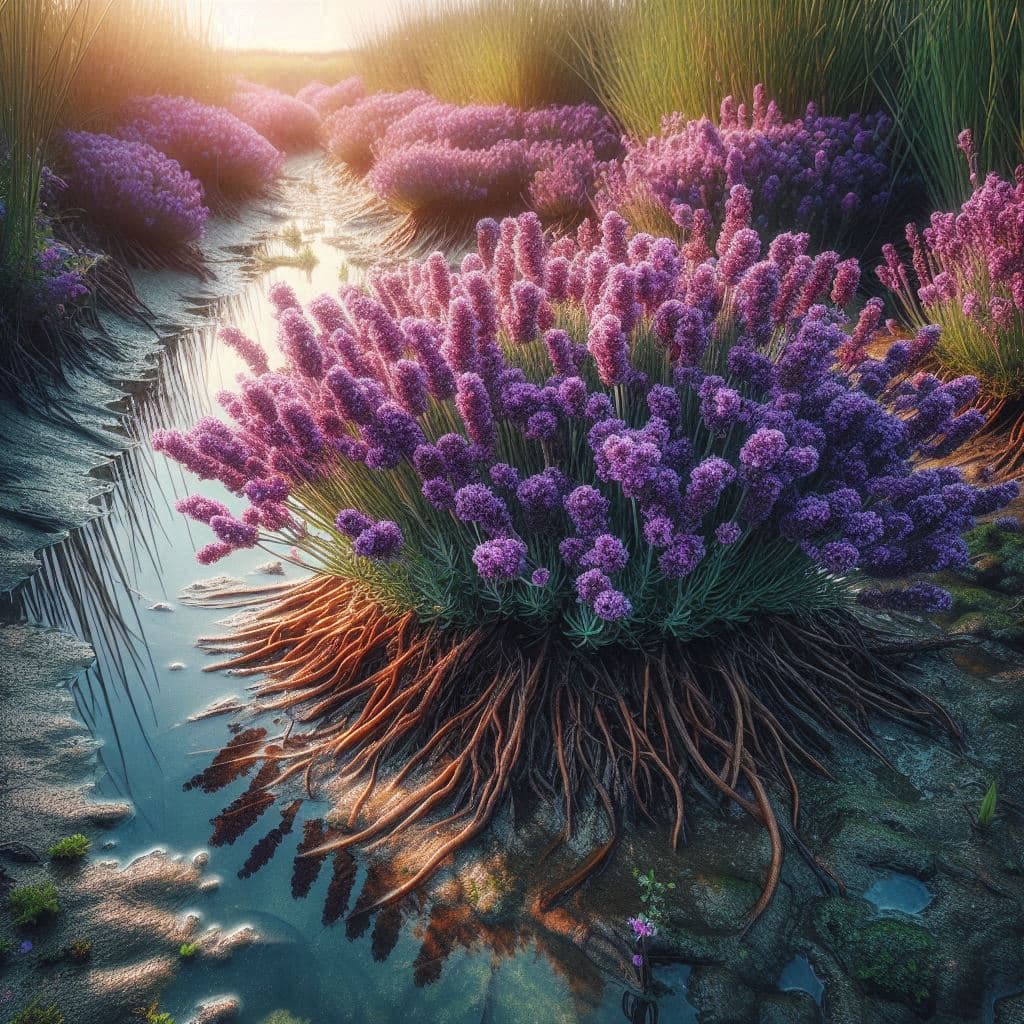
In the gentle hush where saltwater meets meadow grass, a splash of violet peeks — modest at first glance, humble in its beauty, yet quietly weaving its own quiet story of life and balance. Along the brackish edges of the Mediterranean’s marshlands, this purple blossom leans into the wind, its slender stems bending with the tide and the passing of seasons. What seems like a simple flourish of color is, as recent research suggests, part of nature’s deeper tapestry — a floral companion that quietly tucks away carbon beneath its feet, in the hidden world of roots and soil, helping to hold climate’s breath a little longer.
Researchers studying salt marsh ecosystems in Italy’s famed Venice Lagoon found this flower — a species of sea lavender — flourishing where the marsh’s capacity to store carbon was greatest. Salt marshes are already recognized as some of Earth’s richest natural carbon stores; they trap carbon more effectively than many upland forests and grasslands because wet soils slow down decomposition, allowing carbon to remain locked away for extended spans of time. Amid this green net of tidecarried life, the purple blooms stood out — not merely for their hue, but for their quiet labor in the belowground world.
It was beneath the surface, in the dense network of organic matter and roots, that scientists could see the flower’s contribution. Unlike many plants that channel carbon mainly into above-ground leaves and stems, this sea lavender channels a surprising share of its energy into robust belowground mass. There, in the cool darkness of soil and sediment, carbon is more likely to remain long after the petals have fallen. In essence, the flower becomes a subtle steward of carbon — part of a living reservoir that tempers the rise of greenhouse gases in Earth’s atmosphere, a gentle but enduring ally in the work of climate balance.
This discovery resonates with wider research on plant carbon sequestration, which increasingly shows that decisions about which species thrive where can meaningfully affect how much carbon landscapes can hold. While trees often take center stage in discussions about carbon sinks, the role of perennial herbs, marsh plants, and understorey vegetation has gained scientific interest because of their often-underestimated belowground carbon stores.
In considering the mosaic of life that makes up a salt marsh, it becomes clear that each species contributes uniquely — some through towering trunks, others through endless blades of grass, and others still through blossoms that sway quietly at the water’s edge. The sea lavender’s contribution is not loud, but it is steady, a reminder that nature’s solutions can be found not just in grandeur, but in subtle, persistent persistence.
In drawing these scientific threads together, we are reminded that the work of understanding carbon — how it moves, how it is stored, and how we might steward it — often leads us to look closely at the living tapestry around us. As research continues, the humble purple flower of the marsh may well stand as a symbol of nature’s unassuming, yet vital, role in buffering the planet’s changing climate.
AI Image Disclaimer (Rotated Wording)
“Illustrations were produced with AI and serve as conceptual depictions.”
---
Sources
AGU News
Journal of Geophysical Research: Biogeosciences
Journal of Plant Biology
Scientific American
Contextual plant carbon research publications
Published by Banx Network. This article is part of the Banx decentralized media programme, powered by the BXE token on the XRP Ledger.