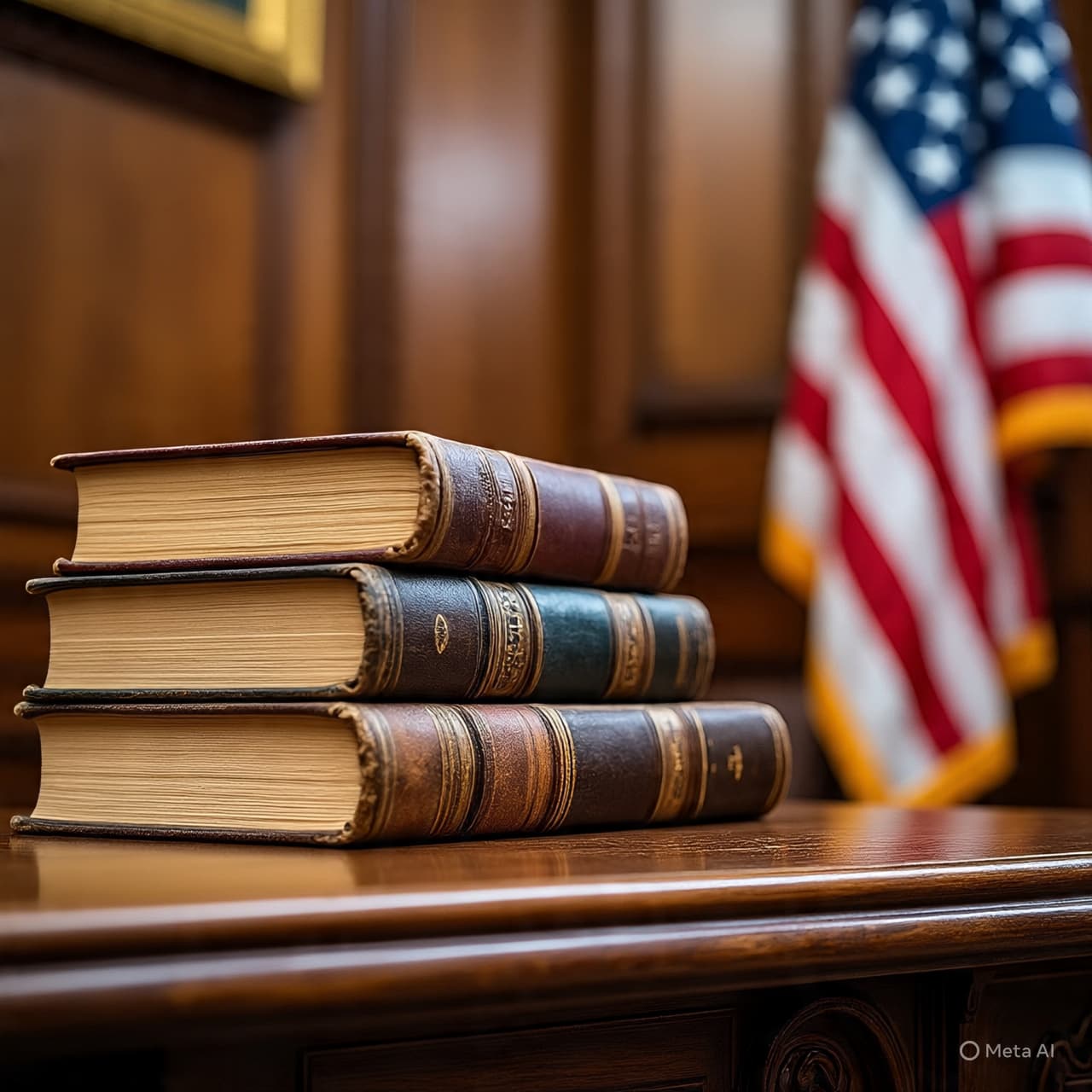
The courtroom is quiet in a way that feels deliberate. Marble columns hold the weight of history, and beneath them, arguments rise in measured cadence. Outside, the country moves at a different pace—states legalize, markets expand, and cultural norms shift. Inside, the question is narrower but no less consequential: who, in this evolving landscape, has the right to own a gun?
The Supreme Court of the United States is wrestling with the intersection of federal gun laws and state-level legalization of marijuana. At issue is whether individuals who use cannabis—legal in many states but still prohibited under federal law—can be barred from possessing firearms under longstanding federal statutes.
Under current law, firearm purchasers must affirm that they are not “unlawful users” of controlled substances. Marijuana remains classified as illegal under federal law, even in states where it is permitted for medical or recreational use. The legal tension has prompted lower courts to diverge in their rulings, with some questioning whether categorical bans align with the constitutional protections outlined in the Second Amendment.
Recent Supreme Court decisions, including New York State Rifle & Pistol Association v. Bruen, have reshaped the legal framework for evaluating gun restrictions, emphasizing historical tradition as the benchmark for constitutionality. In light of that precedent, attorneys have argued that disarming marijuana users lacks a sufficiently rooted historical analogue. Others contend that longstanding limits on firearm possession by certain groups provide the necessary justification.
During oral arguments, justices explored whether federal drug policy—unchanged at the national level despite shifting state laws—creates a constitutional inconsistency. They also questioned how broadly a ruling might apply, considering implications for medical marijuana patients and for broader gun regulation.
The case unfolds at a moment when the national debate over gun rights remains deeply polarized. Advocacy groups on both sides are watching closely, aware that the Court’s reasoning could influence future challenges to firearm restrictions beyond the context of cannabis use. At the same time, Congress has not amended marijuana’s federal status, leaving courts to navigate the gap between state experimentation and federal prohibition.
Whatever the outcome, the decision will likely clarify how the Second Amendment interacts with contemporary realities. It may affirm the federal government’s authority to impose categorical restrictions, or it may narrow the circumstances under which such limits can stand. Either way, the ruling will reverberate beyond the courtroom.
As the justices deliberate, the marble hall remains still. Outside, the country continues to test the boundaries of law and custom. In that quiet space between evolving policy and enduring text, the Court prepares to define how two powerful currents—gun rights and marijuana legalization—flow together in American constitutional life.
AI Image Disclaimer
Visuals are AI-generated and serve as conceptual representations.
Sources
Supreme Court of the United States Reuters Associated Press SCOTUSblog The New York Times
Published by Banx Network. This article is part of the Banx decentralized media programme, powered by the BXE token on the XRP Ledger.