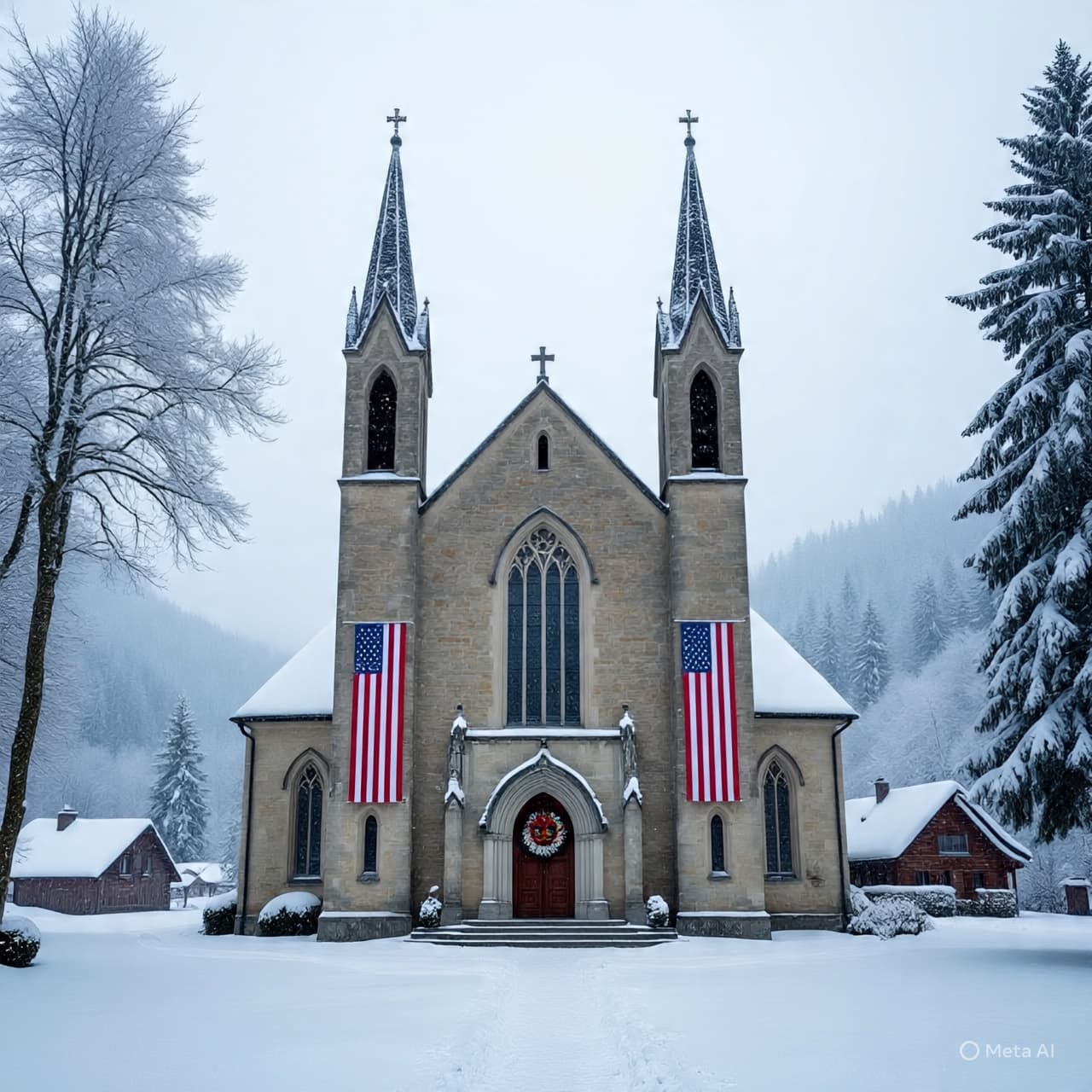
In Davos, winter has a way of softening everything. Snow dulls sound, slows footsteps, and turns even the busiest streets into places of pause. It is a fitting backdrop for reflection, which is perhaps why the small English church near the promenade has long stood as a quiet presence amid the yearly surge of global power. This year, however, its stillness gave way to something louder, more symbolic, and unmistakably American.
The Englische Kirche, a historic Protestant church, was transformed into what became known as “USA House,” a central gathering space for American officials, executives, and invited guests during the World Economic Forum. Where hymns once lingered, conversations about markets, influence, and national direction now filled the air. The building’s stone walls remained unchanged, but its purpose, at least temporarily, shifted into something closer to a stage.
Inside, the space carried a curated image of American identity. Red, white, and blue accents, references to the upcoming 250th anniversary of the United States, and familiar political slogans framed the experience. The atmosphere blended hospitality with messaging, offering food, music, and informal meetings under vaulted ceilings that once signaled reverence rather than reception. For many visitors, it felt less like a formal embassy and more like a living room designed to project confidence and continuity.
Yet the transformation was not merely aesthetic. USA House also reflected a particular political tone, one closely associated with the current administration and its ideological allies. Programming and access were shaped accordingly, and reports that certain political figures were excluded from speaking within the venue highlighted how even social spaces at Davos can mirror domestic divides. In a forum built on dialogue, absence itself became a form of statement.
The choice of a church as the setting added a layer of complexity. For some attendees, the repurposing felt inventive, a respectful reuse of space during an extraordinary global gathering. For others, the overlap of sacred architecture and partisan symbolism raised quiet questions about boundaries — not in protest, but in contemplation. The building held both interpretations at once, absorbing them without comment.
Beyond politics, USA House served as a reminder of how nations present themselves when the world is watching. While many countries opted for sleek pavilions or hotel suites, the American presence chose permanence over polish, anchoring itself in stone and history. The message, intentional or not, suggested roots as much as reach.
As Davos drew to a close and banners were removed, the church began its return to familiarity. The echoes of conversation faded, leaving behind the memory of a week when global power passed through a space built for something quieter. What remained was not controversy so much as impression — that even in the calm of the Alps, symbolism travels easily, and that places, like ideas, can carry different meanings depending on who stands inside them.
AI Image Disclaimer (rotated wording) “Visuals are created with AI tools and are not real photographs.”
Sources (media names only):
The Washington Post Reuters Business Insider Tatler Evangelical Focus
Published by Banx Network. This article is part of the Banx decentralized media programme, powered by the BXE token on the XRP Ledger.