In the ever‑complex rhythm of European politics and international trade, even a slight shift in tone can signal significant undercurrents beneath the surface. On the eve of a key vote on a long‑delayed trade agreement, Ireland’s Taoiseach has opened the possibility that his government might support the Mercosur deal — a pact that has been a source of tension at home for years, especially among farmers wary of competition. With recent concessions from the European Union aimed at alleviating those concerns, the Irish prime minister’s comments reflect a cautious recalibration of Ireland’s stance.
Prime Minister Micheál Martin indicated that while Ireland has historically opposed the EU‑Mercosur trade agreement — a comprehensive free trade pact between the European Union and the South American Mercosur bloc — recent developments have given Dublin reason to reconsider its position. Speaking during an official visit to China, Martin said that talks with EU partners have produced “significant safeguards” over the past year and that progress in agricultural protections, particularly improvements linked to the Common Agricultural Policy (CAP), have been “welcome.” However, he stressed that final decisions have not yet been made and further work will continue before a government decision is reached later in the week.
The Mercosur deal — more than 25 years in the making — aims to reduce tariffs and boost trade between the EU and countries including Brazil, Argentina, Paraguay, and Uruguay. It has faced criticism from several EU member states, chiefly due to concerns that an influx of cheaper agricultural imports, such as beef and sugar, could undermine local farmers. France and Italy were among the holdouts that previously delayed signing, prompting the EU to offer enhanced support measures for farmers to secure broader backing.
In Ireland’s case, agricultural stakeholders have been especially vocal. Many farmers and independent politicians have urged the government to uphold its original opposition to the deal, warning that even with concessions, the pact could expose Irish agriculture to unfair competition and standards disparities. However, Martin’s comments suggested that, with sufficient safeguards and assurances, Ireland might not categorically rule out support when the vote comes before EU governments.
The Taoiseach emphasized that negotiations are ongoing, and any final stance will take into account both domestic concerns and developments in EU deliberations. Irish officials are engaging with counterparts in other member states — notably Italy and France — to shape a position that balances Ireland’s agricultural priorities with broader EU economic interests.
As Brussels works to secure the approvals needed to move the Mercosur deal forward — including continued consultations with agriculture ministers and potential enhancements to farmer support — Ireland’s evolving position could prove pivotal. For now, the Taoiseach’s remarks leave open the possibility that Dublin could back the agreement, provided further concessions and protections for Irish farmers materialize. The coming days are likely to be decisive as the government weighs its traditional stance against fresh assurances from EU partners.
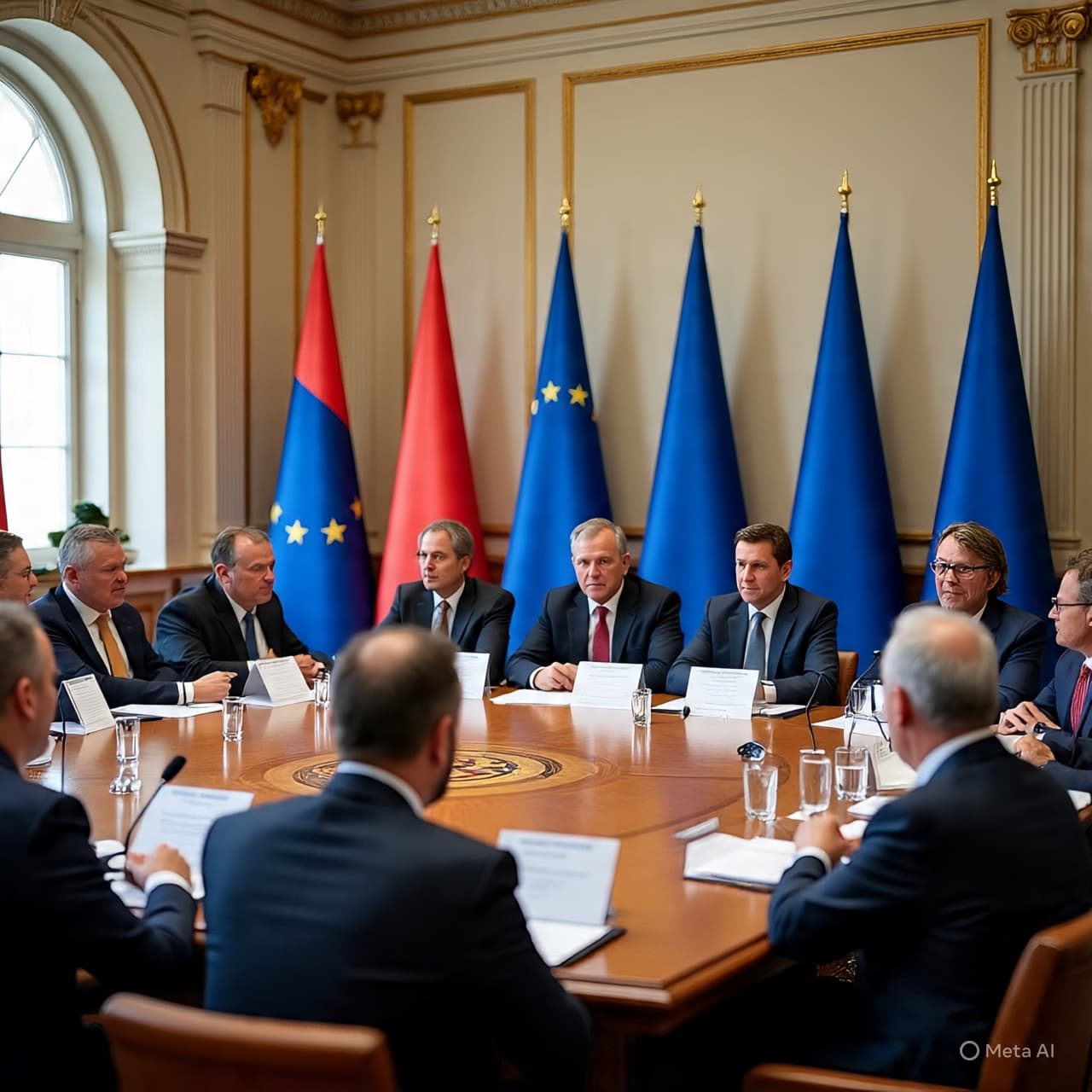
AI Image Disclaimer “Visuals are created with AI tools and are not real photographs, meant for conceptual illustration.”
Sources: The Independent (Ireland) – “Taoiseach leaves door open for backing of Mercosur deal after EU concessions”; Irish Examiner – “Taoiseach leaves door open for Government to support Mercosur trade deal”; Reuters – European leaders work to dispel doubts on Mercosur trade pact; Reuters – EU summons farm ministers to secure Mercosur deal support.
Published by Banx Network. This article is part of the Banx decentralized media programme, powered by the BXE token on the XRP Ledger.