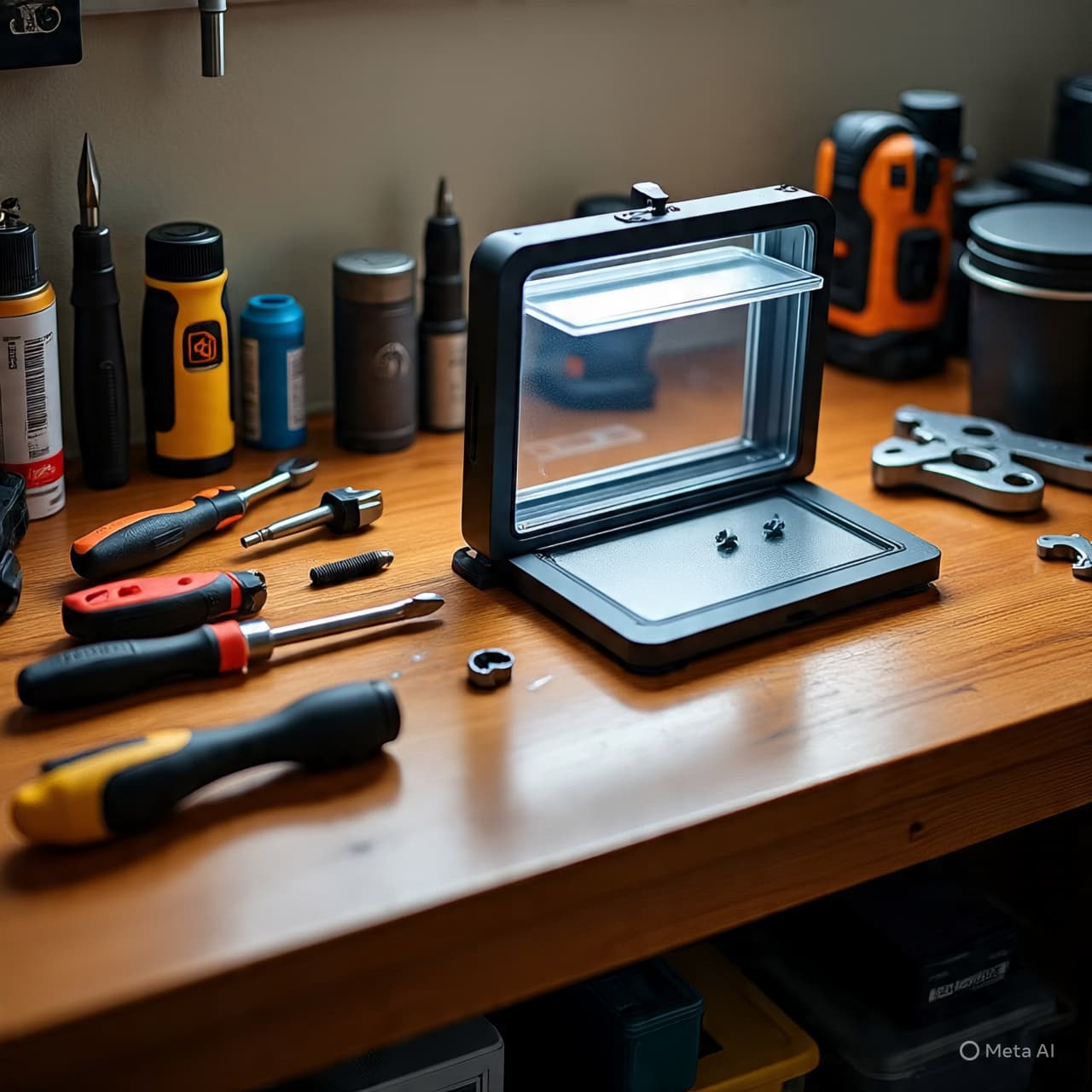
There is a particular calm that settles over a workshop before the first cut is made — a pause filled with alignment, measurement, and the low anticipation of making something fit just a little better than before. On one side rests the familiar weight of power tools, red casings catching the light. On the other, a smaller machine sings in thin layers, building shapes from threadlike plastic, one patient line at a time.
Owners of tools from Milwaukee Tool often discover that the space around the tool matters almost as much as the tool itself. Organization, reach, angle, and grip — these quiet details shape the day’s work. In recent years, home 3D printing has begun to fill these margins with custom accessories, small companions that adapt mass-made hardware to personal rhythm and layout.
Among the most commonly printed additions are battery holders shaped to match the slide-lock geometry of Milwaukee packs. These mounts can be fixed beneath shelves, along van walls, or beside benches, turning unused vertical space into a charging and storage gallery. Instead of batteries resting loose in drawers, they click into place overhead, visible and ready, like books returned to their proper slots. Designers across maker communities have shared variations sized for different pack formats, often with reinforced ribs to handle repeated loading.
Bit and driver organizers are another quiet favorite. Printed blocks with labeled channels or hex recesses give wandering tips a fixed address. Some designs echo the footprint of existing tool cases, while others are shaped as rail-mounted strips that hang along a wall or the side of a cart. The advantage is not complexity but specificity — a tray that fits the exact mix of bits a user reaches for most, rather than a generic grid with half its spaces empty.
For those who work overhead or in tight cavities, clip-on belt hooks and tool-side hangers are frequently adapted and reimagined through print files. While metal clips remain standard, printable versions can be shaped wider, offset differently, or combined with small loops for tethering. The material is lighter, the geometry more experimental, and the result often tuned to a single person’s movement pattern — where the tool rests between tasks, how it turns when set down, how it returns to hand.
Dust ports and vacuum adapters form another corner of this printed landscape. Shop setups are rarely uniform; hose diameters and tool outlets often disagree by a few millimeters — enough to leak efficiency. Custom adapters, modeled to step between sizes, are widely shared by hobbyists and professionals alike. Printed in tougher filaments, they serve as diplomatic pieces between systems, reducing tape-wrapped compromises and loose fits.
Even lighting finds its printed companions. Snap-on diffusers, magnetic light mounts, and small stands for jobsite lamps allow illumination to be redirected and softened. A clear or white printed shade can spread a harsh beam across a wider working area, while articulated mounts let lights perch on shelves, ladders, or steel framing. The change is subtle but welcome: fewer shadows, steadier focus, less strain by late afternoon.
Across maker and fabrication publications, communities, and project libraries, these kinds of accessories appear again and again — modest in size, practical in intent, shaped by shared iteration. They are rarely sold in boxes and almost never advertised on packaging. Instead, they circulate as files, tweaks, and remixes, adjusted for printer tolerances and personal preference.
In direct terms, maker outlets and 3D printing publications document a growing number of home-printable accessories for Milwaukee tools, including battery mounts, bit organizers, belt clips, hose adapters, and light mounts. Most are shared through community design repositories and printed in common materials such as PLA, PETG, or ABS, depending on strength and heat needs.
AI Image Disclaimer Illustrations were generated with AI and depict conceptual scenes rather than real photographs.
Sources (Media Names Only) All3DP Make: Magazine Instructables Hackaday Prusa Blog
Published by Banx Network. This article is part of the Banx decentralized media programme, powered by the BXE token on the XRP Ledger.