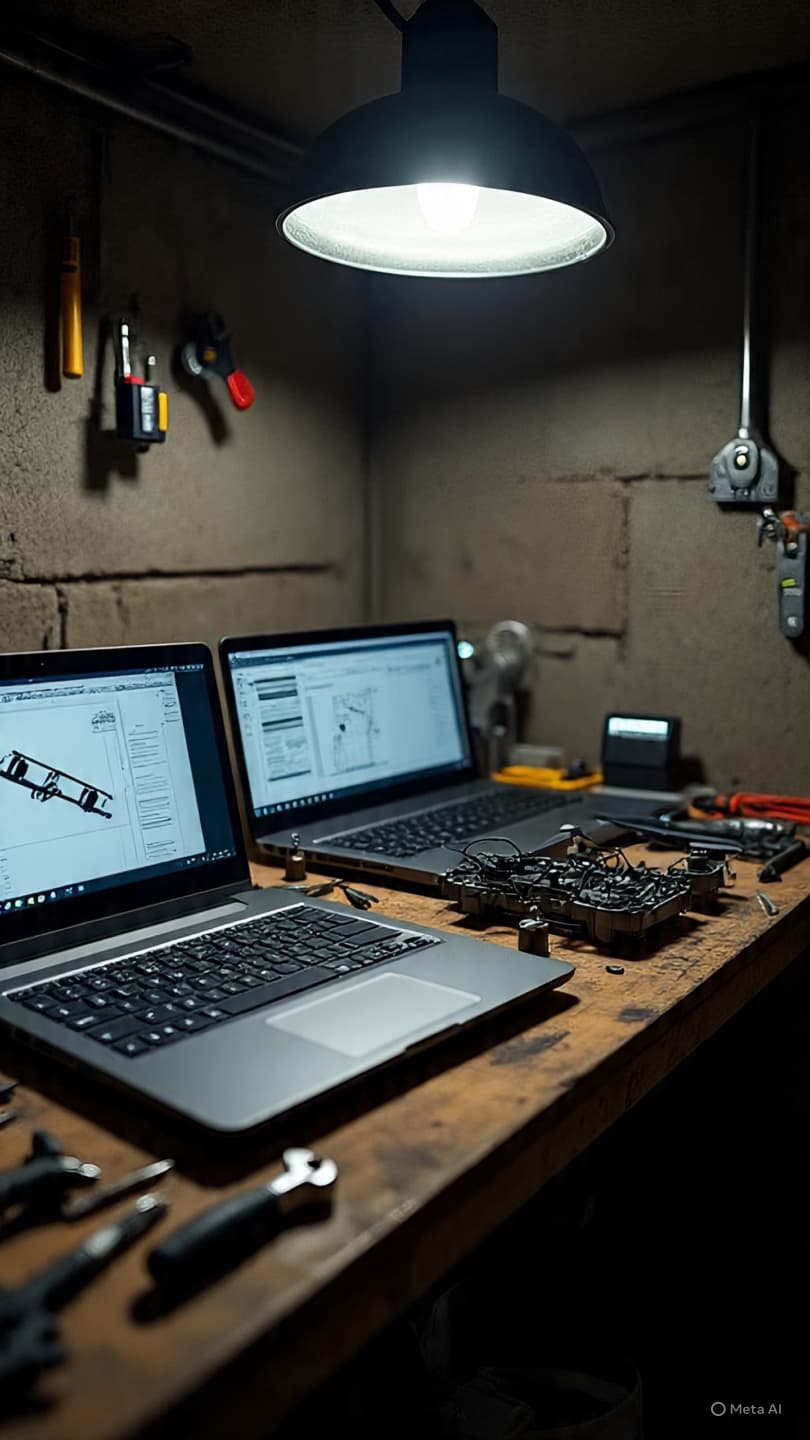
In workshops where the hum of plastic printers once belonged to quiet experimentation and hobbyist invention, a different rhythm has taken hold. The glow of LEDs flickers across tables lined with spools of filament, where digital blueprints are no longer abstract designs but urgent instructions shaped by a country under siege. Across Ukraine, small and dispersed production spaces—often described as “3D printing farms”—have become part of a rapidly evolving wartime ecosystem, where civilian tools are being repurposed for military necessity.
These networks are not singular factories in the traditional sense, but rather a scattered constellation of garages, basements, and workshops linked by necessity more than geography. In them, engineers, volunteers, and technicians collaborate on producing components used in battlefield systems, including parts for drones and other military equipment. While many of these efforts are officially tied to defense support initiatives, reporting has suggested that some outputs may extend into more sensitive categories of wartime hardware.
The rise of this decentralized manufacturing reflects a broader transformation in modern conflict, where industrial capacity is no longer defined solely by large-scale state factories, but also by adaptable civilian infrastructure. Ukraine, facing sustained pressure on its supply chains, has leaned heavily into improvisation and distributed production. In this environment, 3D printing offers speed and flexibility—allowing rapid replacement of parts that might otherwise take weeks or months to procure through conventional channels.
Yet this evolution exists in a space of ambiguity. The same technologies used to produce protective gear, spare components, or reconnaissance drone parts can also be adapted for more destructive applications when guided by different design files and operational intent. It is this dual-use nature that has drawn international attention, as observers attempt to understand how far civilian manufacturing can extend into the architecture of modern warfare without formal industrial oversight.
Ukrainian officials have emphasized the importance of domestic innovation in sustaining defense capabilities, particularly as the war has stretched logistics and procurement systems. Meanwhile, independent reporting has pointed to informal networks that operate with varying degrees of coordination, sometimes supported by crowdfunding initiatives or volunteer engineering communities. The result is a fragmented but responsive production landscape—one that mirrors the fluid and asymmetric nature of the conflict itself.
Beyond the technical dimension lies a quieter question about how war reshapes technological culture. The same open-source communities that once shared design files for educational or experimental purposes now find their knowledge intersecting with military demand. The boundary between maker culture and defense production has blurred, not through a single decision, but through accumulation—layered necessity, iteration, and adaptation under pressure.
As the conflict continues, the implications extend beyond Ukraine’s borders. The normalization of decentralized weapons-adjacent manufacturing raises questions about future conflicts, where similar networks could emerge in other regions with access to digital fabrication tools. What is being tested in real time is not only military endurance, but also the evolving relationship between technology, accessibility, and force.
For now, these workshops remain active nodes in a larger wartime system—small in scale individually, but significant in their collective responsiveness. They sit at the intersection of ingenuity and urgency, where digital design meets physical consequence, and where the tools of modern creativity are drawn into the gravity of conflict.
In this shifting landscape, the line between production and participation in war becomes harder to define, leaving behind a world where the sound of a 3D printer may carry meanings far beyond its original design.
AI Image Disclaimer Images are AI-generated and intended to represent conceptual reconstructions of described environments, not documentary photography.
Sources Reuters, BBC News, The Economist, Financial Times, Associated Press
Published by Banx Network. This article is part of the Banx decentralized media programme, powered by the BXE token on the XRP Ledger.