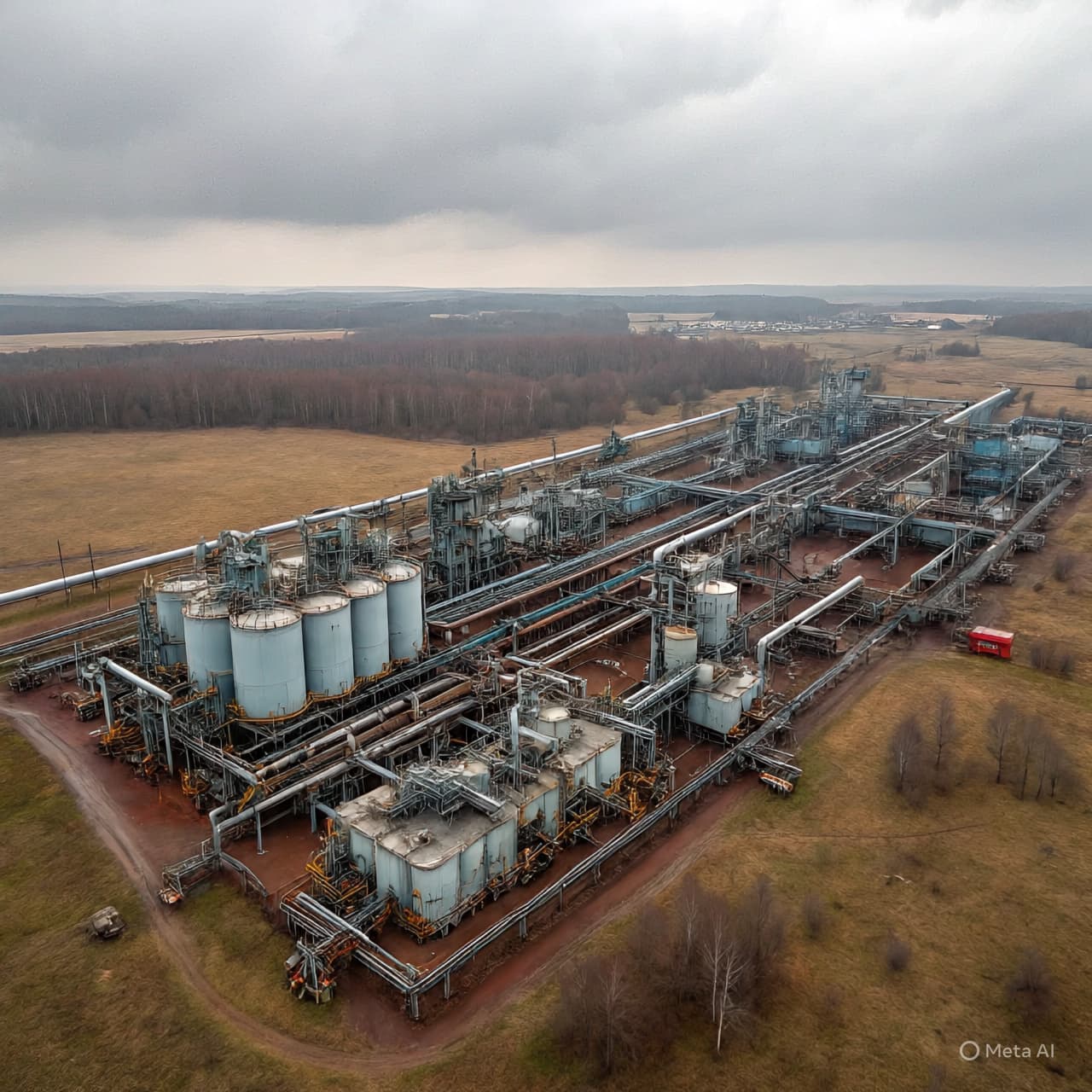
In the flatlands where pipelines run like buried rivers beneath wheat fields and forest edges, infrastructure rarely announces itself. It hums below notice, a quiet geometry of steel and valves carrying energy across borders drawn long ago. The Druzhba pipeline—its name meaning “friendship”—has for decades threaded oil from Russia westward, a reminder that even uneasy neighbors can share the same underground current.
This week, that current faltered.
Ukrainian drones struck a key site along the Druzhba oil pipeline inside Russia, targeting infrastructure tied to the flow of crude toward Central Europe. The attack, according to Russian regional officials and Ukrainian sources cited in international reporting, damaged facilities linked to pumping or storage operations. Fires were reported, and operations were disrupted as emergency crews moved in under darkened skies.
The strike marks another chapter in a conflict that has steadily redrawn the map of what is considered a battlefield. Energy facilities—once assumed to be insulated from direct attack because of their continental importance—have become strategic nodes. Since Russia’s full-scale invasion of Ukraine in 2022, Kyiv has expanded its use of long-range drones to reach military depots, refineries, and logistical arteries deep inside Russian territory. The Druzhba site now joins that widening list.
The reverberations extend beyond the immediate damage. The southern branch of the Druzhba pipeline supplies oil to Hungary and Slovakia, countries that have maintained a more cautious posture toward Moscow compared to other European Union members. Budapest, in particular, has emphasized the importance of uninterrupted energy flows, arguing that pipeline deliveries are critical to its economy. Hungarian officials have previously warned that attacks threatening such routes risk destabilizing regional energy security.
Yet war rarely bends neatly around economic preferences. Ukrainian officials have framed strikes on energy infrastructure as legitimate responses to Russia’s sustained attacks on Ukraine’s own power grid and oil facilities. In Kyiv, the calculus is shaped by months of missile barrages and blackouts. In Budapest, it is shaped by refinery output and winter reserves. Between them lies a pipeline that predates the current conflict, built in the Soviet era to bind together distant capitals through shared supply.
European energy dependence on Russian oil has already diminished significantly since 2022, with sanctions and diversification efforts reshaping trade flows. Still, some Central European states continue to rely on Druzhba’s southern corridor under exemptions negotiated within the European Union. Any disruption, even temporary, draws attention to the delicate balance between geopolitical alignment and material necessity.
The Kremlin has condemned cross-border drone attacks as acts of escalation, while Ukrainian leaders have suggested that the war’s geography cannot remain confined within their own borders. Each strike carries a dual message: operational and symbolic. Infrastructure once considered fixed and neutral is recast as contested ground.
As repair crews assess the extent of the damage, oil traders and policymakers alike watch the gauges. Markets respond not only to barrels lost but to signals sent. The Druzhba pipeline has weathered decades of political transformation—from the Cold War to the fragmentation of the Soviet Union, from EU expansion to sanctions regimes. Now it stands, once again, at the intersection of history and immediacy.
What is at stake is more than the functionality of a pumping station. It is the question of how far this war’s reach will extend—whether energy corridors can remain threads of interdependence, or whether they too become front lines. For Hungary and its neighbors, the concern is tangible: supply, price, continuity. For Ukraine, the objective is strategic pressure. And for Europe as a whole, the episode underscores how modern conflict moves not only across trenches and skies, but along pipelines buried quietly beneath the soil.
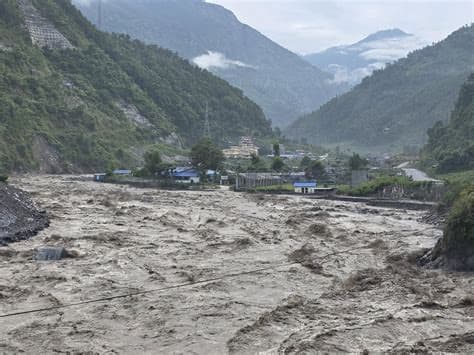
AI Image Disclaimer Illustrations were created using AI tools and are not real photographs.
Sources Reuters BBC News Associated Press Financial Times European Commission
Published by Banx Network. This article is part of the Banx decentralized media programme, powered by the BXE token on the XRP Ledger.