
Key Highlights
- Ukrainian drones targeted the Druzhba pipeline, disrupting oil flow.
- The attack raises concerns over energy security in Central Europe.
- Hungary and Slovakia rely heavily on the pipeline for oil supplies.
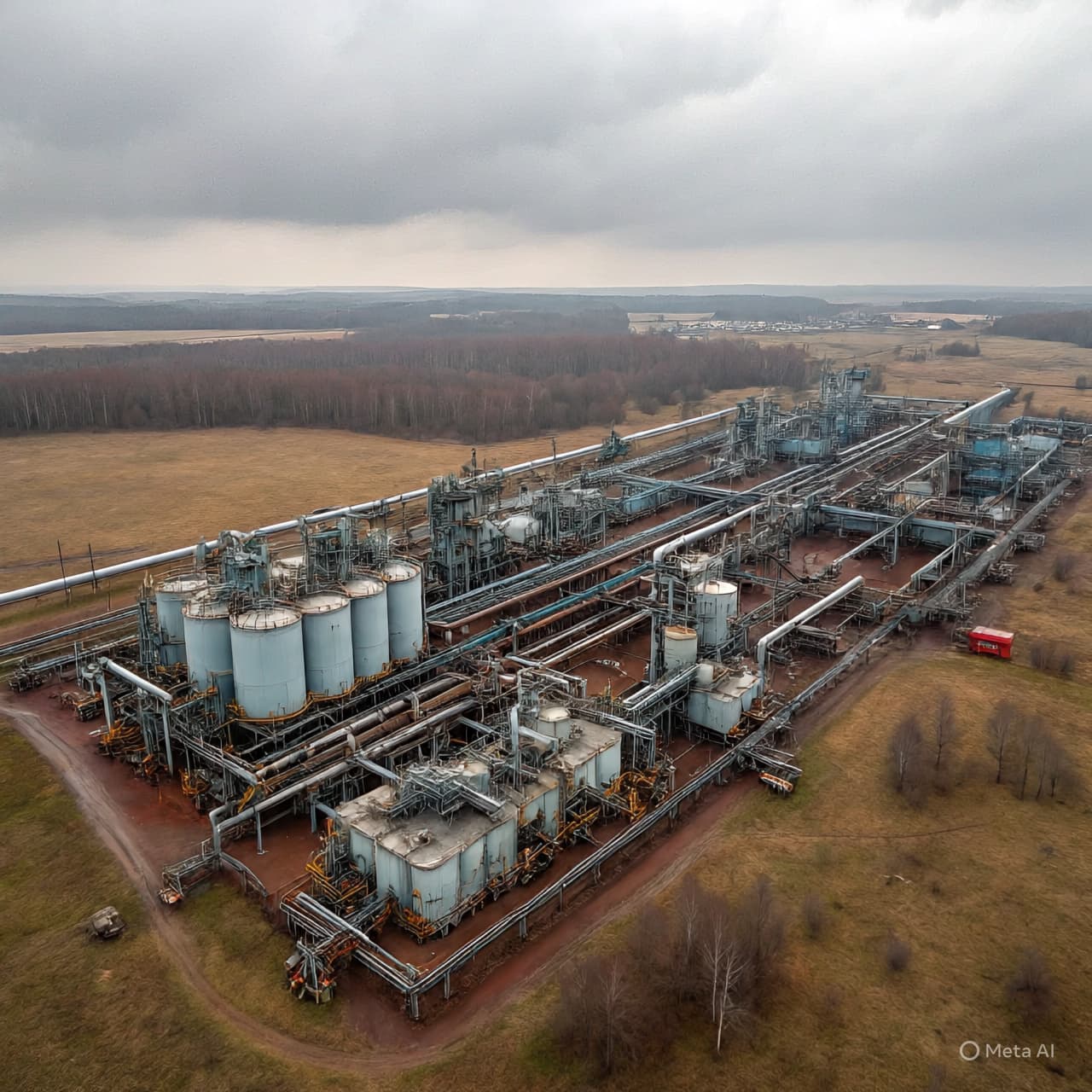
The Druzhba pipeline, a crucial artery for oil transport from Russia to Europe, has been thrust into the spotlight following a recent drone strike by Ukrainian forces. This attack, which occurred within Russian territory, targeted key infrastructure associated with the pipeline, leading to significant operational disruptions. Reports indicate that the strike resulted in fires and damage to facilities crucial for pumping and storage, prompting emergency responses from local authorities.
This incident marks a significant escalation in the ongoing conflict between Ukraine and Russia, as energy infrastructure—previously considered off-limits due to its importance—has now become a focal point of military strategy. Since the onset of Russia's full-scale invasion in 2022, Ukraine has increasingly utilized long-range drones to strike deep into Russian territory, targeting military installations and logistical hubs. The Druzhba pipeline, which has historically symbolized energy cooperation between Russia and Europe, now finds itself at the center of this evolving battlefield.
The implications of this strike extend beyond immediate damage. The southern branch of the Druzhba pipeline supplies oil to Hungary and Slovakia, both of which have maintained a cautious stance towards Russia amid the ongoing conflict. Hungarian officials have previously emphasized the critical nature of uninterrupted energy supplies for their economy, warning that disruptions could destabilize the region's energy security. This perspective highlights the delicate balance Central European nations must navigate between their economic dependencies and geopolitical realities.
Ukrainian officials have framed their strikes on energy infrastructure as necessary responses to Russia's ongoing assaults on Ukraine's own energy systems. In Kyiv, the rationale is shaped by the need to counteract the devastation wrought by missile strikes on Ukrainian power grids. Conversely, in Budapest, the focus remains on maintaining refinery outputs and ensuring sufficient winter reserves. The Druzhba pipeline, built during the Soviet era, serves as a reminder of the intertwined fates of these nations, bound by shared energy needs yet divided by conflict.
Since 2022, European dependence on Russian oil has significantly decreased due to sanctions and efforts to diversify energy sources. However, some Central European countries continue to rely on the Druzhba pipeline, benefiting from exemptions negotiated within the European Union. Any disruption to this supply line, even if temporary, underscores the precarious balance between geopolitical alignment and energy necessity.
The Kremlin has condemned the drone strikes as escalatory, while Ukrainian leaders argue that the war's geography cannot be confined to their borders. Each attack sends a dual message—both operational and symbolic—recasting infrastructure once deemed neutral as contested territory. As repair crews assess the damage, oil traders and policymakers are closely monitoring the situation, aware that markets react not only to physical losses but also to the broader implications of such strikes.
The Druzhba pipeline has endured decades of political upheaval, from the Cold War to the dissolution of the Soviet Union, and now faces a new challenge amid the current conflict. The stakes extend beyond the functionality of a single pumping station; they encompass the future of energy corridors and their role in fostering interdependence or becoming new front lines in warfare. For Hungary and its neighbors, the immediate concerns revolve around supply continuity and pricing, while for Ukraine, the objective remains to exert strategic pressure on Russia. This incident serves as a stark reminder of how modern conflicts extend beyond traditional battlefields, intertwining with the very infrastructure that sustains economies and societies.
Published by Banx Network. This article is part of the Banx decentralized media programme, powered by the BXE token on the XRP Ledger.



