Spring in Paris often arrives with a soft insistence—light settling over stone facades, conversations stretching into the evening, and the quiet sense that time can move gently, even when the world beyond does not. Yet beneath this familiar rhythm, another kind of movement gathers, one shaped not by seasons but by urgency.
Across the Atlantic, preparations take form in measured steps. Marco Rubio is expected to travel to France, carrying with him not only briefing papers and policy positions, but a message intended to bridge a widening hesitation. His task, as it emerges in fragments of reporting and official remarks, is to engage leaders of the Group of Seven—a circle of allied nations whose unity has long been assumed, but not always assured.
At the center of this effort lies Iran, not as a place alone, but as a question—one that stretches across strategy, memory, and consequence. Discussions of potential conflict, framed in Washington with a sense of necessity, arrive in Europe with a different cadence. Here, the past lingers more visibly, shaping the present in subtle but persistent ways. The idea of war, even when distant, carries echoes that complicate its reception.
France, as both host and participant, reflects this layered perspective. Its diplomatic tradition often leans toward caution, favoring dialogue where possible, restraint where necessary. Within the broader G7, similar currents can be felt—some nations more aligned with American urgency, others more inclined toward skepticism. The result is not a fracture, but a quiet divergence, a difference in emphasis that turns consensus into something that must be carefully assembled.
Rubio’s journey, then, becomes less about declaration and more about persuasion. It unfolds in meetings rather than moments, in conversations that stretch across tables and time zones. The language of such exchanges is rarely direct; it moves through nuance, shaped by shared interests and unspoken reservations alike. To “sell” the prospect of confrontation is, in this context, to navigate a landscape where agreement cannot be assumed.
Beyond the conference rooms, the implications extend outward. Any shift in the G7’s position would ripple through global diplomacy, influencing not only policy but perception. Markets, alliances, and regional actors all watch these interactions closely, reading signals in tone as much as in outcome. The question is not only what is decided, but how it is framed—whether unity can be presented, or whether difference will remain visible beneath the surface.
And still, the city continues in its own rhythm. Cafés fill, streets hum, and the Seine moves as it always has, carrying reflections of a sky that changes by the hour. It is within this coexistence—between ordinary life and extraordinary deliberation—that the moment settles.
As plans take shape, the facts remain clear, if quietly stated. Rubio is preparing to travel to France to engage with G7 allies, seeking support for a more assertive stance toward Iran, even as skepticism persists among some members. The outcome is not yet defined, but the effort itself speaks to a broader truth: that even among long-standing partners, agreement is something that must be continually revisited, negotiated, and, at times, gently pursued.
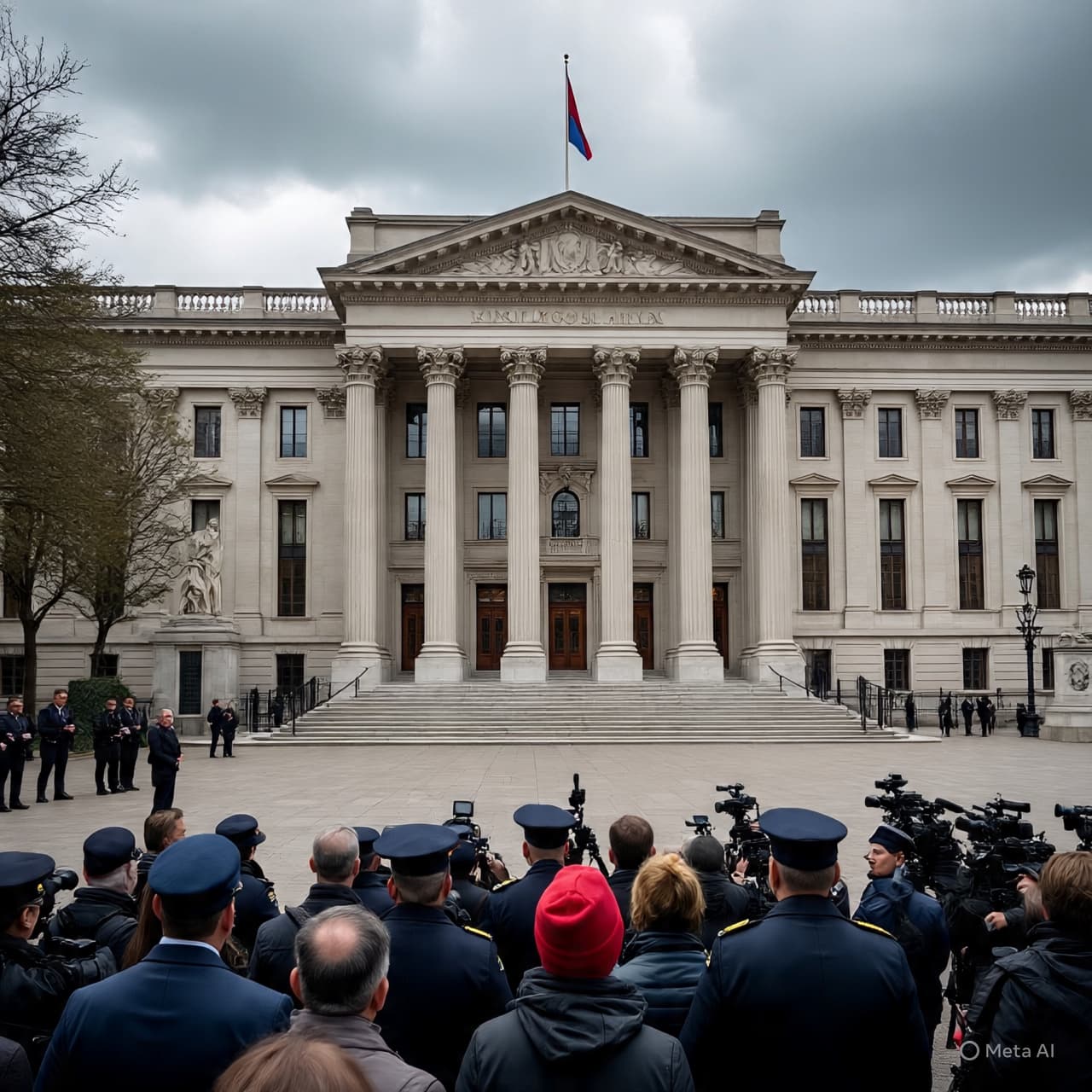
AI Image Disclaimer Visuals are AI-generated and serve as conceptual representations.
Sources Reuters BBC News The New York Times Politico Associated Press
Published by Banx Network. This article is part of the Banx decentralized media programme, powered by the BXE token on the XRP Ledger.