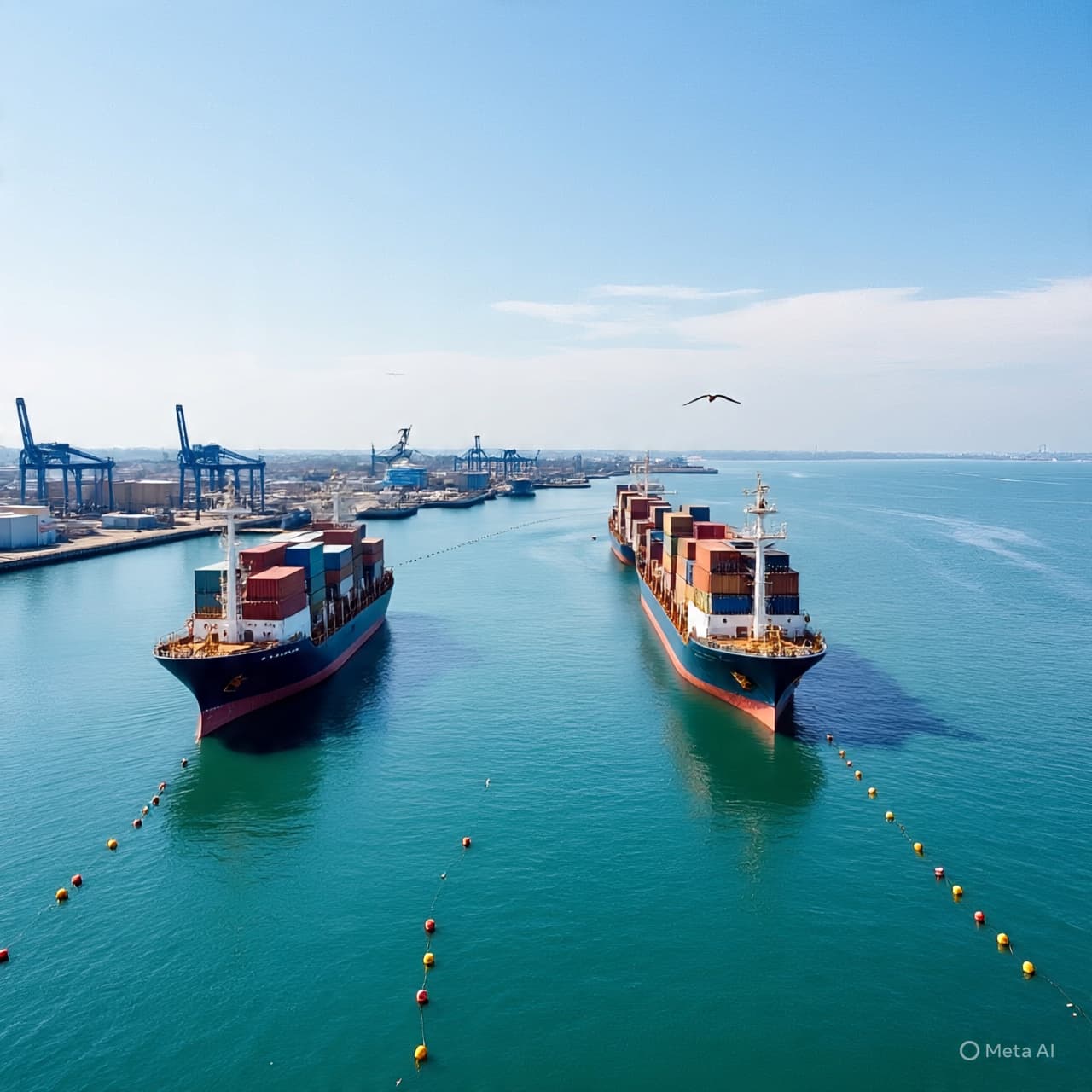
In the pale light that settles over northern harbors, where cranes stand like still sentinels and the sea breathes in slow, deliberate rhythms, disruption often arrives quietly—first as absence, then as realization. Along the shores of the Baltic Sea, where trade routes have long traced steady lines between nations, something has shifted.
Russian oil, once moving in a near-constant flow through these waters, has slowed. Reports indicate that drone strikes have struck key port infrastructure, interrupting operations and complicating the passage of shipments. The effect is not a single rupture, but a series of pauses—each one altering the cadence of export routes that connect Russia to global markets.
Ports along the Baltic have long served as critical gateways, where energy is transferred from land to sea, from pipelines to tankers, from production to distribution. When these nodes falter, the impact extends beyond their immediate surroundings. It moves outward through shipping schedules, supply chains, and pricing systems, reshaping expectations in ways that are both visible and subtle.
The use of drones introduces a particular dimension to this disruption. Precise, mobile, and often difficult to intercept, such strikes reflect a shift in how infrastructure can be targeted. The ports themselves—once defined by their physical scale and permanence—become more vulnerable in a landscape where distance offers less protection than before.
For Russia, the decline in exports represents both a logistical challenge and an economic concern. Oil remains a central component of its revenue structure, and interruptions in its movement carry implications that reach into broader financial stability. Each delayed shipment, each halted operation, contributes to a larger pattern of constraint.
Across global markets, the response has been measured but attentive. Traders and policymakers watch for signals—of further disruption, of recovery, of escalation. Prices adjust not only to current conditions, but to anticipated ones, reflecting the constant interplay between reality and expectation.
In Europe, the situation resonates with a familiarity shaped by recent years. Energy security, once taken as a given, has become an active consideration, influenced by events both near and distant. The Baltic, situated at the intersection of these concerns, becomes a focal point where geography and geopolitics converge.
There is also a human dimension, less visible but no less present. Workers at affected ports, communities tied to maritime activity, and industries reliant on steady supply all feel the subtle shifts that follow disruption. Their routines, like the flow of oil itself, are subject to forces that originate far beyond the immediate horizon.
As the situation evolves, efforts to restore operations move alongside attempts to prevent further damage. Security measures, logistical adjustments, and strategic recalibrations form part of an ongoing response, one that seeks to reestablish continuity in a context that resists it.
Yet even as these efforts take shape, uncertainty remains. The strikes have introduced a new variable into an already complex equation, one that may influence not only current exports, but future planning. The question is not only how to recover, but how to adapt.
And so, along the quiet edges of the Baltic Sea, the rhythm of movement has changed. Tankers wait, routes adjust, and the water carries a different kind of stillness—one shaped not by calm, but by interruption. In that stillness, the broader story continues to unfold, carried forward by currents both seen and unseen.
AI Image Disclaimer Visuals are AI-generated and serve as conceptual representations.
Sources Reuters Bloomberg Financial Times BBC News Associated Press
Published by Banx Network. This article is part of the Banx decentralized media programme, powered by the BXE token on the XRP Ledger.