
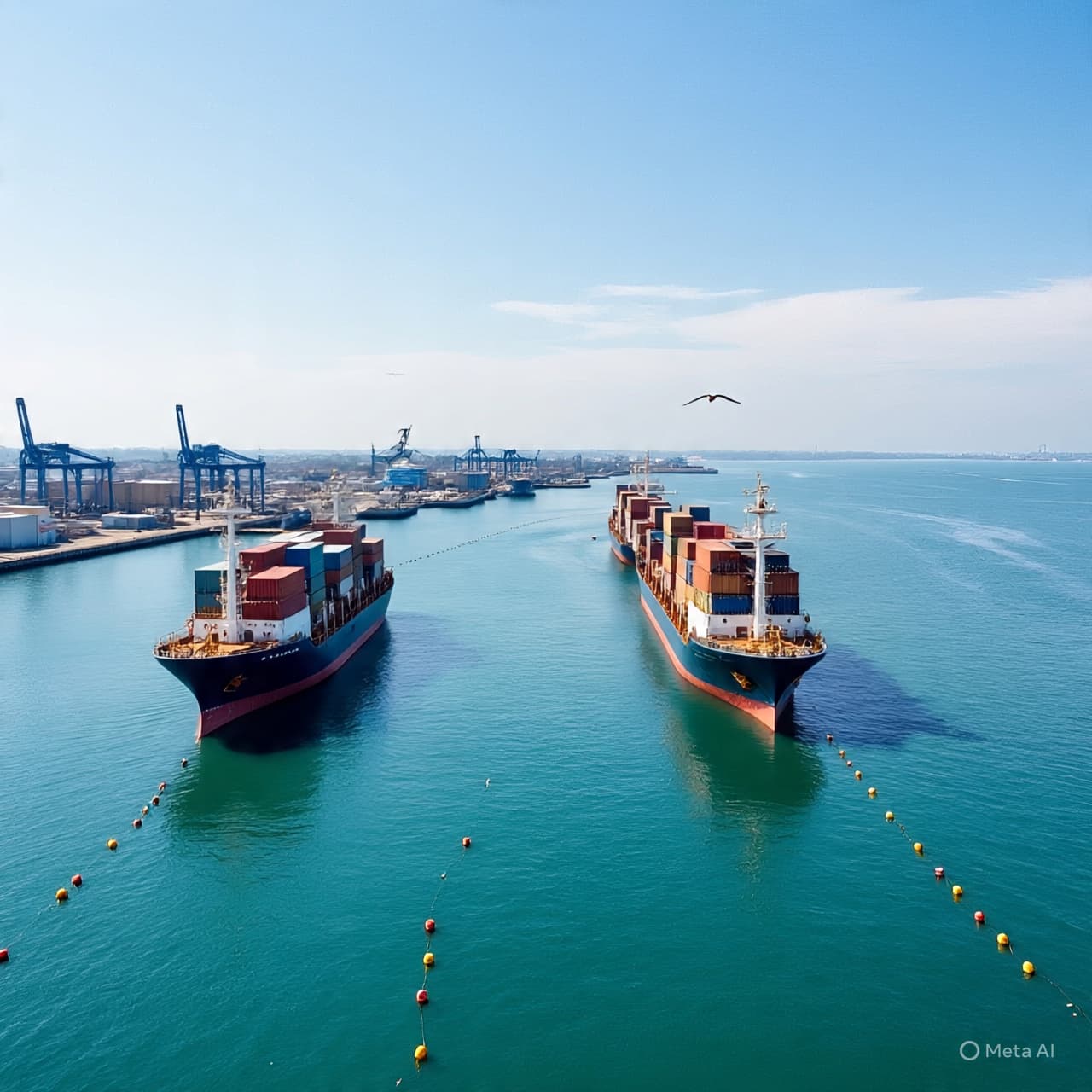
Key Highlights
- Disruption:Drone strikes have interrupted oil shipments in the Baltic Sea.
- Economic Impact:Russia faces logistical and financial challenges due to slowed exports.
- Global Response:Traders and policymakers are closely monitoring the situation.
[Disruption in Oil Trade]
In recent weeks, the Baltic Sea has become a focal point for disruptions in oil trade, primarily due to drone strikes targeting key port infrastructure. These attacks have significantly slowed the flow of Russian oil, which has historically moved through these waters with relative ease. The impact of these disruptions is not merely a single event but a series of interruptions that are reshaping the landscape of global oil exports.
Reports indicate that the drone strikes have targeted critical nodes in the shipping infrastructure, leading to delays and complications in the passage of shipments. The ports along the Baltic Sea, which have long served as vital gateways for energy transfer, are now facing unprecedented challenges. As operations falter, the ramifications extend beyond the immediate area, affecting shipping schedules, supply chains, and pricing systems worldwide.
[The Role of Drones]
The introduction of drone strikes into this equation adds a new layer of complexity. These precise and mobile attacks are difficult to intercept, making traditional security measures less effective. The ports, once seen as stable and secure, are now vulnerable to threats that can emerge from a distance. This shift in the nature of conflict and disruption highlights the evolving landscape of geopolitical tensions and their direct impact on global trade.
For Russia, the decline in oil exports poses significant logistical and economic challenges. Oil is a cornerstone of the Russian economy, and any interruptions in its movement can have far-reaching implications for financial stability. Each delayed shipment not only affects immediate revenue but also contributes to a broader pattern of economic constraint that could influence future planning and operations.
[Global Market Reactions]
In response to these disruptions, global markets have reacted with caution. Traders and policymakers are closely monitoring the situation, looking for signs of further escalation or recovery. Prices are adjusting not only to current conditions but also to anticipated future developments, reflecting the intricate interplay between reality and expectation in the energy sector.
The situation in Europe resonates with a growing awareness of energy security, which has become a pressing concern in light of recent geopolitical events. The Baltic Sea, situated at the intersection of these issues, serves as a critical point where geography and geopolitics converge, influencing energy policies and market dynamics across the continent.
[Human Impact]
Beyond the economic implications, there is a human dimension to this disruption. Workers at affected ports, local communities reliant on maritime activity, and industries dependent on steady oil supply are all feeling the effects of these changes. Their routines, much like the flow of oil itself, are subject to forces that originate far beyond their immediate environment.
As efforts to restore operations continue, security measures and logistical adjustments are being implemented to mitigate further damage. However, uncertainty looms large. The drone strikes have introduced a new variable into an already complex equation, raising questions about how to adapt to this evolving landscape.
In conclusion, the quiet edges of the Baltic Sea now reflect a different kind of stillness—one shaped not by calm but by interruption. As tankers wait and routes adjust, the broader story of disruption unfolds, driven by currents both seen and unseen.
Published by Banx Network. This article is part of the Banx decentralized media programme, powered by the BXE token on the XRP Ledger.



