
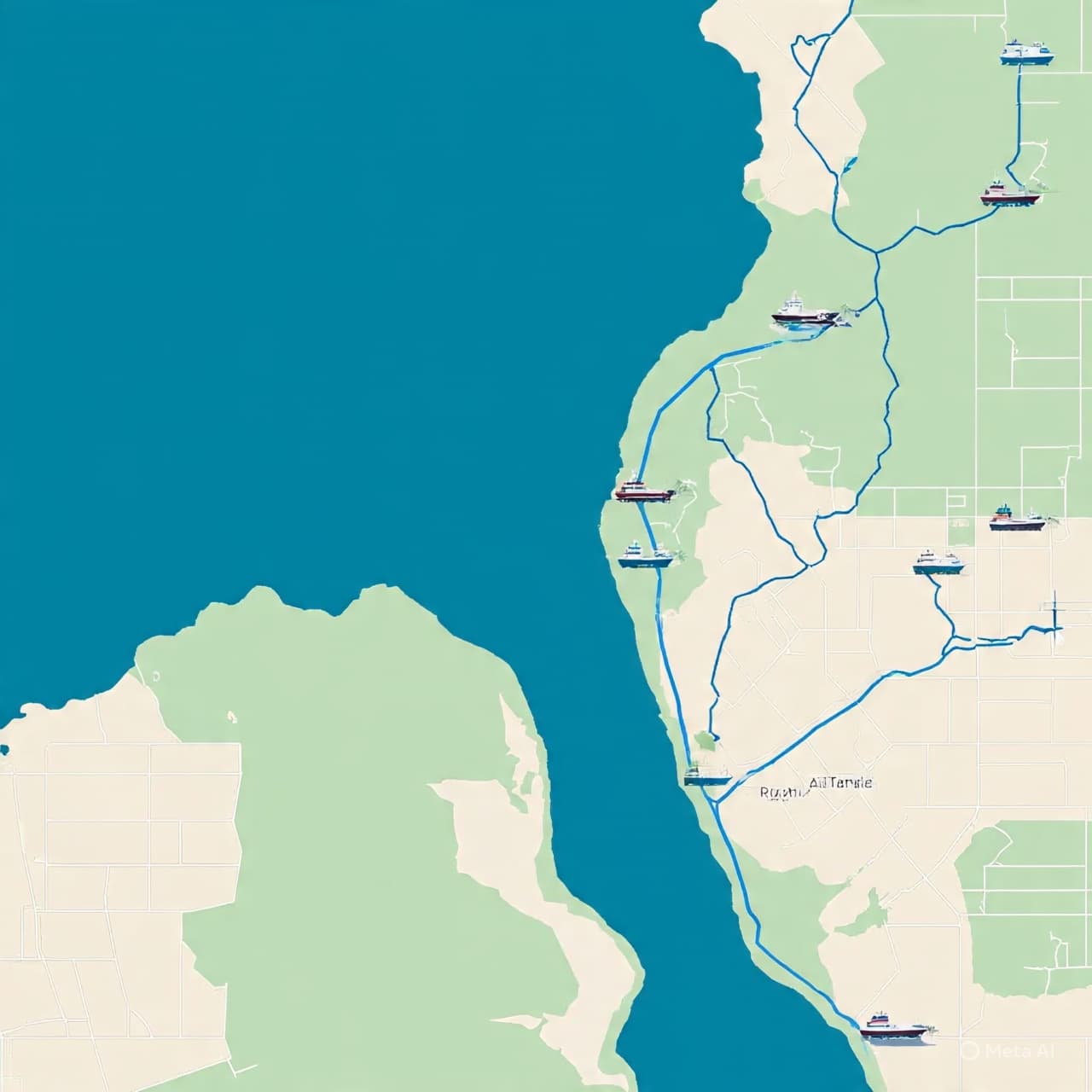
Key Highlights
- Daily Traffic:Fifteen ships passed through the Strait of Hormuz in one day.
- Strategic Importance:The strait is a crucial passage for global oil trade.
- Regional Tensions:Current geopolitical dynamics influence maritime movement.
The Strait of Hormuz, a narrow waterway connecting the Persian Gulf to the Gulf of Oman, serves as a critical juncture for global oil transportation. On a recent day, reports indicated that fifteen ships traversed this vital corridor, underscoring its ongoing significance in international trade. This figure, while not extraordinary in isolation, carries substantial weight given the geopolitical context surrounding the region.
Located between Iran and Oman, the Strait of Hormuz is often described as the world's most important oil transit chokepoint. Approximately 20% of the world's oil supply passes through these waters, making it a focal point for energy security discussions. The convergence of tankers, cargo vessels, and naval ships creates a complex maritime environment where every movement is monitored closely.
Recent tensions in the region have heightened scrutiny of shipping activities. Although there have been no immediate disruptions reported, the presence of military escorts and surveillance systems reflects a heightened state of vigilance. The movement of these vessels is not merely a logistical operation; it is a reflection of broader geopolitical dynamics that influence global markets and energy policies.
The fifteen ships that navigated the strait represent a snapshot of maritime traffic that is both routine and significant. Each vessel carries not only cargo but also the weight of expectations regarding safe passage. In an era marked by uncertainty, the ability to maintain steady shipping routes is crucial for both economic stability and international relations.
As crews maneuver through these waters, they are acutely aware of the implications of their journey. The Strait of Hormuz is not just a geographical feature; it is a symbol of the interconnectedness of global trade and the fragility of peace in a region often fraught with conflict. The horizon may appear unchanged, but the stakes attached to each passage are ever-evolving.
As the day draws to a close and the final vessels exit the strait, the waters return to a semblance of calm. Yet, the memory of movement lingers, serving as a reminder of the delicate balance between commerce and caution in one of the world's most strategically significant maritime corridors. The report of fifteen ships in a single day encapsulates a broader narrative about resilience and the ongoing flow of trade, even amidst uncertainty.
In summary, the Strait of Hormuz remains a vital artery for global oil transit, with each day's shipping activity reflecting the intricate dance of geopolitics and commerce. As observers continue to monitor these movements, the significance of this narrow passage will undoubtedly remain a focal point in discussions about energy security and international relations.
Published by Banx Network. This article is part of the Banx decentralized media programme, powered by the BXE token on the XRP Ledger.



