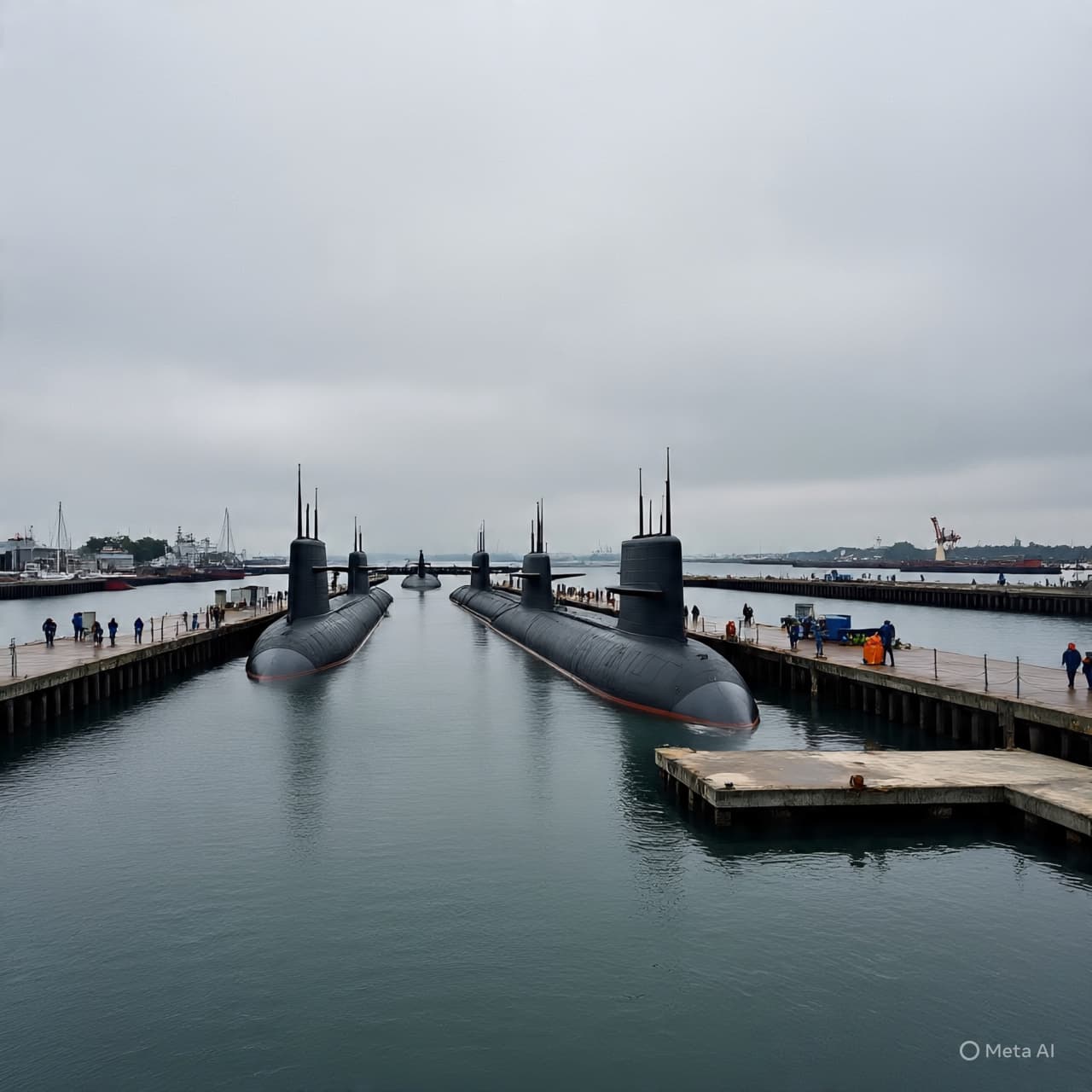
The late winter sun hangs low above shipyards half alive with the hum of cranes and the scent of salt water, stretching long shadows across steel plates waiting to be shaped. In the port of Geoje, where cutters and welders tend to leviathans born of blueprint and ballast, the air seems to hold the promise of motion—a vessel prepared to slip slowly beneath distant seas. It is here that conversations about ships become conversations about nations, and metal meets purpose far from harbor lights.
Across the Pacific and then northward toward Canada, the idea of a new fleet of submarines has taken on a shape as large and complex as the waters those boats would one day glide through. Canada’s plan to replace its aging Victoria-class boats with up to a dozen modern patrol submarines has become one of the most consequential defense procurements in its recent history, a project that calls for technology, partnership, and long-term industrial engagement. In response, South Korea has mobilized not only its shipbuilders but a broader alignment of ministries, diplomats, and industrial leaders to advance its bid.
For South Korea—whose maritime industries have expanded steadily over recent decades—the submarine proposal represents more than a contract. It suggests a deepening of bilateral ties with Canada, framed as cooperation that could stretch across decades. Delegations from Seoul have traveled to Ottawa, defense officials have met their counterparts, and executives from major firms such as Hanwha Ocean and HD Hyundai Heavy Industries have outlined technical and industrial plans.
At the center of the South Korean pitch is the KSS-III class submarine, a design already in service with the Republic of Korea Navy. Representatives emphasize not only the vessel’s specifications but also the prospect of technology transfer, domestic production partnerships, and maintenance capabilities established within Canada itself. The narrative offered is one of shared shipbuilding, where Canadian industry would take part in construction, support, and long-term sustainment rather than serve merely as an end user.
Officials have described the effort as a whole-of-government approach, reflecting the scale of the Canadian program and the strategic value attached to it. Beyond defense procurement, the discussions have touched on broader economic collaboration, supply chain integration, and industrial investment. In this sense, the submarine bid is presented as part of a larger arc of economic diplomacy, carried quietly through memoranda and meetings.
Yet Canada’s evaluation process remains measured and competitive. European manufacturers, including Germany’s ThyssenKrupp Marine Systems, are also pursuing the opportunity, offering their own designs and industrial frameworks. Ottawa’s review is expected to weigh capability, cost, industrial benefits, and long-term reliability before any final decision is reached.
In the meantime, the shipyards of Geoje continue their steady rhythm. Steel is cut, sections are welded, and hulls take shape against the horizon. Across oceans, Canadian policymakers assess proposals that may shape the Royal Canadian Navy’s underwater fleet for decades to come.
The procurement process remains ongoing. Canadian authorities are reviewing submissions as part of a broader modernization effort, and no final selection has been announced. South Korea’s coordinated campaign underscores the strategic importance it attaches to the project, while the ultimate decision rests with Canada’s government following further evaluation.
AI Image Disclaimer
Illustrations were created using AI tools and serve as conceptual representations.
Sources (Media Names Only): Naval News Reuters Yonhap News Agency The Korea Times Esprit de Corps
Published by Banx Network. This article is part of the Banx decentralized media programme, powered by the BXE token on the XRP Ledger.