In the quiet early hours when winter light creeps slowly over the boreal forests and frozen lakes of the North, the expanse between the United States and its largest neighbor feels serene — an unbroken sweep of snow and silence that belies the bustling pace of diplomacy and strategy in rooms far to the south. Yet in recent days, that tranquil sense of shared geography has shifted slightly, not with the clatter of public declarations but with the murmurs of deliberation among those close to power.
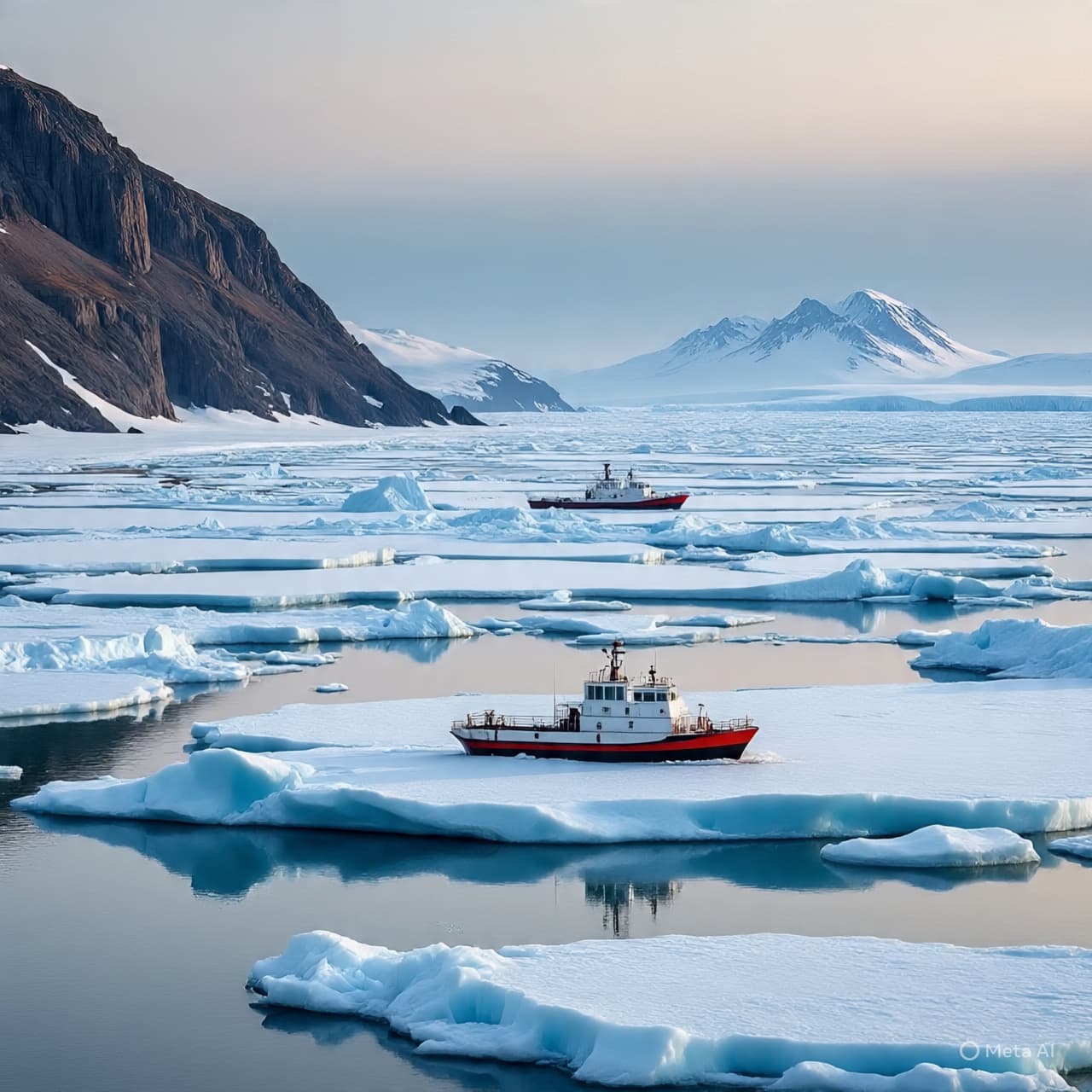
According to people familiar with discussions inside the corridors of the U.S. administration, President Donald Trump’s attention has recently turned toward Canada, not solely as a neighbor to be counseled, but as a place whose vulnerabilities in the Arctic have drawn scrutiny. Within this quiet shifting of focus lies a broader concern about great-power competition in the far north — a region where icebreakers and maritime patrols now figure into strategic conversations alongside sea ice and sovereign territory. Officials have described these discussions as part of a bid to ensure that neither Russia nor China gains advantage in the Arctic’s vast and sparsely populated reaches, even as the broader tapestry of North American security is examined.
For Canadians who watch these developments from Ottawa to Whitehorse, the notion that their nation’s northern border might be reimagined as an object of external “interest” carries a peculiar weight. Canada has long balanced its deep ties with its southern neighbor against its own traditions of autonomy and diplomatic engagement, and the idea of U.S. strategic leverage — even when couched in language of shared defense — evokes questions about the fragile line between cooperation and compulsion. Prime Minister Mark Carney’s recent meetings with counterparts abroad, including in Beijing, reflect an effort to navigate these currents with calm and to articulate Canada’s own perspective on both security and sovereignty.
Economists and historians alike note that the Arctic’s thawing seas and opening waterways have transformed once-remote waters into arenas of economic and geopolitical promise. Icecap routes and mineral wealth, long locked beneath winter’s grip, are becoming more accessible, and with them come conversations that extend well beyond the whispered halls of bureaucracy. It is in this wider context that Canada’s place — as both steward of its own lands and participant in broader continental defense — is being contemplated with renewed intensity.
In Washington, advisers and allies alike talk of bolstering maritime presence and increasing the fleet of icebreakers capable of patrolling icy straits, reflecting a desire to knit together capabilities in the face of perceived rivalry. Yet even as these talks unfold, there is careful awareness that alliances are built on trust — not just on shared maps or strategic objectives, but on mutual respect for the boundaries drawn by history and agreement. The Arctic remains a space where caution and ambition must co-exist, where the patterns of diplomacy move slowly but with profound consequence.
For residents in towns where winter’s hush is longer than the days themselves, this shifting geopolitical focus may feel distant. Yet in the slow light of dawn, when trees gleam with frost and the horizon holds promise of another day’s journey, there is a sense that the questions of power and place — like wind over snow — touch all of us in ways that ripple far from the capitals where they are first voiced.
In straightforward terms, U.S. officials have told reporters that President Donald Trump has expressed concern about Canada's defense capabilities in the Arctic and has discussed expanded U.S. patrols and maritime assets in the region. These conversations are part of a broader initiative to counter perceived influence from Russia and China in the far north. Canadian leaders have reiterated the importance of sovereignty and reiterated support for collective defense arrangements, even as diplomatic engagement continues.
AI Image Disclaimer Illustrations are AI-generated and serve as conceptual representations.
Sources The Daily Beast NBC News Reuters Associated Press Yahoo News UK
Published by Banx Network. This article is part of the Banx decentralized media programme, powered by the BXE token on the XRP Ledger.